Undocumented students in California navigate uncertainty and fear under Trump
An onslaught of new anti-immigrant policies under the Trump administration has targeted immigrants, creating a climate of fear and uncertainty.
Many undocumented students face renewed fears about racism and personal safety, wondering if they will be able to stay in college, let alone the country. The results have a direct impact on how affected students go about their studies and daily lives. Some are afraid to be in public — to go to the grocery store or even to campus, given that President Donald Trump lifted longstanding restrictions that prevented U.S. Immigration and Customs Enforcement (ICE) agents from operating in schools, churches or hospitals.
In recent months, EdSource’s California Student Journalism Corps interviewed a group of undocumented students and students from mixed-status families to discover how the new administration’s policies have personally impacted them and how they navigate these changes.
(Click on the names or images below to read what each person had to say.)
Oscar Guero
Third-year psychology major at UC Berkeley
Oscar Guero has been head of his family household since he was a senior in high school. He has always felt the need to take care of his undocumented mother and is proud to take on important family responsibilities such as translating at the doctor’s office or paying the bills with his own money.
He is a third-year psychology major at UC Berkeley after transferring in January from Bakersfield College.
Guero grew up in the small town of Richgrove in Tulare County, which is filled with vineyards, orange groves and other agricultural bounties. He had moved to Berkeley a week before the ICE raids in Kern County on Jan. 7, a 15-minute drive from Richgrove and just two weeks before President Donald Trump took office. According to CalMatters, at least 40 of the more than 78 people arrested were deported to Mexico.
After years of his mother working in the fields picking grapes or doing any offseason fieldwork she could find, his mother fell ill, leaving him as head of the household.
“She did end up with heart problems after working in the fields, so I had to take over for her,” he said. “Doctor’s appointments, court appointments. When she fell ill, I was always there by her side. I would help the doctors communicate with her, and I would help her communicate with the doctors.”
Although Guero is the youngest of three siblings, he said he felt responsible for taking care of his mother and the household. He worked at Jack in the Box as a night shift manager, averaging 35 hours a week while in high school and picking grapes in the summer to pay for rent and other bills.
“I was filing taxes as head of household, especially after my mother stopped working. I was in charge of the rent and bills. I was in charge of groceries. My siblings are going to be there, but I feel like they don’t feel the same sense of responsibility over her as I do because I’ve been her primary caregiver for a while now.”
When Guero told his family that he was moving to UC Berkeley, he knew his mother would encourage him to go, but he couldn’t get past the guilt he felt over leaving his mother.
“At first, there was no guilt, simply because I didn’t know where I was going to end up, but once I got the acceptance letter from Berkeley, that’s when everything kind of started flooding in,” he said. “I can’t leave my mom. That was on the top of my head, consistently.”
Although Guero decided to attend Cal, he is in constant contact with his family. Recently, he reached out to his four siblings, three of whom have Deferred Action for Childhood Arrivals (DACA) status, to remind them of their rights and to make sure they were safe during the ICE raids. Guero and his brother are U.S. citizens.
“I feel the fear lingering in my head. I have talked to all my family members, especially because they all have kids,” Guero said. “I talked to them about how dangerous it is because they work out in the fields, and the Border Patrol was targeting field-workers not too long ago.”
Guero said he feared applying for financial aid because his mother was undocumented.
However, he is grateful to have found a community of students who have similar backgrounds and fears at Cal, he said. Their support keeps him going during these hard times.
“It all puts a lot of stress on me, and at one point, I did believe that I wasn’t going to continue school simply because I couldn’t get my FAFSA turned in. I rely on a lot of government help,” said Guero, referring to federal student loans. “They’re consistently educating students because undocumented students are part of the UC Berkeley system, and I feel there is this sense of community.”
By Nathalie Herrera
Tania Torres
Business major at Las Positas College
Tania Torres enjoyed a typical upbringing marked by milestones of American adolescence: high school graduation, college coursework and a part-time job as a lead youth development professional at her local Boys & Girls Club.
However, in the midst of working toward her dream of becoming an accountant for the National Football League, she finds herself facing a potential nightmare scenario: her parents being deported.
“That’s a very big fear I have,” Torres said. “I’m going to go to school or work, and (when I get home) my parents aren’t going to be there.”
Torres’ parents immigrated from Jalisco, Mexico, to the Bay Area suburb of San Ramon as young adults in search of better opportunities for themselves. Her mother arrived in California on a visa in 2000, and her father arrived illegally. They eventually settled in the Central Valley with Torres and her three brothers. She feels her family’s livelihood is threatened by President Trump’s stance on immigration.
Torres has been filled with anxiety since he won the election. While Torres and her family navigate the challenges of Trump’s policies, ICE officials are assessing the shuttered Federal Correctional Institute, Dublin as a potential immigrant detention facility, located 10 miles from where she attends Las Positas College.
Torres says that the president’s policies have affected her mother the most. She says her mother is “very religious” and is fearful of attending church after hearing reports of raids. On Jan. 20, hours after his inauguration, Trump reversed a policy preventing federal immigration authorities from operating near “sensitive places,” including places of worship and schools.
Torres’ mother immigrated to the United States in 2000 with a work visa, which lapsed after a few years. She has not returned to Mexico since 2006. Torres believes that if her mother leaves the country, it will be almost impossible for her to return to the U.S.
“Both of my parents have given up so much, especially my mom,” Torres said. “She gave up her entire family, and she hasn’t seen them in so long. Her mother passed away, and she wasn’t even able to go see her or go to her funeral.”
Her mother continues to work toward obtaining citizenship and is conferring with immigration attorneys.
Torres said that despite her father’s seemingly calm disposition, the drastic changes in immigration policy have also affected him. He has lived and worked in the United States since he was 18 and is now 61. Trump’s policies feel like a “betrayal” to him, she said.
“Their home is here, at this point,” Torres said. “We graduated here. We went to high school here. They have friends here. They have a whole routine here.”
Because of her parents’ reluctance to leave their house, Torres says that she and her brothers have had to take on more responsibilities, such as grocery shopping, walking the dog and picking up prescriptions. Torres said that she and her siblings have always helped with chores, but grocery shopping for their entire family is a lot more responsibility than what she’s used to. Convincing her mother to pick up take-out food for the family has been difficult.
Torres says that she frequently cautions her parents, who are “very talkative and friendly,” against talking to strangers. “I’ve been telling them not to speak to people they don’t know.”
Torres is inspired by her parents and is working toward a business degree and a high-paying career so that she can return the favor. Her father never finished elementary school, and her ultimate goal is to help him retire someday.
Torres said that she is grateful for the services Las Positas College provides for undocumented students and those with mixed-status families, such as Know Your Rights seminars, which offer students resources and steps to follow if they are stopped or detained by federal immigration officials. In conjunction with the California Community Colleges Chancellor’s Office and the California Department of Social Services, the college also provides several free legal services to students.
“I’m glad that the school is stepping up,” she said. Los Positas is considered a sanctuary campus that does not comply with federal immigration enforcement without a court order or warrant. The college’s Dream Center provides an inclusive space for undocumented students, DACA recipients and those with mixed-status families.
“It’s very important for people to know that we are just people,” Torres said. “We should all just be kind to each other. We all just need to be more compassionate.”
By Raina Dent
Pedro Gurrola
Fourth-year communications major at Sonoma State University
Pedro Gurrola is a fourth-year communications student at Sonoma State University. He is close to completing the first part of his grand plan: 1. Graduate. 2. Become a sports broadcaster. 3. Help his parents financially.
But he fears new, unforeseen obstacles will stand in his way.
He is undocumented and worries about going to class and getting arrested or coming home after an exam to find a family member being arrested.
“When Trump first got into office back in 2016, I feared for my life and my career. I thought that everything my parents did back home to get me where I am today could’ve been for nothing,” Gurrola said. “Now that he’s back in office, I have those same fears again.”
Gurrola works as a stocker at a Safeway grocery store and a server at a pizzeria to help his parents afford the high cost of living in California. But with recent ICE raids in and near Marin County, where his parents live, Gurrola worries about leaving for work and not returning home.
He tries to be strategic.
“I’ve been telling my co-workers to check if there’s any police cars outside before I even leave the building,” Gurrola said. “People shouldn’t have to live in fear that randomly, one day someone will ID you, then just take you against your will.”
Gurrola, who was born in Jalisco, Mexico, came to the United States in 2007 when he was 5 with his older sister and their parents. In Mexico, his father worked in construction, and his mother was a nanny. When they left, they gave up their jobs, their home and most of their family and friends for a better future.
“My parents don’t speak English very well, and I feel like the police will target those individuals much more, and it scares me,” Gurrola said. “I have to text them on a daily basis just to make my conscience feel at peace because you never know what could happen.”
Even though Gurrola believes he can trust his co-workers, he does not feel supported on campus.
“I love coming to school, don’t get me wrong, but ever since the ICE raids, I have been scared, and it’s affecting my education,” Gurrola said. “No events, no support groups on campus. It makes me think that I am not important to campus officials.”
While Gurrola understands Sonoma State is going through drastic budget cuts, he believes the university can do more for undocumented students, such as providing legal services, mental health support and financial aid opportunities.
“Sonoma has the Dream Center, which has helped a little bit, but with all the budget cuts going on and DEI programs being cut by Trump, I feel like students like me will become much more of an afterthought.”
In his junior year, Gurrola thought about dropping out. He was working two jobs and wanted to focus on making money to help his parents. But wanting to help his parents is also what made him have second thoughts.
“I realized that getting my degree isn’t just for me,” Gurrola said. “It’s for my family, who gave up everything back home for me and my sister to have a better life and for my community to show that we belong here.”
Gurrola wants to become a sports broadcaster, but the path feels steep as he juggles college and a lack of experience. Most internships he has applied for are unpaid, forcing him to choose between gaining valuable industry experience and supporting his family financially.
“Even though I am scared to come to school some days, there are other days where I feel like I can conquer everything,” Gurrola said. “I have to believe everything is going to be OK in these upcoming months.”
By Marc Duran
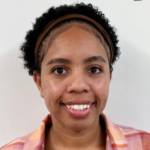
Archangel Apolonio
Senior studying journalism at California State University, Dominguez Hills
As her final semester at CSU Dominguez Hills drew to a close, Archangel Apolonio walked a tightrope between academic success and an uncertain future as an undocumented person.
A broadcast journalism student juggling classes, an internship and a staff coordinator at the Immigrant Justice Center, Apolonio bore a relentless fear of deportation.
“I don’t know what’s next for me,” Apolonio said in May before graduation. “I don’t even know who is going to hire me. I’m about to graduate, but instead of celebrating, I feel like I’m constantly looking over my shoulder.”
Apolonio says that the weight of uncertainty presses on her shoulders, making daily tasks feel overwhelming. Even routine activities like riding the bus come with a lingering fear of an ICE raid or arrest.
“I can’t really go out to places, not even to the movie theater,” Apolonio said. “It has impacted my social life as well.”
Apolonio struggled with the lack of institutional support at Dominguez Hills, a place meant to foster safety and growth.
“I feel campus officials are not doing enough,” she said.
Staff at the Immigrant Justice Center and La Casita, a Latinx cultural resource center, are doing their utmost to provide support and resources for students.
While the centers offer legal guidance, emotional support and a sense of community, systemic inaction remains.
As she worked toward her journalism degree, she used her platform as a student journalist on campus to challenge stereotypes surrounding undocumented students.
“One of the biggest messages I want the public to hear is that we see a lot of narratives in the media — undocumented people don’t pay taxes, they’re criminals, they’re taking jobs,” Apolonio said. “But I have not seen any undocumented students in this category. We’re simply trying to get a career.”
Apolonio wants people to remember that undocumented students are classmates, co-workers, and friends. Like any other student, they are working toward a better future, despite the barriers placed in their way.
“Between being a college student and being undocumented, it’s more difficult when you don’t have a job or when you don’t know when you are going to get one,” Apolonio said. “It’s something that I lack the most, but won’t give up.”
By Rafael Rodriguez
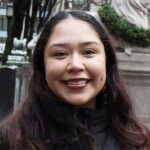
Daniela Garcia
Fourth-year agroecology major and education minor at UC Santa Cruz
Daniela Garcia walks to and from classes with her head down, eyes on the ground, terrified of the possibility of being noticed. After the presidential election, the fourth-year agroecology student noticed an increase in police on the UC Santa Cruz campus. For Garcia, being undocumented under the second Trump administration means that any interaction with police is a threat to her everyday life.
“[Even] when you’re not doing anything wrong, being here is doing something wrong,” Garcia said.
It is not just her own safety she has to worry about. Garcia’s parents, also undocumented, are over 200 miles away in Chico. She is constantly fighting to help them understand the level of danger they are in.
Garcia’s mother tries to reassure her that they made it through President Donald Trump’s first term in office just fine, but that was before she left for college. Being far away means they can no longer protect each other. Her father thinks that since he follows the law, goes to work and pays his taxes, they won’t want to deport him.
“My dad [is] like, ‘They’re not gonna take me, it’s not me they’re looking for,’” Garcia said. “But I’m like, ‘Pa, you’re brown. They don’t care, they’re just gonna stop you based off of what you look like.’”
Most students at UC Santa Cruz don’t experience the same fear and alienation that Garcia lives with as an undocumented student. When it comes to faculty and staff at the university, she said it seems like they just don’t get it.
A day after the election, a white professor in Garcia’s agroecology class opened up a space for students to talk about their fears. While most students were concerned about the environment, Garcia expressed her concerns about harmful policies aimed at migrants.
Her professor told her, “It’s OK, he’s only going to deport some people.”
It’s comments like those that make Garcia feel alienated and disrespected.
“Literally, I felt my jaw on the floor,” Garcia said. “What do you mean ‘some?’ Some could be me, some could be my family, some could be anybody.”
At her on-campus job, Garcia said her boss attempted to find out who was undocumented. She claims she was never compensated for working overtime.
In Garcia’s sophomore year, she said a group of students burned another student’s Mexican flag. Soon after, the university attempted but failed to open a housing unit for undocumented students next to Rachel Carson College, where the incident occurred.
When advocating for a physical space for undocumented students on campus, which is provided for other marginalized groups on campus, she said the director of the Educational Opportunity Programs told her, “This isn’t the oppression olympics.”
These experiences led Garcia to decide that she no longer wants to work on campus. However, it has also prompted her to consider how the university can improve its support for undocumented students. She says that the university keeps telling undocumented students what they need, rather than listening.
Garcia wishes there were a physical space for undocumented students, more legal resources, better outreach, and training for faculty and staff about appropriate ways to communicate with undocumented students.
Though she has not received the proper support from the university, Garcia has found solace in her community: Friends who have undocumented parents keep each other updated about where ICE is and where to find resources.
Garcia tries to step away sometimes, asking her friends to go out for a meal where they don’t talk about politics. While she acknowledges what a privilege it is to be able to do this, it is important for her peace of mind.
“I can’t continue to live in fear.”
By Daniela Castillo
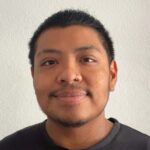
Mitzli Pavia Garcia
Postgraduate (graduated in 2024) from San Diego State University
Although attending and graduating from an American university is a great milestone for many undocumented students, it doesn’t eliminate their immigration status or fear for their livelihoods.
Mitzli Pavia Garcia, a 2024 San Diego State University graduate, remembers being 12 years old and running out of food and water on a three-day trek through the Arizona desert. Garcia and eight others attempted to cross the Mexico border into the United States for a month, turning back due to extreme weather or arrests.
Garcia and the group broke open cactuses to sip and prayed when they found a farm, taking gulps of water from the same trough as the cattle.
Today, Garcia is a 28-year-old undocumented resident of the United States.
Born in Cuautla, Mexico, Garcia was 6 years old when they first entered the United States. According to Garcia, their mom wanted to give them a life better than her own. Garcia’s mother never finished middle school, and their father did not complete elementary school.
Garcia said they always navigate life aware of their immigration status. Struggling to keep up in high school while thinking about higher education, they recalled how colleges and financial aid programs required Social Security numbers to apply. And they worried about the record number of deportations during the Obama administration, which instilled fear in the undocumented community.
“When I was in school, I knew that I was safe from immigration, so I loved learning,” Garcia said. “I was top of the class for some things, and it was really hard for me to push myself to do the best when I knew that I wasn’t going to be able to access higher education.”
Garcia applied for the Deferred Action for Childhood Arrivals program, hoping to receive security from the government as a student. Because Garcia and their mom had returned to Mexico to care for their grandmother before high school, their application was instantly rejected.
The lack of security from DACA didn’t deter Garcia.
Garcia was accepted to San Diego State University in 2022 after attending San Diego Mesa and San Diego Miramar community colleges.
Garcia said undocumented students severely lacked support at SDSU.
“We have an undocumented resource center at San Diego State. It’s a great thing, but it’s the bare minimum,” Garcia said. “It’s a great space for undocumented students to go and sit, but it was hard for me to ask them for help because they don’t even have the resources.”
Garcia found more support from Movimiento Estudiantil Chicanx de Aztlán, or MEChA, on campus. According to its website, MEChA is a national organization with local chapters that focus on Chicanx issues, including U.S. immigration and Central and South American political struggles.
Garcia felt pressure even after graduating from a four-year university. They have been trying to achieve American citizenship, but have grown frustrated and worried about the lengthy process.
“A lot of us still can’t legally work in the spaces that we worked so hard for four years because again, they require Social Security or legal status,” they said. “I submitted legal paperwork in 2020, then Covid hit. At the time, it was a five-year wait for the legal route that I was pursuing. It is now doubled, and now it’s a 10-year-plus wait. Trump keeps telling us, ‘Hey, do it the legal way,’ and then the legal way takes a quarter of your life.”
Based on the legal proceedings he has completed, Garcia said, “I am not supposed to be deportable.” But they know, ICE “can hold me in a detention center if they want to, because they’re doing that now. They’re arresting citizens just because they’re brown, putting them in detention centers, and then not believing that they’re citizens, even with the paperwork. I don’t even feel safe to travel outside of San Diego, and when everything started happening a few weeks ago, I was afraid to leave my house.”
Garcia finds strength in their undocumented identity, however.
“We’ve feared this already before,” they said. “While they may be able to instill this fear in my community, I’m not going to let them instill that fear in me. I’m still here, I still made it out. We can still achieve our dreams.”
By Roman Fong
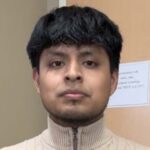
Javier Diego Jacinto
Bachelor of Arts in liberal studies with an emphasis on bilingual education and a Master of Arts in postsecondary educational leadership and student affairs from San Diego State University Research Foundation
After earning his undergraduate degree in 2021, Javier Diego Jacinto faced a difficult decision: to pursue his dream of becoming a kindergarten teacher or fulfill his duties as a soon-to-be father.
As a Deferred Action for Childhood Arrivals (DACA) recipient, he feared deportation and leaving his new family behind.
“My wife was expecting our first child,” Diego Jacinto said. “Between my dream and duties as a father and husband, my fear continued to grow, it looked like losing my DACA.”
Relying on his Indigenous Mazatec heritage made it easier for Diego Jacinto to prioritize his family.
“As the man, you have to serve as the protector and make a space where your child and your wife feel that their needs are met,” Diego Jacinto said. “I was willing to defer my dream to be able to have my family.”
Four years and two daughters later, Diego Jacinto said he still fears deportation despite his DACA status. Every day, he wakes up afraid to leave his home. He finds comfort cradling his daughters and watching them play in the living room, hoping that he won’t ever be separated from them.
“Whether it’s grocery shopping, whether it’s going to do simple things like going to the mall, taking our daughter to the park — all extracurricular activities become alienating,” Diego Jacinto said. “As if it’s something that we’re not supposed to be doing, yet we’re doing it.”
While DACA is supposed to act as a layer of protection that prevents him from facing deportation, Diego Jacinto fears racial profiling based on his skin tone and accent. He believes that even with DACA, he is still at risk of being detained by ICE.
Diego Jacinto said that he stays informed about his civil rights and the benefits as a DACA beneficiary. His wife, who is a citizen, drives when the family has to pass through checkpoints.
“It’s always about being one step ahead of the game,” Diego Jacinto said. “That’s the only way to be able to live a little bit more comfortably.”
DACA gives Diego Jacinto the ability to work in the United States. While he didn’t become a kindergarten teacher, he chose to pursue a master’s degree instead. In spring 2024, Diego Jacinto graduated from San Diego State University with a master’s in Postsecondary Educational Leadership and Student Affairs.
He now works for the SDSU Research Foundation as a community outreach and engagement coordinator for the Developing Effective Bilingual Educators with Resources Project. The program assists students who are chasing the same dream he once had — becoming an educator. He helps guide them from community college to bilingual education credential programs available in the Cal State system.
In his role, Diego Jacinto said that he isn’t afraid to be open about his undocumented identity and act as a resource to undocumented students who need additional support. He was once in their shoes.
Diego Jacinto remembers times when educators would criticize him for being bilingual.
“I lived through the experience of being nicely told, ‘Hey Javier, Spanish isn’t used in the classroom,’” he said. “‘Let’s make better choices. Let’s continue to speak our English because that will get you a job when you grow up.’”
Diego Jacinto navigated the educational system when Proposition 227 required schools to teach almost exclusively in English.
“You had to speak English,” Diego Jacinto said. “The language, the culture, the assets that you brought to this country from your country of origin, essentially, were trash. They did not matter.”
Through his educational journey and work with the SDSU Research Foundation, Diego Jacinto said he wants to create environments of equity and support for multicultural students and their families, especially those from undocumented backgrounds.
“I made it part of my duties to ensure that all departments across campuses knew that undocumented students exist,” Diego Jacinto said. “They have dreams, they have goals and ambitions, and they want to make them (a) reality.”
Diego Jacinto said that he wants to work toward breaking barriers and creating more spaces for undocumented students to dream, speak their native tongue and be able to proudly say they are undocumented.
By Jenna Ramiscal