The impact of adult culture on student performance
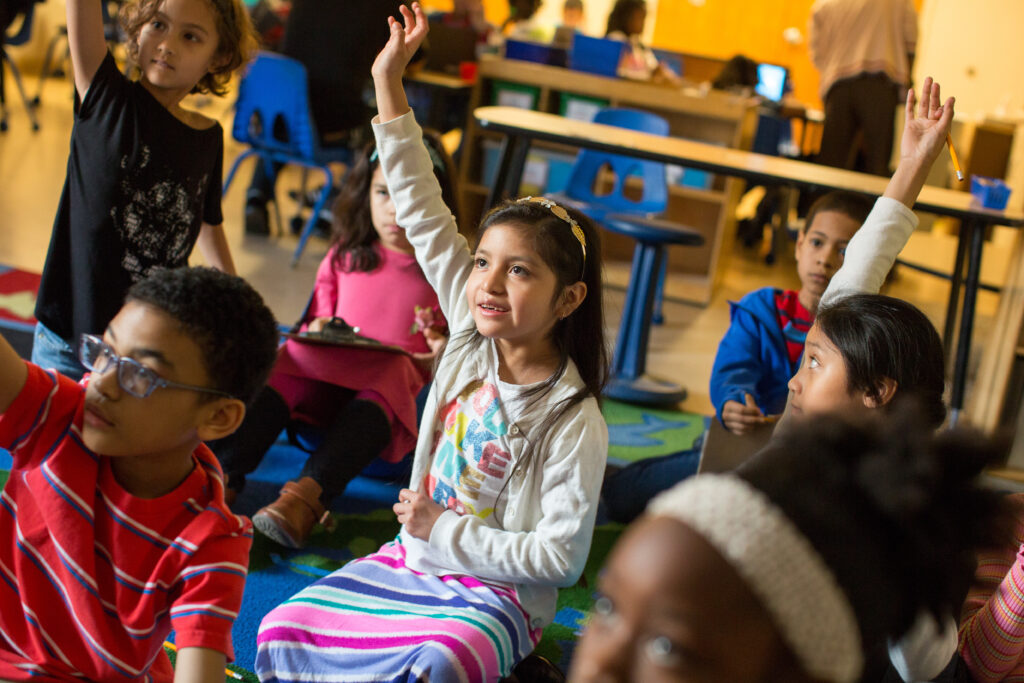
A third grader raises her hand to answer a teacher’s question during a math lesson.
Credit: Allison Shelley/The Verbatim Agency for EDUimages
Just over a decade ago, as director of WestEd’s national Center for School Turnaround and Improvement, my team worked with some of the nation’s most struggling schools. In addition to finding poor academic achievement, we consistently encountered a fractured adult culture. In virtually every school, relationships among administrators, teachers and parents were frayed, trust was lacking, and the fundamental joy of educating young people had vanished. The climate among adults was so compromised that effective teaching and learning couldn’t take root until we could bring about a turnaround in adult culture.
Consider one of our partner schools in Stockton Unified, an urban California district. A survey revealed that nearly 80% of its staff found the school an unsupportive place to work. Almost half believed administrators and staff didn’t treat each other with respect.
These conditions weren’t born of malice; schools like this are incredibly challenging environments. Many students come from impoverished homes, often arriving hungry or suffering from health issues. Too often, teachers in these schools feel blamed for poor student outcomes.
But there was a crucial point of consensus: Nobody liked working this way. Educators, administrators and staff knew it was harmful to them and their students. They were desperate for a way out.
Struggling schools often have a fractured adult culture.
In most cases, we found that path — a way to transform adult culture. The solution didn’t come from us at WestEd. It came from them. We merely invited them to identify the core values they wanted to guide their professional relationships. Invariably, principles such as honesty, mutual respect, forgiveness and transparency emerged.
Next, we asked them to describe specific actions that would either uphold or undermine their values. Responses like these were common:
“We agree to follow through on commitments.”
“We agree to forgive one another for past lapses.”
“We agree to acknowledge one another (preferably with a smile) when passing in the hall.”
“We agree not to gossip or send ALL-CAPS email responses to messages we don’t like.”
These weren’t abstract ideals; they were concrete commitments to a new way of interacting.
Finally, we asked if they would make a good-faith effort to leave the past behind and actively interact in ways that honored their newly defined values. In every school, virtually every administrator, teacher and staff member raised their hand, affirming their commitment to a better path forward.
Of course, mistakes were made. Old habits die hard. But apologies and civil conversations usually followed. Within weeks, a palpable shift in morale would emerge. This transformation wasn’t just about feeling better; it laid the essential groundwork for collaboration. Teams, administrators and staff could then work together enthusiastically on critical matters directly impacting teaching and learning, such as improving instruction, modifying curriculum, and empowering parents with new strategies to support their children at home.
The urban school mentioned earlier, once plagued by a lack of mutual respect and support, had been the lowest-performing school in a district of nearly 50. A year later, the same culture survey revealed a dramatic reversal: Nearly 80% of staff now believed the school was a supportive and inviting place to work. Mutual respect had sharply risen.
What also changed was student performance. Academic achievement indicators at that school rose faster than those of any other school in the district the following year.
Whether it’s battle fatigue from culture wars, the breakdown of collegial relationships, or a sheer lack of support leading to burnout, many dedicated educators quit or transfer to healthier environments in other schools. Those who remain often hunker down, collaborate less and teach with less enthusiasm. No school can succeed under these conditions.
The key lesson we learned is clear: A dysfunctional culture among adults must be addressed — and ideally, transformed — before any sustained focus on improving student learning can succeed. It’s not just about what happens in the classroom; it’s about strengthening the very foundation of trust, support and respect on which a successful school community is built.
Without it, the best intentions to improve student learning will fall short.
•••
Ken Futernick is a trustee on the El Dorado County Office of Education board in Northern California, professor emeritus at Sacramento State University, and hosts the podcast “Courageous Conversations About Our Schools.“
The opinions expressed in this commentary represent those of the author. EdSource welcomes commentaries representing diverse points of view. If you would like to submit a commentary, please review our guidelines and contact us.