Student Loan Wage Garnishment Rights: What Borrowers Need to Know
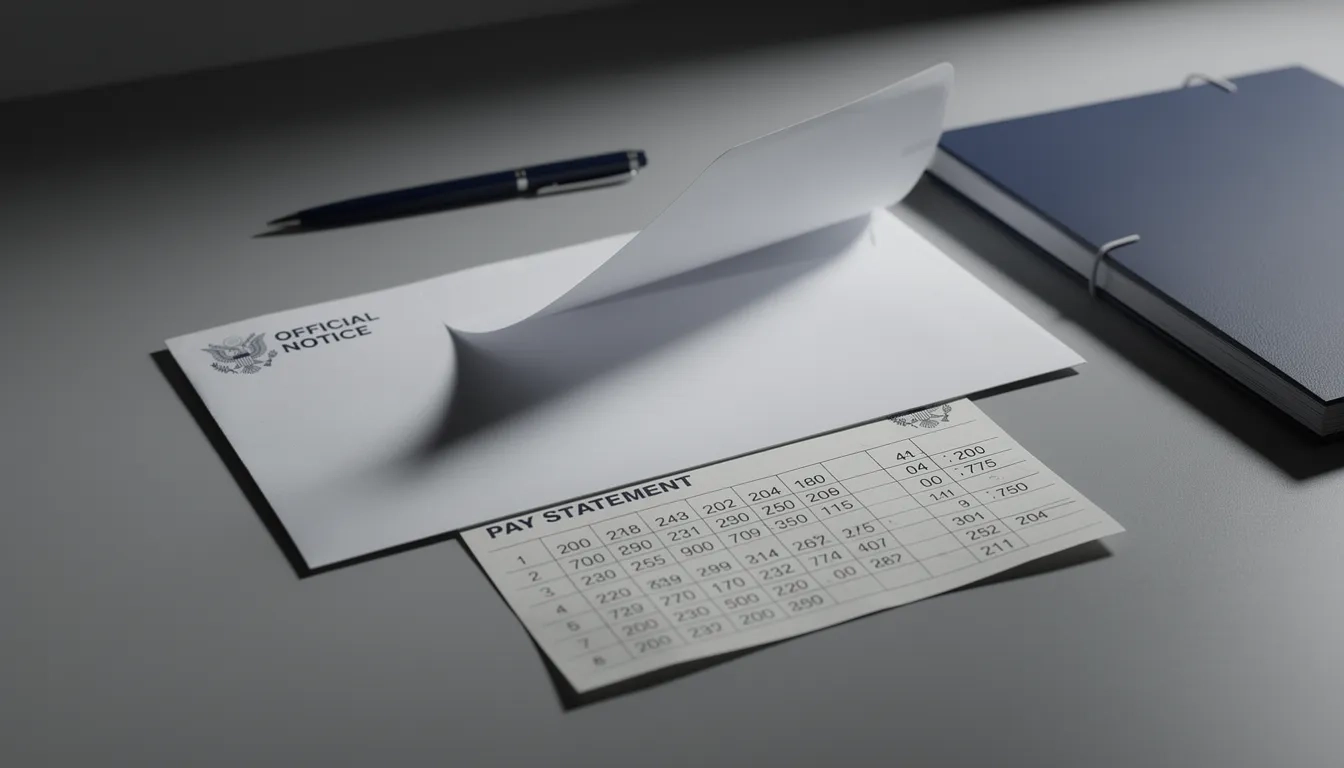
The Department of Education mailed its first wave of garnishment notices in January 2026, targeting thousands of defaulted borrowers as the opening move in a full-scale collections restart. For millions of Americans who'd coasted through a COVID-era pause stretching back to March 2020, the breathing room is officially over.
But here's what most people don't know going into this: garnishment doesn't just happen to you without warning. Federal law gives you specific rights before a single dollar leaves your paycheck. The problem is that those rights expire fast, they arrive by mail, and a lot of borrowers miss them entirely.
What Administrative Wage Garnishment Actually Is
Federal student loan garnishment is called Administrative Wage Garnishment, or AWG. Unlike what happens with credit cards or private loans, the federal government does not need a court order. No lawsuit. No judge.
The Department of Education can order your employer to withhold wages directly, as long as your federal loans are in default — meaning you haven't made a qualifying payment in at least 270 days. That's the part that catches people off guard. With private debt, a creditor has to sue you, win a judgment, and petition a court before any withholding begins. Federal student loans skip that line entirely.
AWG can also reach Social Security benefits, not just employment wages. The government can take up to 15% of your Social Security retirement or disability payments, though it must leave the first $750 per month untouched. Supplemental Security Income (SSI) is the only benefit that's fully shielded.
One more thing worth knowing: there's no time limit. The federal government faces no statute of limitations on collecting defaulted student loan debt. A loan from the late 1990s can and does generate a garnishment notice in 2026.
The 15% Cap and How Disposable Pay Is Calculated
By law, AWG is limited to 15% of your "disposable pay." The phrase sounds simple, but the definition matters more than the number.
Disposable pay is your gross wages minus legally required deductions: federal, state, and local income taxes, plus Social Security and Medicare withholdings. What doesn't count as a deduction: voluntary contributions to your 401(k), health insurance premiums, or union dues. Those stay in the gross before the math runs.
A concrete example: Your gross paycheck is $4,500, and $1,100 goes to taxes and required payroll deductions. Your disposable pay is $3,400. The government can take up to 15% of that — $510 — each pay period.
There's a second guardrail: after garnishment, your weekly take-home can't fall below 30 times the federal minimum wage, which works out to exactly $217.50 per week at the current $7.25/hour minimum. Whichever limit leaves you with more money is the one that applies.
| Loan Type | Max Garnishment | Court Order Required? | Statute of Limitations |
|---|---|---|---|
| Federal student loan (AWG) | 15% of disposable pay | No | None |
| Private student loan | Up to 25% (state-dependent) | Yes | Typically 3–10 years |
| IRS tax levy | Up to 70%+ | No | 10 years |
| Civil judgment debt | 25% federal cap | Yes | Varies by state |
Your Notice Rights: The 30-Day Window You Can't Miss
The government cannot blindside you. Before AWG begins, you're entitled to two separate notices, and each one comes with its own action window.
First, a 65-day notice arrives after your loan formally enters default. This is your earliest warning that collections are on the horizon. Second, a formal Notice of Intent to Garnish must be mailed at least 30 days before your employer receives a withholding order. That second notice is where your real leverage lives.
What the 30-day notice must contain:
- The total amount of the debt
- Your right to inspect your loan file and repayment history
- Your right to enter a voluntary repayment arrangement
- Your right to request a hearing before withholding begins
The trap most borrowers fall into: both notices go to the last address on file with your loan servicer. Move without updating your contact information on StudentAid.gov, and you may only learn about the garnishment from your HR department — at which point your options are significantly narrower.
How to Request a Hearing (and What It Can Realistically Get You)
Submit a written hearing request within the 30-day window, and garnishment must pause until a hearing official issues a decision. That's not a small thing. It can buy you weeks, sometimes months.
But be honest about what a hearing can and can't accomplish. The scope is deliberately limited:
A hearing officer can only determine whether the debt is legally enforceable as stated, whether the garnishment amount was calculated correctly, and whether the withholding would create an extreme financial hardship.
That third ground — financial hardship — is what most borrowers argue. If you can document that the 15% withholding leaves you unable to cover rent, utilities, or food, you may get the percentage reduced temporarily. Getting garnishment stopped entirely on hardship alone is rare.
You cannot use a hearing to dispute whether the loan was valid, argue you shouldn't have to pay, or demand forgiveness. Those are separate processes entirely.
Most hearings are paper reviews. You submit your written request, attach supporting documents, and a hearing officer decides based on what you send. Miss the 30-day deadline and you can still request a hearing — but garnishment proceeds while your case is pending. The pause is gone.
Employment Protections Under the CCPA
Your job is protected. Within limits.
Title III of the Consumer Credit Protection Act prohibits employers from firing or taking any adverse employment action against a worker whose wages are being garnished "for any one debt." That protection covers AWG for student loans, court-ordered garnishments, and tax levies equally.
The catch is the phrase "any one debt." If two separate garnishments hit your paycheck at the same time, federal law no longer requires your employer to keep you on. Some states go further — California, for example, extends single-debt firing protection regardless of how many garnishments are active.
Your employer also cannot refuse to comply with a valid AWG order on your behalf, no matter how sympathetic they might be to your situation. Employers who fail to withhold become liable for the amount they should have collected.
How to Stop Garnishment Before It Starts (and After)
Your options depend almost entirely on timing.
Before garnishment begins, three paths exist:
Loan rehabilitation: Agree to make 9 voluntary monthly payments over 10 months. Payments are based on your income and can be as low as $5/month for very low-income borrowers. Complete the program and your loan exits default — and the default notation is removed from your credit report (though individual late payments remain).
Direct Consolidation: Combine your defaulted loan into a new Direct Consolidation Loan and immediately enroll in an income-driven repayment plan. This can resolve default faster than rehabilitation but must be started before an active AWG order exists.
Full repayment: Pay the entire balance and interest. Straightforward but rarely realistic for most borrowers.
After garnishment has started, consolidation is no longer available. Rehabilitation is your primary remaining path. The critical detail: garnishment doesn't stop the moment you agree to rehabilitate. It continues until your 5th consecutive qualifying payment posts — typically five months into a 9-month program.
Bankruptcy creates an automatic stay that halts all collection activity including AWG, but it's usually temporary. Student loans are notoriously hard to discharge in bankruptcy, and federal courts have been applying a strict "undue hardship" standard that most borrowers cannot meet.
Private Student Loans Follow a Completely Different Path
Everything above applies only to federal student loans. Private lenders like Sallie Mae or Discover cannot use Administrative Wage Garnishment. Full stop.
To garnish wages for a private loan, a lender must:
- Sue you in civil court
- Win a judgment against you
- File a separate application for a wage garnishment order
That process typically runs 6 to 18 months. Private loans also carry statutes of limitations — typically between 3 and 10 years depending on your state. Once that window closes, the lender loses the right to sue and collect at all.
The irony: private garnishment orders can go higher. The federal CCPA caps court-ordered garnishment at 25% of disposable pay, compared to the 15% AWG cap on federal loans. So federal borrowers face a lower cap but less procedural protection. It's one of the more counterintuitive corners of student loan law.
Bottom Line
- Update your address on StudentAid.gov right now. The 30-day notice goes to whatever address is on file. If it's wrong, you lose your action window without knowing it.
- Request a hearing in writing the moment you receive a garnishment notice. Even if hardship reduction isn't guaranteed, the pause in withholding buys you time to explore other options.
- Start loan rehabilitation as early as possible. If AWG is already active, it won't stop until your 5th payment posts — but starting early shortens that window.
- Private loans require a court judgment first. If you're dealing exclusively with private student debt, you have a longer runway and different procedural rights than federal borrowers.
My honest read: for most borrowers, fighting a hearing to reduce garnishment is a short-term fix. Rehabilitation is harder up front but it removes the default from your credit report and restores eligibility for deferment, forbearance, and income-driven repayment. That's the move that actually solves the underlying problem.
Frequently Asked Questions
Can my employer fire me because of student loan wage garnishment?
Federal law under the Consumer Credit Protection Act prohibits termination based on a single debt garnishment, which covers AWG for student loans. The protection disappears if two separate garnishments hit your paycheck simultaneously. Some states like California extend broader protections. Any retaliation can be reported to the Department of Labor's Wage and Hour Division.
Can the government garnish my Social Security benefits for student loan debt?
Yes. Defaulted federal student loans can result in up to 15% of your Social Security retirement or disability benefits being withheld. The first $750 per month is protected. Supplemental Security Income (SSI) is completely off-limits for student loan garnishment under any circumstances.
Is there a myth that the government needs a court order to garnish wages for student loans?
This is one of the most common misconceptions. For federal student loans, no court order is needed at all — that's what makes AWG different from virtually all other forms of debt collection. Private student loan lenders, by contrast, must go to court and win a judgment before any garnishment can happen.
What should I do if I missed the 30-day hearing deadline?
You can still submit a written hearing request after the deadline, but garnishment will proceed while your case is pending. Your best move at that point is to simultaneously request a hearing and contact your loan servicer about starting rehabilitation. The 5th rehabilitation payment triggers removal of the garnishment order.
How long does student loan wage garnishment last?
Garnishment continues indefinitely until one of the following happens: you pay off the full balance, you successfully complete loan rehabilitation (with garnishment lifting after the 5th payment), you win a hearing that terminates or reduces the order, or you file for bankruptcy (which creates a temporary stay). Without action, it doesn't expire on its own.
Can I negotiate the garnishment amount down?
At a hearing, you can argue financial hardship and request a reduced withholding percentage. You'd need to show documented evidence that the standard 15% prevents you from covering basic living expenses. Reductions are granted occasionally but complete terminations on hardship grounds alone are uncommon. Starting rehabilitation is typically faster and more reliable than a hardship-only hearing argument.
Sources
- Federal Administrative Wage Garnishment for Student Loans — Tate Esq
- Administrative Wage Garnishments — Student Loan Borrowers Assistance
- Student Loan Wage Garnishment Laws by State 2026 — Remote Laws
- Federal Student Loan Wage Garnishment Resumes January 2026 — ACA International
- What Rights Do You Have During the Wage Garnishment Process? — CBS News
- Student Loans Garnish Wages: Current Rules and What Americans Must Know — Legal United States