How a Student Loan Servicer Transfer Affects Your Account
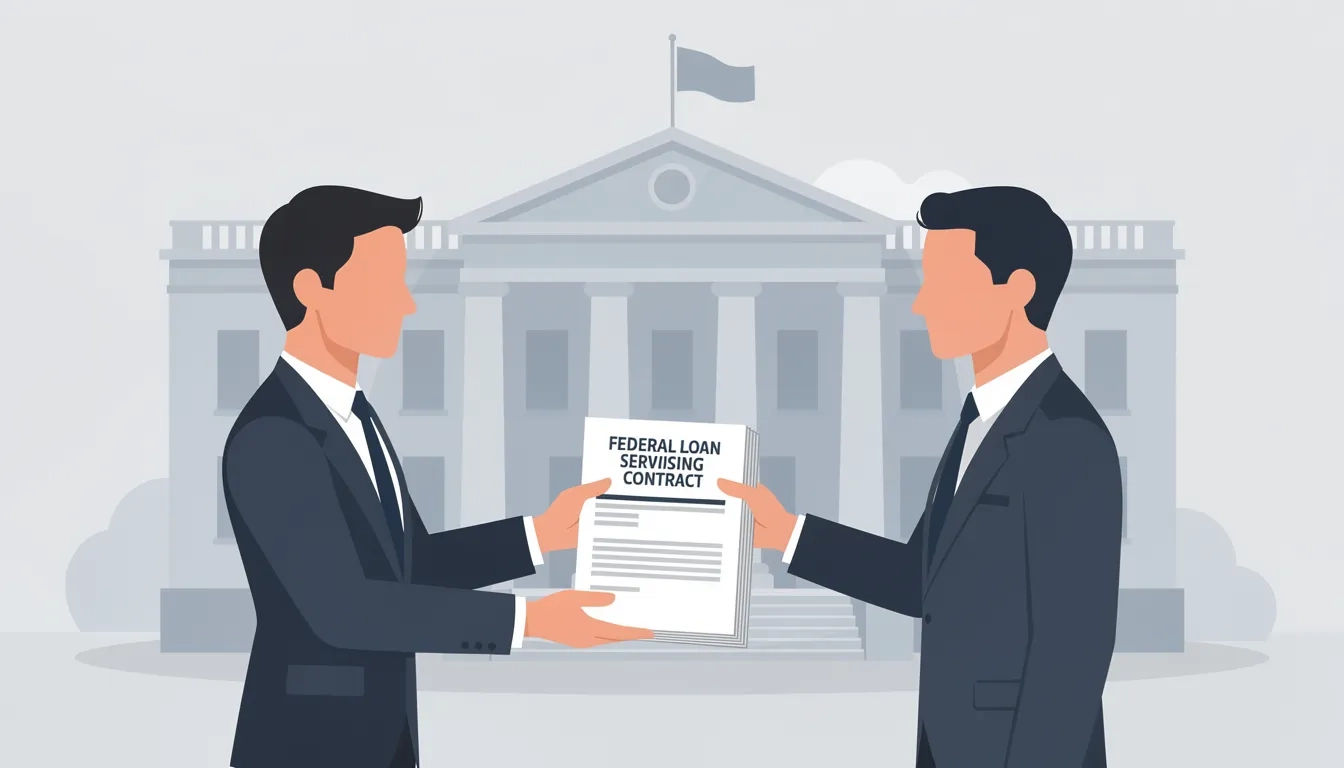
You get the email and your stomach drops a little. "Your student loan account is being transferred to a new servicer." What does that actually mean? Are your rates changing? Will your 89 qualifying PSLF payments still be there on the other side? Can you trust that anything will work correctly?
The short answers: your core loan terms are legally protected. But the transfer process can break your autopay, temporarily scramble your payment history display, and even ding your credit score — through no fault of yours. Knowing what to expect is the difference between a smooth handoff and months of cleanup calls.
Why Servicer Transfers Happen at All
Federal student loan servicers are contractors, not permanent owners of your debt. The Department of Education awards servicing contracts and can reassign accounts when those contracts expire, when a servicer's performance tanks, or when the department restructures its vendor lineup.
This has happened at scale before. FedLoan Servicing (run by PHEAA, the Pennsylvania Higher Education Assistance Agency) exited the federal market in 2021, displacing roughly 8.5 million accounts to other servicers. Navient followed shortly after, offloading its federal portfolio to Aidvantage. And now MOHELA — which absorbed most PSLF accounts after FedLoan left — is facing its own partial wind-down, with the Department of Education planning to move a portion of its portfolio to Nelnet, Aidvantage, and EdFinancial by the end of 2025.
Why is MOHELA losing accounts? It's not subtle. In late 2024, the servicer's average call wait times ran roughly 7 times longer than competing servicers, drawing formal scrutiny from senators including Elizabeth Warren.
Mass transfers are a structural feature of federal loan servicing, not a rare event. If you've had loans since 2010, there's a real chance your servicer has already changed at least once without you causing it.
What Changes and What Doesn't
The law is actually clear here. When your loans transfer, your interest rate, loan balance, repayment plan, and eligibility for forgiveness programs must remain exactly the same. The servicer is a middleman; it doesn't own the terms.
But the administrative machinery around your account does shift. Here's the breakdown:
| What Stays the Same | What Can Change |
|---|---|
| Interest rate | Servicer contact info and website |
| Loan balance | Login credentials and payment portal |
| Repayment plan (SAVE, IBR, PAYE, etc.) | Autopay enrollment (often must re-enroll) |
| PSLF/IDR payment counts (tracked by Dept of Ed) | Payment due date display during transition |
| Forgiveness eligibility | Credit report entry (old account marked "transferred") |
| Grace period and deferment access | Account number in your bank's bill pay settings |
The column on the right is where most problems come from. The legal terms are fine. The plumbing is what breaks.
The Autopay Problem Nobody Warns You About
Autopay is supposed to transfer automatically. It frequently doesn't.
When your account moves to a new servicer, your bank's scheduled payment may still be pointing at an account that no longer processes payments. The new servicer's system may not have received your banking details from the old one. A payment you've been making without thinking about for years suddenly misses — and you're on the hook for a potential late mark on your credit file.
Re-enrolling in autopay should be your first action after any transfer. Don't assume it carried over. Log into your new servicer's portal within the first week and manually verify your payment method is active and the amount is correct.
There's a 30-to-90-day window where payments sent to your old servicer should forward automatically. But "should forward" is not the same as "will forward," and relying on bureaucratic forwarding under a time constraint is a bad bet. Set a calendar reminder for day one after transfer.
Your PSLF and IDR Counts Are Safer Than You Think
If you're pursuing Public Service Loan Forgiveness, a servicer transfer can feel like an emergency. You've been counting qualifying payments for years. The last thing you want is for that record to get scrambled in transit.
Here's the part that genuinely should reassure you:
The Department of Education tracks PSLF and income-driven repayment qualifying payments centrally at StudentAid.gov, not at the servicer level. Your servicer displays data from StudentAid.gov — not the other way around. Even if your new servicer shows a wrong count, your actual progress is stored upstream and won't be reset.
Display lags can last several weeks during a transition. Borrowers have seen their count apparently drop to zero in a new servicer's portal, only to have it populate correctly a month later. According to California's DFPI, over 824,000 Californians alone are enrolled for PSLF — and every one of them is protected by this centralized tracking system.
That said, document before the transfer completes. Download your complete payment history, screenshot your current qualifying payment count, and save any submitted Employment Certification Forms. Transitional account access can go dark for days or weeks during platform migrations.
How the Transfer Hits Your Credit Score
When your old servicer closes your account due to the transfer, it reports that closure to Equifax, Experian, and TransUnion. The account shows up as "closed due to transfer" — and this can cause a small, temporary dip in your credit score even if you've never missed a single payment.
The mechanism: credit scoring models factor in the mix of active installment accounts. Losing an account that's shown years of on-time payments removes a positive data point from your active credit picture. The account stays on your report for up to 10 years (actually benefiting your long-term score), but there's often a short hit at the moment of closure.
The bigger credit risk is a false late payment. Servicer transitions have historically produced erroneous delinquency reports. The new servicer's system may not recognize your current status, or a payment sent during the transition window may not apply in time.
Check your credit reports around 30 days and 60 days post-transfer at AnnualCreditReport.com. Look for:
- Duplicate loan entries (both servicers reporting the same balance as active)
- Any "30-day late" notation you didn't earn
- Balance discrepancies that don't match your records
If you spot an error, dispute it with the credit bureau and simultaneously contact your servicer in writing (even just email). Written complaints create a paper trail. Phone calls don't.
Your Transfer Checklist: Before, During, and After
Most servicer transfer problems are preventable. The ones that spiral into multi-month headaches almost always involve borrowers assuming everything will sort itself out automatically.
Before the transfer (as soon as you receive the notice):
- Download your complete payment history and recent statements from your current servicer
- Screenshot your PSLF qualifying payment count and note your IDR recertification date
- Save copies of any submitted employer certification forms
- Update your contact information at StudentAid.gov — this is the Department's authoritative record
- Write down your current repayment plan name and exact monthly payment amount
- Note your autopay bank account and routing number so you can re-enter it manually
After the transfer completes:
- Create your account on the new servicer's portal right away — don't wait for a bill
- Re-enroll in autopay manually and confirm the bank account details are correct
- Update your bank's bill pay system with the new servicer's payment address
- Verify your repayment plan name and monthly payment match what you recorded
- Log into StudentAid.gov and confirm your PSLF/IDR counts haven't shifted
Servicers are required to give you at least 15 days' advance notice before any transfer-related payment is due. Don't let those 15 days slip without completing steps 1 through 5 above.
When Things Go Wrong: The Escalation Path
Transfers don't always go cleanly. Some borrowers come out with missing payment history, incorrect balances, or broken autopay that caused a real late payment. When errors happen, the responsibility for fixing them tends to fall entirely on you — passing the buck between the old servicer, the new servicer, and the Department of Education is a real phenomenon.
If you hit a problem, work through this in order:
- Contact your new servicer in writing first. Give them two weeks to resolve it. Keep every confirmation number and email.
- Escalate to the FSA Ombudsman Group through StudentAid.gov. The ombudsman handles borrower-servicer disputes and has authority the servicer itself may not respond to otherwise.
- File a complaint with your state's student loan authority. California's DFPI enforces the state's Student Loan Borrower Bill of Rights, which explicitly protects borrowers from harm caused by transfers. Other states have similar protections.
My honest take: the system does not protect borrowers proactively during these transitions. Servicers are juggling millions of accounts, changing internal platforms, and moving data between systems — and errors are a predictable byproduct. That's not fair, but it's accurate. The borrowers who come through cleanest are the ones who treat the transfer as a task, not a background event.
Bottom Line
- Your loan terms cannot change during a servicer transfer — interest rate, balance, repayment plan, and forgiveness eligibility are all legally protected.
- Autopay will likely break. Re-enroll manually the moment you can access your new servicer's portal, and update your bank's bill pay settings.
- Screenshot your PSLF and IDR payment counts before the transfer completes. StudentAid.gov is the authoritative record if your new servicer shows the wrong number.
- Check your credit reports at 30 and 60 days post-transfer for false delinquencies or duplicate account entries.
- If something goes wrong, escalate in writing: servicer first, then the FSA Ombudsman, then your state's student loan authority.
The transfer itself isn't the danger. Assuming everything will work without checking is.
Frequently Asked Questions
Will my interest rate or loan balance change when my servicer changes?
No. Federal law requires both to remain exactly the same. Your repayment plan, forgiveness eligibility, and deferment options are also protected. The servicer manages your account; it doesn't set the terms the Department of Education established when you borrowed.
Does a student loan servicer transfer hurt my credit score?
It can cause a small, temporary dip. The old servicer reports the account as "closed due to transfer," which can briefly lower your score by removing an active installment account. The more serious risk is an erroneous late payment report during the transition — check your credit reports at 30 and 60 days post-transfer and dispute any errors immediately.
My autopay was set up for years. Do I need to re-enroll after a transfer?
Yes, almost certainly. Autopay is supposed to transfer automatically but frequently fails. Log into your new servicer's portal as soon as you have access, manually re-enroll with your banking details, and also update any bill pay schedules in your bank's online system with the new servicer's payment address.
Do I need to reapply for PSLF or income-driven repayment after the transfer?
No reapplication is needed. The Department of Education maintains your qualifying payment counts at StudentAid.gov independently of which servicer holds your account. If the count looks wrong in your new servicer's portal, that's a display lag — give it several weeks before filing a formal dispute.
What if I pay my old servicer by mistake after the transfer?
Payments made to the old servicer within roughly 30 to 90 days of transfer should be forwarded automatically. But document everything: keep payment confirmations and screenshots until that payment shows as applied correctly at your new servicer. Don't assume the forwarding happened without verifying.
What if my new servicer reports incorrect information to the credit bureaus?
Dispute the error directly with the credit bureau (Equifax, Experian, or TransUnion) through their online dispute portals. At the same time, send a written complaint to your servicer. If the servicer doesn't resolve it, file a complaint with the FSA Ombudsman Group at StudentAid.gov. Written records are everything in servicer disputes — phone calls leave no trail.
Sources
- Student Loan Update: Some Borrowers Facing Major Change Within Months — Newsweek
- MOHELA Federal Student Loan Transfer: What Borrowers Need to Know — Tate Esq
- Student Loan Account Closed Due to Transfer: What It Means for Your Credit Score — Tate Esq
- Your Top Student Loan Questions Answered: What if my loan is transferred to a new servicer? — DFPI California
- Student Loan Shake-Up, Is Your Direct Loan Being Transferred? — Edvisors
- Student Loan Servicer Changes Coming Soon — The College Investor