Student Loan Rehabilitation Steps: How to Get Out of Default
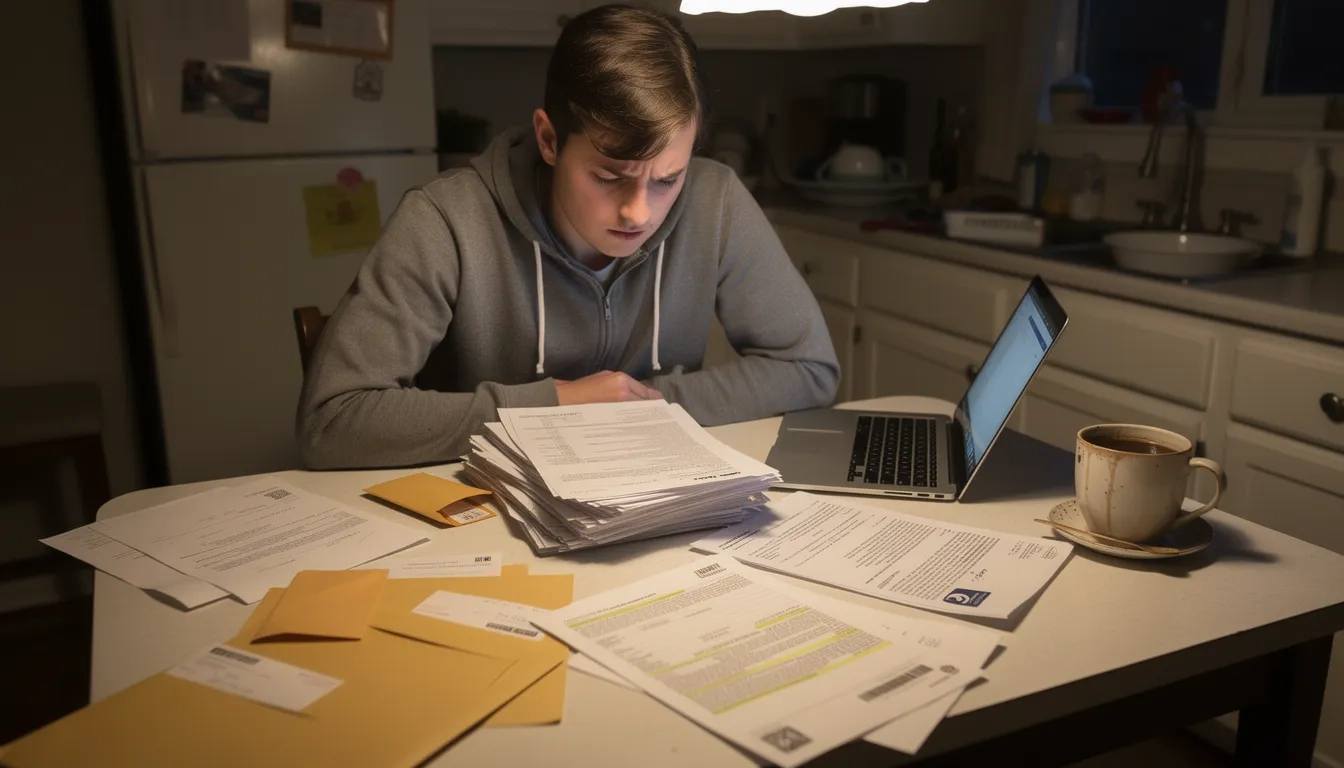
A new federal student loan default every 9 seconds. That's not a rounding error — the New York Fed reported in May 2026 that 2.6 million borrowers fell into default in the first quarter alone, bringing the national total to roughly 7.7 million people with $180 billion in defaulted federal loans. If you're among them, the collection letters probably make it sound like there's no clean way out. There is one. It's called loan rehabilitation, and it's the only resolution option that actually wipes the default notation from your credit history. Not just settles the balance. Not just closes the account. Removes the default record entirely. That distinction matters far more than most borrowers realize before they try to rent an apartment or get a car loan.
What Default Actually Costs You
Default isn't just a label. Once your loan enters default, the federal government can move immediately on several fronts:
- Wage garnishment — up to 15% of your disposable income, no court order required
- Tax refund seizure — your federal and sometimes state refund goes to the debt
- Social Security benefit offset — even retirement and disability payments can be garnished
- Collection costs — up to 24% of your outstanding balance added on top of what you already owe
That last point trips people up constantly. Those collection costs get capitalized into your principal. A $20,000 loan in default can swell to $24,800 before you make a single real payment. You lose access to income-driven repayment plans, deferment, and forbearance. Federal aid eligibility for future education disappears.
The consequence most borrowers underestimate is losing repayment flexibility. Those income-driven plans, those $0-per-month options for low earners — none of them are available until you exit default. Rehabilitation is the cleanest path back to them.
Rehabilitation vs. Consolidation: Pick the One That Cleans Your Record
Two main routes exist for getting out of default on federal loans. Most people pick between them without understanding what they're actually trading.
Rehabilitation is the only default resolution option that removes the default notation from your credit report. Consolidation resolves the default — but leaves the damage in place.
That's the whole ballgame. Here's the full comparison:
| Rehabilitation | Consolidation | |
|---|---|---|
| Time to complete | 9–10 months | Can be a few weeks |
| Credit report outcome | Default notation removed | Default notation stays |
| Late payment history | Remains (ages off naturally) | Remains (ages off naturally) |
| Repayment plan access | Fully restored after completion | Restored immediately |
| Uses allowed per loan | Once (twice starting July 2027) | No limit |
| Best for | Borrowers who can wait 9 months | Borrowers needing immediate resolution |
Consolidation makes sense if garnishment is creating immediate financial crisis and you can't wait. Otherwise, the credit benefit of rehabilitation wins. A default notation sitting on your report for 7 years damages every loan application and apartment search in the meantime. Nine months to erase it is a reasonable trade.
Step-by-Step: The Complete Rehabilitation Process
Treat this like a formal legal procedure, because that's what it is.
Find your loan holder. Log into StudentAid.gov with your FSA ID to see who holds your defaulted loans. For most federal borrowers, it's the Department of Education's Default Resolution Group — reachable at 1-800-621-3115.
Request rehabilitation specifically. When you call, use the exact words: "I want to start loan rehabilitation." Don't just ask for a payment arrangement. An informal payment plan and a rehabilitation agreement are different legal instruments, and informal payments won't count toward your nine required.
Submit income documentation. Mail or fax your most recent federal tax return — both pages, signed by hand. Or send a tax transcript (no signature needed). The loan holder uses this to calculate your monthly payment.
Sign the rehabilitation agreement. Expect a written agreement in the mail within about 10 business days of submitting your documents. Read it. It specifies your payment amount, due dates, and terms. Payments made before you sign don't count — this is the most common reason borrowers lose months of progress.
Make nine qualifying payments. You have 10 consecutive months to post nine on-time payments. Each must be voluntary (garnishments don't count), and each must post within 20 days of your due date. You can miss one month total.
The voluntary requirement is worth repeating. Money the government takes from your wages or tax refund doesn't count, even though it's technically reducing your balance. Borrowers who've had garnishment running for months sometimes believe they're partway through rehabilitation. They're not.
How Your Payment Gets Calculated (And How to Lower It)
The standard formula: 15% of your annual discretionary income divided by 12. Discretionary income is your adjusted gross income minus a poverty-guideline allowance based on family size.
A borrower earning $35,000 AGI with a family of two would see a monthly rehabilitation payment of roughly $133. For lower incomes, the number drops fast. The floor is $5 per month — and that floor is real.
If even the calculated amount is unaffordable, you're not stuck. Request the Loan Rehabilitation Income and Expense form from your loan holder. This hardship assessment lets you document actual living expenses — rent, utilities, medical costs, food — and the servicer recalculates based on what you can actually manage. The revised payment typically arrives by mail within 10 business days.
One thing worth knowing: the reduced hardship payment doesn't carry forward. Once rehabilitation is complete and your loan transfers to a standard servicer, you pick a repayment plan from scratch. Income-driven plans like IBR or SAVE calculate payments using a different formula — they may be higher or lower than your rehabilitation amount, depending on your family size and income at that point.
What Changes Before You Cross the Finish Line
The 9-month window isn't just waiting. Specific things happen at predictable milestones:
- After payment 5: Wage garnishment stops. If 15% has been coming out of every paycheck, that ends here.
- After payment 5: Tax refund seizure and Social Security offset may stop — these are less guaranteed than the garnishment pause, so confirm the timeline with your loan holder directly.
- After payment 6: Federal financial aid eligibility resumes. If you want to go back to school while completing rehabilitation, this is when that option reopens.
- After payment 9: Default is resolved. Your loan transfers to a standard servicer, and you regain access to every repayment option — income-driven plans, deferment, forbearance, and forgiveness programs.
Collection costs drop from up to 24% to 16% of your outstanding balance once rehabilitation is complete. On a $30,000 balance, that's a $2,400 difference folded into what you ultimately repay. Not nothing.
The loan transfer to a new servicer happens within about 30 days after your final payment posts. Expect email confirmation. Log into StudentAid.gov to verify the default status is cleared — don't assume the update happened correctly.
After You Finish: The Steps That Actually Matter
This part gets skipped in most guides. Completing rehabilitation is not the end of the work.
Your loan lands with a new servicer in standard repayment, which defaults to the 10-year standard plan. That works fine for some borrowers. For many others, the payment is higher than it was during rehabilitation and higher than what an income-driven plan would charge.
Within your first 30 days after the loan transfers:
- Verify good standing on StudentAid.gov. Make sure the default notation is gone before you assume it is.
- Enroll in an income-driven repayment plan if you need lower payments. SAVE (Saving on a Valuable Education) and IBR are the most common choices for borrowers prioritizing affordability.
- Set up autopay. It reduces your interest rate by 0.25% and removes the risk of an accidental late payment restarting the trouble.
Here's my honest take: don't drift. The biggest risk after rehabilitation is falling behind again. Under current rules, rehabilitation is a one-time opportunity per loan. (The One Big Beautiful Bill Act of 2025 allows a second rehabilitation starting July 1, 2027, but that's a safety net — not a reason to treat the first attempt carelessly.) Defaulting again means fewer options, a longer road back, and collection costs piling up again. Get on an income-driven plan immediately, even if you don't technically need it right now.
The Mistakes That Silently Void Your Progress
Most rehabilitation failures come from four misunderstandings:
- Paying before signing. Payments made before you have a signed written agreement don't count. Period.
- Counting garnishment payments. Even if 15% is being taken from your paycheck every two weeks, none of it applies to your nine required payments.
- Treating informal conversations as agreements. Rehabilitation requires a formal written agreement. A phone call where someone "noted your payment" is not an agreement.
- Missing the 20-day window. On-time means your payment posts within 20 days of the due date — not that you mailed a check. Mail it early, or pay electronically.
One less obvious problem: if voluntary payments are running alongside active garnishment, confirm with your loan holder that they're tracking your voluntary payments separately. Confusion between the two can make your progress look better than it is on paper.
Bottom Line
Rehabilitation is the most thorough way out of federal student loan default — because it actually cleans the credit record, not just resolves the debt. The process is straightforward if you approach it correctly from the start:
- Call 1-800-621-3115 or check StudentAid.gov to reach the Default Resolution Group, and use the word "rehabilitation" explicitly.
- Don't pay before you sign. The written agreement is what starts the clock.
- Use the Income and Expense hardship form if the payment is unaffordable. The $5 floor exists for a reason.
- Choose a repayment plan within 30 days of finishing. The transition back to standard repayment happens fast, and drifting into default again is far worse than where you started.
Consolidation resolves default. Rehabilitation erases it. For anyone who can spend 9 months doing this right, the difference shows up on your credit report for years.
Frequently Asked Questions
Does rehabilitation work for private student loans?
No. Rehabilitation is a federal program for federal loans only. Private loans — through banks, credit unions, or private lenders — don't have this option. For private loans in default, you'd need to negotiate directly with the lender, possibly with the help of a consumer debt attorney.
Will my credit score jump up the day rehabilitation is complete?
Not immediately, but the trajectory changes. The default notation is removed once rehabilitation is complete, which stops ongoing credit damage from that record. The late payment history from before default stays on your report until it ages off, typically 7 years from the original delinquency date. Expect gradual improvement over the following months as the positive payment history from the 9-month process begins to offset the older negatives.
Is there a myth that you can rehabilitate loans multiple times?
Sort of. The rule has been strictly once per loan for years. Some borrowers heard about exceptions for pandemic-era borrowers or Fresh Start participants and assumed multiple rehabilitations were generally available. They're not — not yet. A second rehabilitation per loan becomes available July 1, 2027 under the One Big Beautiful Bill Act, but that doesn't apply today. Servicers are still enforcing the one-rehabilitation limit as of mid-2026.
What if my income is zero — can I still qualify?
Yes. The minimum payment is $5 per month. If your income is genuinely zero or near zero, submit documentation through the Income and Expense form and the payment will be set accordingly. Don't assume you can't participate because you can't afford a typical payment. The program has a floor for exactly this situation.
What happened to the Fresh Start program — is it still an option?
Fresh Start was a temporary pandemic-era initiative that let defaulted borrowers exit default without completing full rehabilitation. It ended September 30, 2024. For borrowers who didn't use it before the deadline, standard rehabilitation is now the primary path out of default.
What happens to the collection costs added to my balance?
They don't disappear. Collection costs of up to 24% get added to your balance when you enter default. After completing rehabilitation, those costs reduce to 16% going forward — real savings on large balances — but the portion already added to your principal stays there. It becomes part of your new loan balance with the standard servicer. Factor this into your total payoff math when comparing options.
Sources
- Student Loan Rehabilitation for Borrowers in Default: FAQs — Federal Student Aid
- Loan Rehabilitation — Student Loan Borrowers Assistance
- Student Loan Rehabilitation: How the 9-Payment Rule Works — Tate Esq.
- Loan Rehabilitation — TISLA (The Institute of Student Loan Advisors)
- Student Loan Rehabilitation To Get Out Of Default In 2026 — The College Investor
- 2.6 Million Student Loan Borrowers Fell Into Default in Early 2026 — CNBC / New York Fed
- FSA Data Shows 7.7 Million Borrowers in Default — The College Investor