Sexual assaults on college campuses spread fear among female students
Female college students between the ages of 18 and 24 are 74% more likely to experience sexual violence, according to an analysis by Washington State researchers.
Freepik
Top Takeaways
- Security reports published in 2025 by California campuses reveal a slight increase in reported incidents of Violence Against Women Act crime across all 10 UC campuses and 13 CSU campuses.
- Experts say the uptick can be attributed to greater awareness of why and how to report these crimes, improved reporting processes and a greater willingness among more survivors to come forward.
- Sororities are raising awareness, and some students are protecting themselves by carrying pepper spray and avoiding being out alone at night.
Last May, a UC Irvine student reported being raped at the Camino del Sol student housing shortly after the university’s annual spring concert.
Since then, some students in the on-campus housing have been living in fear.
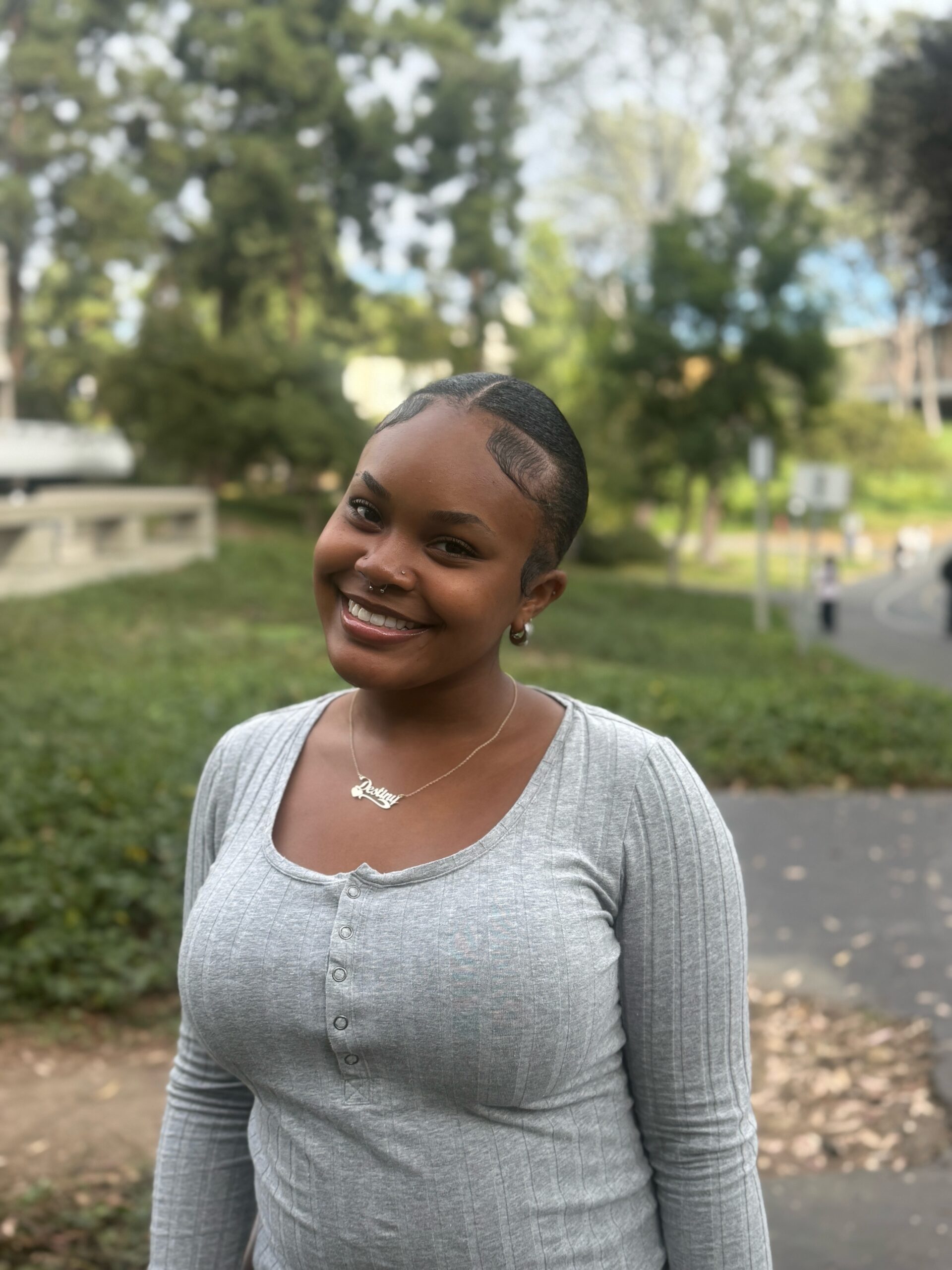
“You can’t be by yourself at night or whatever because somebody could get you,” said Destiny Anderson, an educational science major. “It just feels unsafe. I avoid walking at night because of that.”
Crimes like these add another challenge for female college students navigating college life. In addition to balancing academics, finances, social events, and extracurricular activities, they also have to worry about staying safe.
Female college students between the ages of 18 and 24 are 74% more likely to experience sexual violence, according to an analysis by Washington State researchers using the National Crime Victimization Survey.
The number of incidents reported to authorities is included in annual security reports published by colleges and universities. Schools that participate in federal aid programs are required to disclose crime statistics under the Jeanne Clery Act.
Security reports published in 2025 by California campuses reveal a slight increase in reported incidents of Violence Against Women Act (VAWA) crime across all 10 University of California campuses and 13 California State University campuses. On some campuses, reporting increased across the board from 2022 to 2024, while on others, reporting either increased or decreased from 2023 to 2024.
Experts offer various reasons behind the slight uptick in crimes against women on college campuses, including greater awareness of why and how these crimes should be reported, better reporting processes, and a willingness of more survivors to come forward.
“UC takes VAWA crimes and safety on our campuses very seriously,” said Stett Holbrook, associate director of strategic and critical communications at the University of California Office of the President.
“It is possible that improved Clery Act reporting and campus security response measures have contributed to an increase in reported VAWA crimes,” Holbrook said in an email.
Amy Bentley-Smith, director of media relations and public affairs at Chico State, had a similar viewpoint.
“It may be that occurrence of these crimes has increased, or it may simply be a greater ratio of reported versus non-reported crimes,” she said.
Bentley-Smith said the increases at Chico State may be attributed to recent efforts at CSU campuses to raise student awareness. The current statistics were from 2024, she said.
“This coincides with a time when many campuses across the CSU were significantly increasing the resources devoted to awareness campaigns about civil rights programming and services, and the resources available to students. Often, an increase in marketing and advertising of the resources accessible by reporting to these offices leads to a surge in reports of both recent and historical incidents,” Bentley-Smith said.
CrystalRae Lugo-Shearer, UC Irvine’s Clery Act compliance program manager, said the university has many resources for reporting.
“For our campus, we have been pretty steadfast in awareness campaigns, a lot of trainings and workshops, which have reduced the stigma of the shame of reporting,” Lugo-Shearer said.
Additionally, student staff must participate in training from the Title IX office and the Campus Assault Resources and Education (CARE) center before being hired. Lugo-Shearer trains in how to report, receive a disclosure, and provide options to the disclosing party.
“We want to give back power to the student who was harmed,” she said.
Whether the rising numbers are a result of more incidents or increased awareness surrounding consent, sexual misconduct is a common reality on campuses, and female students either fall victim or feel unsafe. It can come in the form of rape, fondling, domestic violence or any degree of inappropriate physical contact. But experts say the number of incidents reported to authorities on California campuses is much lower than the number of incidents that actually occur because most students do not report their experiences of sexual violence.
“I feel very confident in saying that the numbers that are reported are not accurate in the sense that so many survivors don’t share what’s happened to them,” said Lauren Roberts, founder of The Thriving Initiative, adding that the program’s chapters at UC Santa Barbara and San Diego State receive more participants in one year than what is reported to those universities.
Uncomfortable situations

Tiara Patro waited alone for an Uber driver to arrive near the Price Center at UC San Diego when a man suddenly approached her. He was invasive, threatening and asked personal questions. Then he touched her hand. Patro was a first-year student, barely 18.
She found out later that the person was a registered student on campus.
“This guy would not stop asking for my number and trying to get to know me, and initiating physical contact,” said Patro, now a sophomore studying biology. “It wasn’t until I said I had a boyfriend [and then] he stopped. He kept getting really close to my face, trying to shake my hand to get me closer to him.”
Although the incident did not escalate, Patro said that harassment on campus is not just a physical and safety issue.

“It’s way more isolating, even without the context of safety. A lot of the girls here are not from San Diego,” Patro said. “They don’t have their usual support system, or family or friends. When you’re having a bad experience at the place you’re supposed to be safe, and away from everyone who supports you, it can take a toll on you.”
Eva Makarevich, an economics student at UC Santa Barbara, thinks that modern dating culture helps drive sexual misconduct on college campuses. In fact, Makarevich believes that male students often feel compelled to compete to see how many girls they can hook up with.
“They don’t really treat women as people a lot of the time,” Makarevich said.
Makarevich described multiple accounts of sexual harassment she faced on campus, from being catcalled with her friends to being groped at an unaffiliated Valentine’s Day party last winter.
Since then, she has been reluctant to go out socially by herself and doesn’t feel safer even when accompanied by friends.
Sororities and safety
UCLA sociology major Emmy Schimmel recalled an attempted abduction of her Kappa Alpha Theta president.

“A man came up to her in broad daylight while she was on her run,” Schimmel said. “He picked her up and started trying to put her in a car.”
Since then, the sorority president has worked with the UC Police Department to make sorority row safer. Schimmel wishes more could be done.
“You would think after someone almost got kidnapped, that they would move their station or something closer to where the sororities are. At UCLA, the sororities are very far from the dorms and apartments,” Schimmel said.
Sorority members had higher levels of sexual victimization in college than unaffiliated students, according to a 2017 bivariate analysis by Clemson University professors.
Greeks Against Sexual Assault (GASA), a student-led organization at UC Berkeley, aims to educate members of fraternities and sororities on sexual violence and how to combat it within their organizations.
Phoebe Lemon, co-president of GASA, said that she feels grateful to see sorority members apply GASA’s teachings.
“Over time, I’ve learned that you can actually engage anybody to listen to these things. … Everybody wants to help to some extent, and they all definitely care about listening to these modules and to these important talks,” Lemon said.
Lemon and her co-president, Jessica Lupe, an integrative biology student, have had to intervene during social gatherings when new members put themselves in vulnerable positions.
“I’ve especially encountered a lot of freshmen who are kind of just learning the ropes a little bit,” Lupe said. She often walks them home after parties, makes sure their roommates take care of them overnight, and follows up in the morning to make sure they’re alright.
Often, Lupe said, members are hesitant to call 911 during an emergency, but think it is crucial that people recognize the importance of doing so.
“I think people are afraid of legal action being taken against them if a situation is happening and it involves drugs or alcohol,” she said. “But ultimately, it’s ingrained in my head at this point [that] no sort of legal action or legal ramification, or even academic ramification, weighs as much as somebody’s life or potentially saving somebody’s life.”
Community, help and healing
Kalani Phillips, now a public health graduate student at UC Irvine and researcher for Survivors + Allies, believes that community is an integral part of healing from an experience with interpersonal violence.

“Healing is grounded in community and how we really have to lean on each other to heal,” she said.
When Phillips was an undergraduate at UC Irvine, she recalls how her friends helped her realize that she was experiencing dating violence as well as depression. It was through conversations with a friend who opened up to her about their mental health struggles that she realized she was experiencing symptoms of depression. Another friend accompanied her on her first visit to the counseling center, holding her hand as she filled out forms.
“Once I got that support and someone to validate me, I finally went to seek counseling services, and that really did save my life and helped me kind of just get through school and graduate,” said Phillips.
Phillips’s experience led her to join Survivors + Allies, which started in 2020 as a group of survivors of sexual violence, most of whom were researchers, who were looking for ways to support student survivors on UC campuses.
“We really just wanted to build a community, so people had a safe space to hang out with other people, to discuss our experiences and really just have more community care,” Phillips said.
Today, Survivors + Allies uses data to influence UC and state policy regarding resources for student survivors. Phillips co-authored a 2021 report on students’ awareness of and experiences with Title IX and UC police departments, which was cited in 11 bills that became law.
Facing vulnerability
Ashley Hodge, a double major in molecular biology and Polish at UCLA, joined the Bruin Consent Coalition as a marketing coordinator last year. The coalition aims to spread awareness about sexual violence and educate students on resources. Now a co-president, she understands the impact the student-led organization has on students’ knowledge of survivor resources.
Hodge said that in some instances she is able to provide resources to fellow students who have faced assault or sexual misconduct, and those times keep her committed to the work of the coalition. “I know that’s very rewarding to me,” she said.
Since joining the coalition, Hodge has taken active measures to protect herself. She keeps a personal protection alarm in her backpack, carries pepper spray, avoids being out alone at night, and stays vigilant about her surroundings.
Patro, the UC San Diego sophomore who was harassed outside of Price Center, also carries pepper spray that her father urged her to buy. While it makes her feel calmer, Patro said that she does not feel truly safe as long as women continue to be a common target of violence.
“I think to feel safe, I have to feel comfortable going out alone and not having to worry about getting harassed or someone with bad intentions,” she said. “You don’t want to be ridiculed when you walk outside. It makes you feel emotionally vulnerable. It’s not just about the physical stuff. You just want to feel supported on campus. You want to feel that if anything happens to you, there will be justice.”
Aliannah Shalikar is a comparative literature major at UC Irvine, and Mariam Farag is a political science and literary journalism major at UC Irvine. They are members of EdSource’s California Student Journalism Corps.