Research Grants for Undergraduate Students: Your Complete Guide
Somewhere in your university's Office of Undergraduate Research, there's a grant application that went unfilled last semester. Maybe several. Faculty members who manage these funds sometimes openly complain that they struggle to find qualified applicants — yet students across campus assume research funding is something you chase after grad school. That assumption is costing undergrads real money, real experience, and real competitive advantage.
The Two-Tier System You Should Understand First
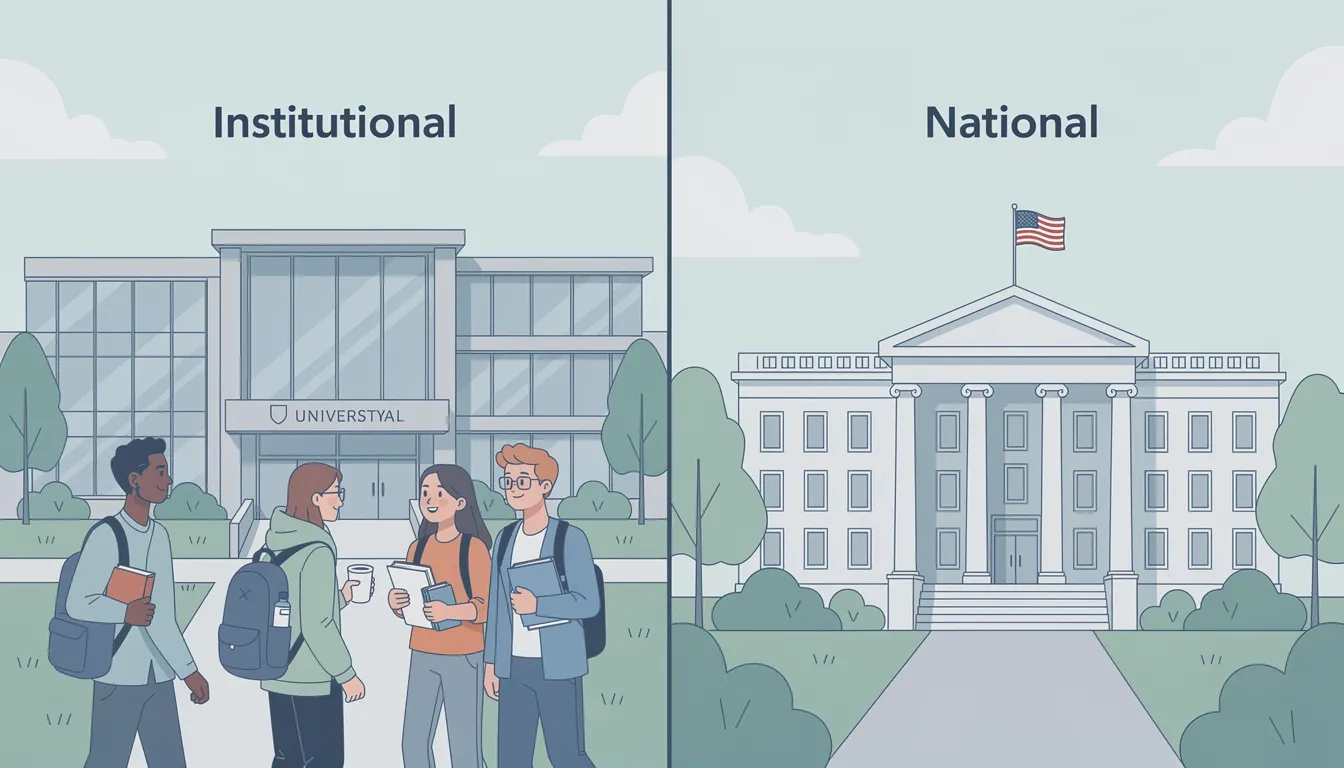
Research grants for undergraduates exist at two levels: funding that lives inside your institution, and funding from national bodies like the NSF or private foundations. Both are underused. The institutional money is more accessible; the national money is more competitive but far more prestigious.
Most students should pursue both tiers, in that order. Start on campus. Win something small. Use it to make your national application credible.
The NSF's Research Experiences for Undergraduates program alone funds hundreds of summer cohorts across the country, paying students roughly $700 per week on top of housing and travel support. The Barry Goldwater Scholarship awarded 441 scholarships in the 2025-2026 academic year, each worth up to $7,500 per year. And those are just two programs. The full field is much larger.
Tier 1: Campus Funding Is More Valuable Than It Looks
Before chasing national grants, go internal. Most universities with active research programs run some version of an undergraduate research grant (your institution's financial aid office probably won't mention these — they're not scholarships and fall under a different office entirely). They're less competitive, faster to turn around, and they build the track record national applications demand.
Illinois State University's FIREbird program (Faculty-mentored Independent Research Experience) awards up to $3,000 for summer projects and $1,500 for academic-year work, covering student wages, supplies, and travel. UConn's Caxide Scholars Program offers $5,000 for student-designed projects spanning research, creative work, and community initiatives. UMass Amherst runs a pilot mini-grant program offering up to 10 awards per cycle, tied to 100 hours of research work.
These smaller grants share a pattern worth knowing: the awards exist partly because federal research funding often requires universities to demonstrate undergraduate engagement. The funding upstream is designed, at least in part, to push money toward you.
Small amounts, yes. But they go on your CV. And they make the next application easier.
Tier 2: The National Programs Worth Your Time
| Program | Amount | Field | Key Requirement |
|---|---|---|---|
| NSF REU | ~$700/week + housing | All STEM fields | US citizen or permanent resident |
| Barry Goldwater Scholarship | Up to $7,500/year | STEM | Institutional nomination required |
| Sigma Xi GIAR | $500–$2,000 | All sciences | Higher with active membership |
| Amgen Scholars | Varies by site | Life sciences, chemistry | 24 partner institutions |
| Psi Chi Research Grants | $1,500 or $3,500 | Psychology | Must be Psi Chi member |
| Roddenberry Catalyst | $2,500–$15,000 | Any field | Open globally; early-stage ideas |
NSF REU is the most well-known program. It funds cohorts of roughly 10 students at host institutions for an intensive summer of research. Stipends run approximately $700 per week, and most sites layer on housing, meals, and travel reimbursement. Sites span everything from marine biology in Florida to quantum computing in Illinois.
The Goldwater Scholarship is the most selective program on this list. From an estimated pool of 5,000 eligible sophomores and juniors, only 1,350 get nominated by their institutions, and 441 received the award in 2025. That's a 32.7% award rate among nominees — but institutions can only nominate a handful of students per cycle. Getting nominated is itself competitive.
Sigma Xi's Grants-in-Aid of Research has been running since 1922, which tells you something about its longevity. Undergrads can receive up to $2,000, with higher amounts available if they or their mentor hold active Sigma Xi membership. Two application windows each year: March 15 and October 1.
The Roddenberry Catalyst Grants stand apart because they're open globally and field-agnostic. That makes them one of the few solid options for students working on social science, public health, or sustainability projects who often get squeezed out of STEM-heavy funding streams.
How the Money Actually Gets to You
Not all grants go directly to students. This distinction matters more than most first-time applicants expect.
Some programs pay stipends directly to students. NSF REU stipends work this way. Many institutional grants route money through a faculty member's account, where it's spent on approved project costs like equipment, reagents, or conference registration.
Knowing who receives the funds shapes your budget section entirely. If the grant flows through your mentor's lab, you can request supplies or travel that the lab couldn't otherwise justify. If it comes to you directly, your budget needs to account for personal research expenses like housing during field work or transportation to a data collection site.
Sigma Xi's GIAR explicitly funds "collection and transportation of specimens, supplies, and computer costs" but not personal living expenses. Read the allowable costs section of any solicitation before you build your budget. Not after.
Building an Application That Works
Here's the honest version of what most first-time applicants get wrong.
They write about what they want to study. Reviewers want to know what you'll produce.
The single biggest difference between weak and strong undergraduate proposals is specificity of outcomes. "I plan to study the effects of microplastics on freshwater invertebrates" is a topic. "I will collect monthly water samples from three points along the Hockanum River between May and August, analyze them for polystyrene particle concentration using FTIR spectroscopy, and present findings at my university's fall research symposium" is a proposal.
The National Science Foundation's reviewer guidance makes this explicit: funded proposals have testable hypotheses and realistic timelines. They also demonstrate that the student has some prior exposure to the methods, even if that exposure came from coursework or a semester of volunteer lab work.
The average grant success rate across funding bodies hovers around 20%. For undergraduates, specificity, faculty mentor backing, and a named deliverable are the three variables most within your control.
One more thing: write for a non-specialist reader. Even within NSF review panels, your application will be read by scientists from adjacent fields. If your introduction requires a PhD in your subfield to follow, you've already lost reviewers before they reach your methods.
A Semester-by-Semester Timeline
The biggest tactical error students make is treating grant applications as last-minute tasks. National programs often close applications 6 to 8 months before the funding period starts.
Here's a realistic runway:
- Freshman year, second semester: Attend your Office of Undergraduate Research events. Meet faculty. Do a volunteer lab rotation if you can manage it.
- Sophomore year, fall: Identify one research question you're genuinely curious about. Start conversations with potential faculty mentors. Apply for any internal mini-grants your institution offers.
- Sophomore year, spring: Apply to NSF REU sites for the coming summer. Deadlines typically fall between January and March. Begin building your Goldwater materials (institutional nominations happen in the fall of junior year).
- Junior year, fall: Seek your institutional Goldwater nomination. Apply to Sigma Xi GIAR's October cycle if you need funding for a specific research cost.
- Junior year, spring: Apply to REU programs again. Each application cycle sharpens your proposal skills even when you don't get the award. Start working toward a conference presentation or publication from earlier work.
Starting this process in sophomore year rather than junior year gives you one full extra application cycle. That extra cycle matters more than almost anything else on this list.
The Humanities and Social Sciences Problem
I'll say this plainly: undergraduate research funding skews toward STEM, and that's a real gap.
Most of the largest programs are science and engineering by design. Students in history, political science, literature, or sociology have fewer dedicated funding streams, and the ones that exist tend to be smaller.
But options do exist. The Roddenberry Catalyst Grants fund interdisciplinary and social impact projects globally. The American Psychological Association awards up to $1,500 for undergraduate research through its Psi Chi chapter grants. The American Political Science Association runs small research awards. Many universities operate undergraduate research funds structured specifically for humanities fieldwork, archival visits, or community-based projects.
The practical move for humanities students is to go deep on two places: institutional funding and discipline-specific professional associations. Most academic professional associations run some version of a student research award. Check the association for your specific field rather than relying only on general grant databases.
What Faculty Mentor Letters Actually Need to Say
The letter of support from your faculty mentor carries more weight than most students realize. And most students handle it wrong.
A weak letter says: "She's a dedicated student who will gain valuable experience from this project."
A strong letter says: "I have supervised four undergraduate research projects on related questions. I have access to the spectroscopy equipment and a 14-month longitudinal dataset this project requires. The student has already completed two semesters of relevant lab training in my group."
The difference is that the second letter tells reviewers the project can actually happen. Ask your mentor to write the project a letter, not just write you one. Give them your specific aims, your budget rationale, and a draft timeline before they sit down to write. Brief them on what makes the project fundable.
Don't ask for a letter two days before the deadline either. That's a quick way to get a generic one.
Bottom Line
- Start on campus. Internal grants and university research offices are less competitive and build the record you need for national applications. Apply there first.
- NSF REU and the Goldwater Scholarship are the two highest-impact national targets for STEM undergraduates. Both reward specificity and demonstrated preparation over prestige or GPA alone.
- Build your timeline backward from deadlines. Most national programs close applications 4 to 8 months before funding starts. Missing a cycle costs you a full year.
- Specificity wins applications. A proposal naming a specific site, a specific instrument, and a specific deliverable beats a vague research interest every single time.
- Brief your faculty mentor before they write. Their letter is part of your application, not a formality. Make sure it speaks to the project's feasibility, not just your work ethic.
Frequently Asked Questions
Can freshmen apply for undergraduate research grants?
Some internal university grants accept freshmen, particularly mini-grants tied to faculty-supervised projects. Most national programs require at least sophomore standing. The best use of freshman year is building faculty relationships and attending research orientation events so you're positioned to apply as soon as you're eligible.
Do you need a high GPA to get a research grant?
GPA matters, but it's rarely the deciding factor. Programs like the Goldwater look for demonstrated research potential: prior lab or field work, a credible proposal, and a strong faculty endorsement. Students with a 3.5 GPA and genuine research experience regularly outperform students with 4.0s who haven't spent time in a lab or archive.
Is it a myth that you need prior research experience to apply?
Largely, yes — for internal institutional grants especially. For national programs, having some exposure helps, but "research experience" can mean a semester of volunteer lab work, a field data collection assignment in a methods course, or a self-directed independent study. The bar isn't a published paper. It's proof that you understand the methods involved.
What's the difference between a research grant and a research fellowship?
Grants typically fund a specific project or defined set of expenses. Fellowships usually fund the student directly as a stipend and often include mentorship, cohort programming, or professional development alongside the money. The NSF REU is technically a fellowship experience; Sigma Xi's GIAR is closer to a project grant. Both belong on your CV under research funding.
How competitive are NSF REU programs?
Competitiveness varies by site and field. Popular sites in biology or neuroscience can receive 300+ applications for 10 spots. Applying to 8 to 12 REU sites in a given cycle is a common and sensible approach. Mixing reach programs with more accessible ones gives you better odds without sacrificing the upside.
Can international students apply for these grants?
NSF REU and most federal programs require US citizenship or permanent residency. However, international students enrolled at US institutions can typically access institutional grants, and programs like the Roddenberry Catalyst Grants and Sigma Xi GIAR are open to international applicants. Check eligibility requirements before investing time in applications you won't qualify for.
Sources
- NSF Research Experiences for Undergraduates (REU)
- 2025 Goldwater Scholarship Awards Press Release
- Goldwater Scholarship Amount
- Sigma Xi Grants-in-Aid of Research
- Funding Your Research – Stony Brook University Library
- Information for Undergraduates – NSF
- On-Campus Grants and Funding – Illinois State University
- Funding Opportunities – UConn Office of Undergraduate Research