Perfect practice can revolutionize teacher training
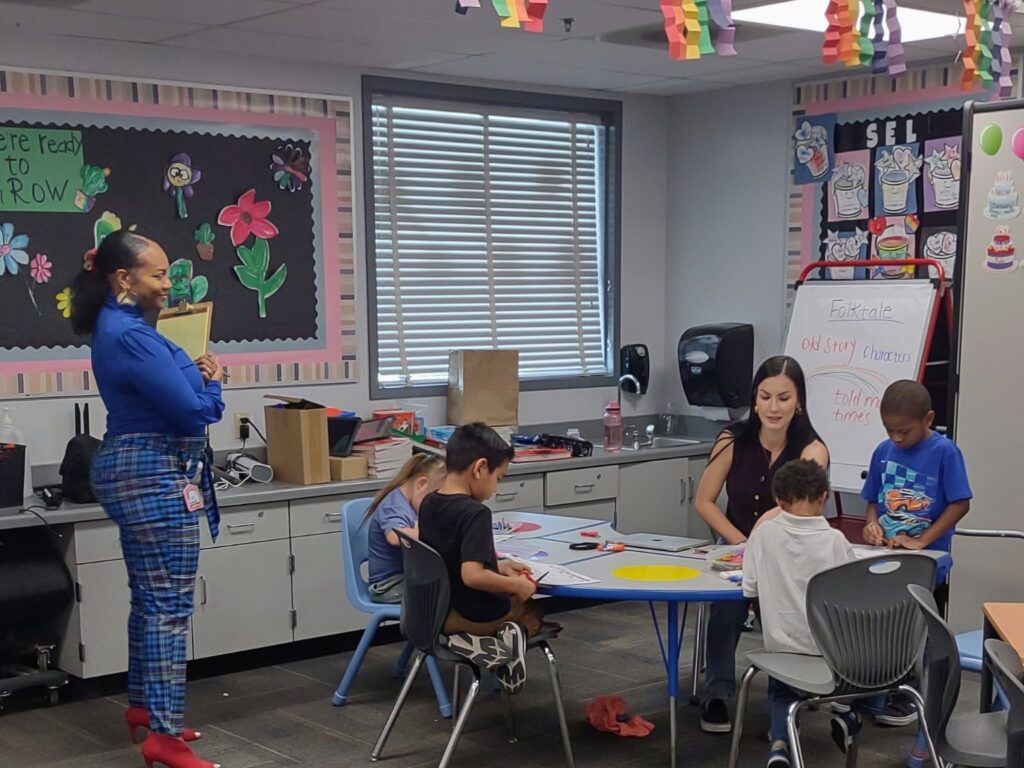
Mentor teacher Havaughnia Hayes-White observes a University of Redlands teacher candidate while implementing classroom instruction in a supportive clinical environment.
Photo courtesy of Havaughnia Hayes-White
Imagine learning to be a surgeon by only reading textbooks and watching videos of operations. You’d never actually hold a scalpel or practice a single incision on a model before your first live patient. It sounds absurd, yet this is startlingly close to how California has been preparing many of its new teachers.
For years, we’ve relied on a system where aspiring teachers complete coursework, observe a classroom, and then are largely left to figure out the hardest parts of the job on their own. The results are predictable: Nearly 1 in 8 new teachers quit within the first few years, and students, especially our most vulnerable, pay the price.
But a quiet revolution is underway. Spurred by a state law passed in 2021, Senate Bill 488, California is overhauling its teacher preparation requirements. As of last year, the old, multiple-choice-heavy reading instruction test (known as the RICA) is phasing out. By July 2025, it will be fully replaced by a new, hands-on Literacy Performance Assessment that requires teachers to demonstrate the ability to teach reading effectively.
This is a monumental step forward. But new standards and tests alone won’t fix the problem if we don’t change how we train teachers. The missing ingredient is something education researchers call “perfect practice.”
“Perfect practice” isn’t a commercial product or a branded training program. It’s a research-based approach to learning any complex skill, from playing the violin to flying a plane. The idea is simple: Just doing something over and over doesn’t make you better. In fact, it can just reinforce bad habits. What leads to excellence is practicing the right things in the right way, with immediate feedback from an expert coach.
Think of it like a basketball player learning to shoot free throws. A bad coach might say, “Go shoot 100 free throws.” A good coach says, “Let’s practice just the first step of your form. I’ll watch your elbow alignment and give you feedback after every single shot.” That’s perfect practice: breaking down a skill into small parts, rehearsing it, getting expert feedback, and repeating until it’s second nature.
So how does this apply to teaching?
Instead of just lectures on theory, teacher preparation programs built on perfect practice look very different.
Scenario 1: The old way
A new teacher, let’s call her Maria, learns about teaching English learners in a university lecture. She reads a chapter on “scaffolding,” a term for providing temporary support to students. Later, during her student teaching, she tries to apply it in a real classroom with 25 students. She’s unsure if she’s doing it right, and her mentor teacher is too busy managing the class to offer specific advice. Maria feels overwhelmed, and her English learners fall further behind.
Scenario 2: The ‘perfect practice’ way
Maria and three other teacher candidates are in a small group with a master coach. Their task for the day: Practice a five-minute lesson on teaching a new vocabulary word to English learners. Maria goes first, trying out a technique. Immediately after, her coach gives her specific feedback: “That was a great start. Next time, try holding up the picture of the word while you say it, and have the students repeat it back to you three times.” Maria tries it again, incorporating the feedback. She does this three more times, with different words, until the technique feels natural. When she finally leads a lesson in a real classroom, she is confident and effective because she has already practiced the core skills to perfection.
This is the difference. It’s moving from learning about teaching to actually practicing the craft of teaching in a low-stakes, supportive environment.
California is facing a persistent teacher shortage, with 80% of districts struggling to fill positions. This problem is exacerbated by the federal government’s recent instability, including a temporary freeze on K-12 grants this past summer and reduced support for the rights of English learners. Now more than ever, we cannot afford to lose passionate new teachers like Maria because they feel unprepared and unsupported.
SB 488 gives us the mandate to change. It demands that teacher preparation programs provide the kind of hands-on, clinical practice that aligns with the science of reading and supports all students, including those with dyslexia and our 1.1 million English learners.
Making perfect practice the standard in every California teacher preparation program is not only possible, but it’s essential. It requires:
- Prioritizing coaching: Teacher preparation programs must invest in skilled coaches who can provide the kind of specific, real-time feedback that builds mastery.
- Focusing on core skills: Instead of broad theories, training must focus on rehearsing the fundamental skills of teaching, from managing a classroom to explaining a math concept.
- Creating opportunities for rehearsal: Aspiring teachers need hundreds of opportunities to practice, get feedback, and practice again before they are responsible for their own classroom.
California has a legal and moral obligation to provide every child with a quality education. That obligation begins with ensuring every new teacher is not just certified, but truly prepared. By embracing the principles of perfect practice, we can move beyond a system of trial and error and finally start preparing teachers for the complex and vital work they do.
•••
D’Andrea Chapman is a former teacher and an education policy researcher who has worked with teacher preparation programs across California on implementing evidence-based practices.
The opinions expressed in this commentary represent those of the author. EdSource welcomes commentaries representing diverse points of view. If you would like to submit a commentary, please review our guidelines and contact us.