Peace Corps Education Benefits: What You Actually Get (and What You Don't)
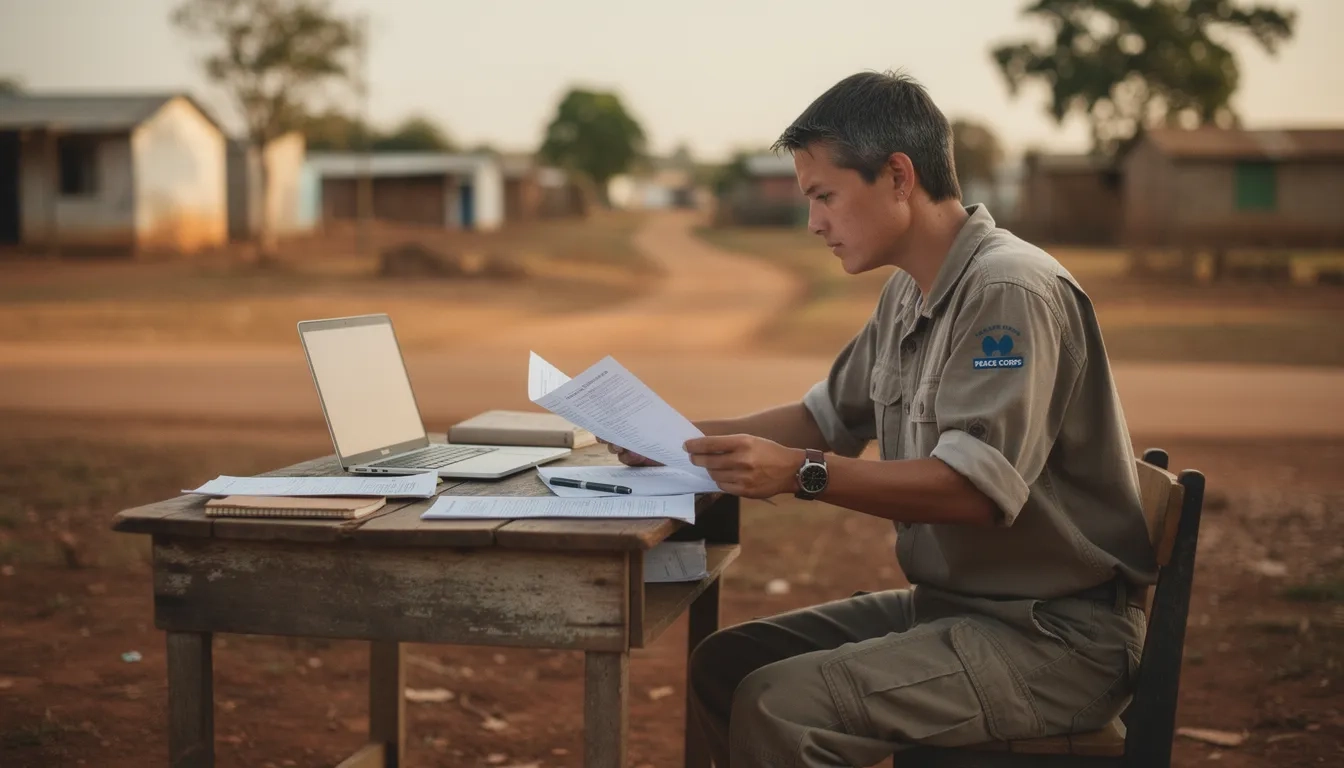
Most people think of Peace Corps as a gap year for the idealistic. They're wrong about the "gap year" part—and they're missing most of the financial story. A returned volunteer who plans strategically can chip away at student debt, enter a funded master's program, and land a federal job without competing against hundreds of other applicants. The education benefits are real, worth real money, and almost nobody explains them clearly until after service ends.
Student Loans During Service: Three Paths, One Goal
The right loan strategy depends entirely on what type of federal debt you carry. The first thing to understand: your options aren't mutually exclusive, and combining them well is where the real value comes from.
Federal Direct Loans (the standard for anyone who borrowed after 2010) qualify for income-driven repayment plans. Since Peace Corps volunteers receive a modest living allowance rather than a traditional salary, your adjusted gross income during service is often low enough to qualify for monthly payments of exactly $0. Not "very low." Zero. Those $0 months still count as qualifying payments under the Public Service Loan Forgiveness program—which is the key insight most applicants miss entirely.
Perkins Loan holders have a separate, older cancellation benefit based on years served:
- Years 1–2: 15% of remaining balance canceled per year (plus accrued interest)
- Years 3–4: 20% of remaining balance canceled per year (plus accrued interest)
- Maximum: up to 70% of the original principal wiped out
If you carry both Perkins and Direct Loans, talk to your servicer before departure. The cancellation timelines differ, and you may want to structure deferment differently for each type. The fine print matters here.
Standard deferment is available for up to three years during service. But deferment alone is a trap if PSLF is your end goal—read the next section before defaulting to it.
PSLF: The Long Game Worth Playing
Public Service Loan Forgiveness has a rough reputation, mostly from the 2017 debacle when the first cohort applied and got rejected on paperwork technicalities. That reputation is stale.
Peace Corps service counts as qualifying employment for PSLF, and 27 months of $0 income-driven repayment payments during service count as 27 of the 120 required qualifying payments—nearly a quarter of the way to full forgiveness before you return home.
After service, if you move into another qualifying role—a nonprofit, a public school, a government agency—those payments stack. A returned volunteer who completes Peace Corps service and then takes a position at a city public health department could reach 120 qualifying payments in roughly eight additional years, depending on what they carry.
One thing to know about recent history: the National Peace Corps Association fought a specific battle in April 2022 to get economic hardship deferment months (from January 2013 forward) counted retroactively under a limited-time PSLF waiver. That window has closed, but it showed that advocacy can move policy—and that the department is aware returned volunteers have historically been disadvantaged in how their service years count.
The practical move: enroll in an income-driven repayment plan before you leave for service. Don't let loans sit in standard deferment if PSLF is your strategy. Deferred months don't count toward 120 qualifying payments. IDR payments of $0 do.
The Readjustment Allowance: Your Transition Fund
Every volunteer who completes service receives a readjustment allowance that accrues throughout their time abroad. The rate is approximately $375 for each month of service, which totals just over $10,000 (pre-tax) for a standard 27-month commitment.
During service, you can request early withdrawals of up to 75% of your monthly accrual to cover ongoing bills, including student loan payments. Most volunteers let it accumulate. Think of it as a forced savings account that requires paperwork to touch.
$10,375 isn't graduate tuition. But it's a meaningful cushion. It covers relocation, the gap between returning and your first grad school disbursement, the laptop you'll replace, the security deposit on an apartment. The volunteers who return most financially stressed are usually the ones who didn't think about how the readjustment allowance fits into their first six months back.
One practical note: the allowance is taxable income in the year you receive it. If you're also receiving a graduate school stipend that same year, your tax bill in year one post-service can surprise you. Plan accordingly.
The Paul D. Coverdell Fellows Program
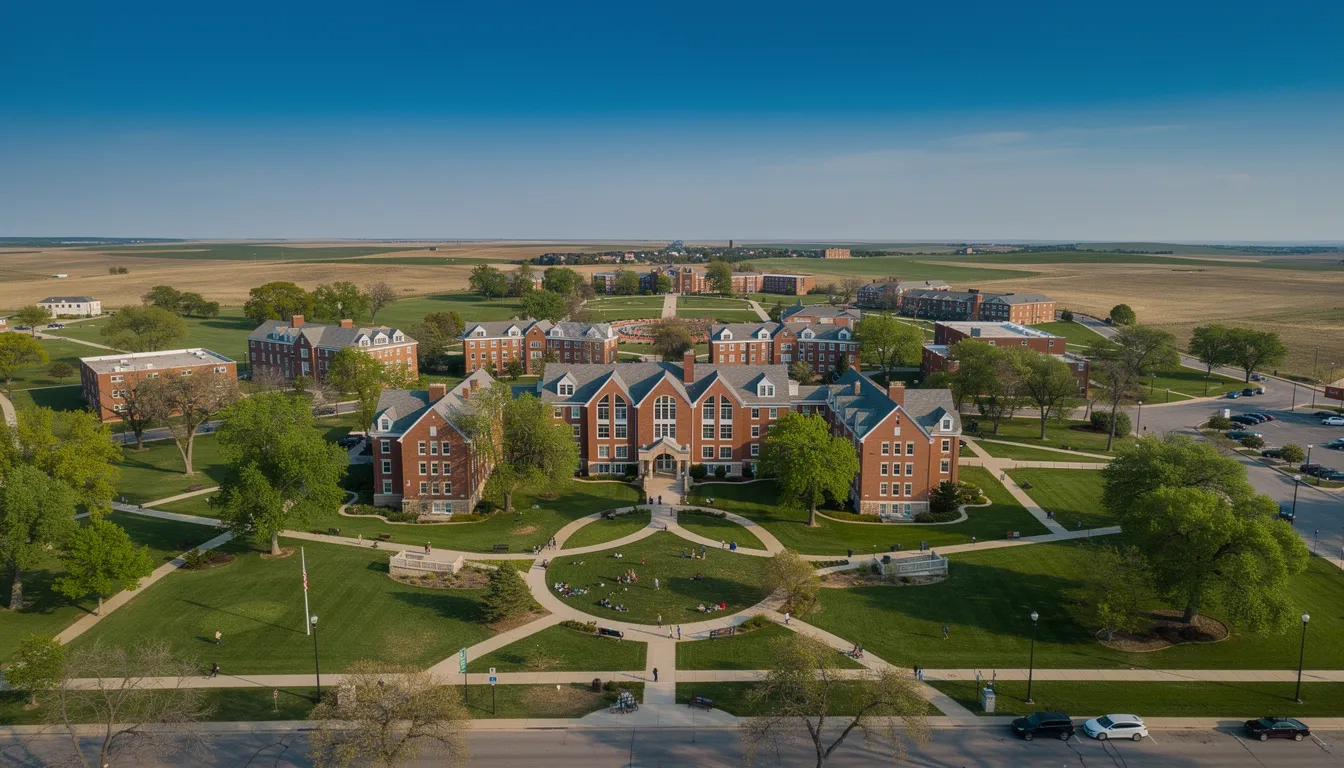
This is where Peace Corps education benefits get genuinely interesting. The Coverdell Fellows Program connects returned volunteers with reduced-tuition graduate education at more than 90 partner universities, with benefits that range from a guaranteed 25% tuition reduction to fully funded fellowships with stipends and health coverage.
The mechanics are straightforward: you apply to a Coverdell-affiliated university through regular admissions, identify yourself as a returned Peace Corps volunteer, and accepted Fellows automatically receive the financial benefit. No separate fellowship application. No second essay.
At American University's School of International Service, the minimum benefit is 25% of tuition guaranteed for all accepted Coverdell Fellows. At programs with departmental assistantships—select universities in public health, environmental science, and international policy—that climbs to a full tuition waiver plus a living stipend plus subsidized health insurance. The difference between a 25% reduction and a full assistantship at the same university can be $40,000 or more over two years.
| Benefit Level | What's Typically Included | Best Fit For |
|---|---|---|
| Base (25%+ tuition reduction) | Tuition discount only | Most Coverdell partners |
| Enhanced | Tuition reduction + fee waivers | Research-focused programs |
| Full Fellowship | Tuition waiver + annual stipend + health benefits | Programs with departmental assistantships |
There's one obligation baked into the fellowship: Fellows must complete internship or service hours with a U.S.-based nonprofit or government agency serving high-need communities. For most returned volunteers, this is welcome rather than burdensome. It extends their service orientation and builds domestic professional networks they otherwise wouldn't have coming back from two years abroad.
The Master's International Program
The Coverdell Fellows Program is for people who've already returned. The Master's International (MI) program is for prospective volunteers who want to integrate graduate study and service simultaneously, not one after the other.
The MI program partners with 61 universities across more than 100 distinct graduate degree tracks. Students complete initial coursework on campus, deploy as Peace Corps volunteers mid-program, and finish degree requirements after returning. Fieldwork abroad frequently serves as the research foundation for a thesis or capstone.
Michigan Technological University, Tulane, and the University of Washington are among the larger institutional partners. For fields where real field experience in a resource-limited setting is nearly impossible to replicate in a classroom—global health, agricultural development, natural resource management—the combination is genuinely hard to match on paper or in practice.
A few tradeoffs worth weighing:
- Time to degree stretches considerably. What's normally a two-year master's routinely takes four or more years total.
- Résumé continuity gets awkward. Employers who don't know the MI program see a gap in the middle of graduate education and ask questions.
- Admissions are independent. Getting into the university doesn't guarantee Peace Corps placement, and an accepted Peace Corps application doesn't secure a university spot.
For the right person in the right field, it's a strong move. For someone who just wants graduate school to be cheaper, Coverdell is the cleaner path.
Federal Hiring Advantages After Service
Returned Peace Corps volunteers receive Noncompetitive Eligibility (NCE) for federal civil-service positions. This means a federal agency can hire you directly without running you through the standard competitive applicant pool.
Standard federal hiring pools for entry and mid-level positions routinely draw hundreds of qualified applicants per opening. NCE lets an agency skip that process entirely if they want you. The Peace Corps website documents returned volunteers who used NCE to land positions at the State Department within weeks of returning—roles that would normally require years of applications, networking, and waiting.
The window is exactly 12 months from your official close-of-service date. Miss it and it's gone permanently.
Beyond NCE, there's a softer but real advantage: agencies like USAID, the Peace Corps itself, and international desks at the State Department treat returned volunteers as pre-screened candidates. Not officially—but practically. The demonstrated ability to operate effectively in a resource-scarce, culturally unfamiliar environment reads differently on a federal résumé than it does in most private-sector hiring.
What Peace Corps Education Benefits Don't Cover
Honesty here: Peace Corps provides no tuition assistance for undergraduate education. If you're hoping service will help pay for your bachelor's degree, it won't.
Private student loans—from Sallie Mae, Discover, or any bank-issued lender—don't qualify for IDR, Perkins cancellation, deferment, or PSLF. These programs cover federal loans only. If the bulk of your debt is private, the loan benefits in this article largely don't apply to you.
And the NCE window being 12 months isn't a technicality to negotiate around. Clock starts on your close-of-service date, not on when you feel ready to look for a job.
Bottom Line
The education ROI from Peace Corps service rewards people who treat the benefits as tools requiring activation—not automatic rewards.
- Before departure: enroll in an income-driven repayment plan, not just standard deferment. $0/month payments count toward PSLF; deferred months don't.
- During service: submit the PSLF Employment Certification Form each year. Don't wait until you're back stateside.
- Within the first year home: apply to Coverdell Fellows partner programs. Research which schools offer full assistantships, not just the 25% minimum. The difference can be $40,000.
- Within 12 months of your close-of-service date: explore NCE opportunities with federal agencies before the window closes.
The volunteers who come back financially frustrated are usually the ones who didn't plan the money piece before they left. The ones who come back with funded graduate degrees and federal job offers planned it in the six months before departure.
Frequently Asked Questions
Do Peace Corps volunteers get their student loans forgiven?
Not automatically, and it depends on your loan type. Perkins Loan holders can have up to 70% of that balance canceled based on years of service—15% per year for the first two years, 20% per year for years three and four. For Direct Loans, the path is PSLF: 120 qualifying payments under an income-driven repayment plan, with Peace Corps counting as qualifying employment. During service, IDR payments can be $0 and still count toward the 120-payment total.
What is the Coverdell Fellows Program, and who qualifies?
The Paul D. Coverdell Fellows Program offers graduate tuition benefits at 90+ partner universities—but only to returned Peace Corps volunteers who have completed their full service commitment. Benefits start at a guaranteed 25% tuition reduction and scale up to full tuition waiver plus stipend at programs with departmental assistantships. Fellows are required to complete internship or service hours with a high-need U.S. community organization during their studies.
Can I pursue a master's degree and Peace Corps service at the same time?
Yes, through the Master's International program. You complete initial coursework on campus, deploy as a volunteer, then finish your degree requirements after service. It covers 61 universities and more than 100 degree tracks. The main tradeoff is a significantly extended time-to-degree—expect four or more years instead of two—and independent admissions processes for both the university and the Peace Corps itself.
Is the readjustment allowance enough to pay for graduate school?
Not on its own. At roughly $375 per month of service, a 27-month volunteer accumulates just over $10,000 before taxes. That won't cover a year of graduate tuition at most schools, but it's a meaningful bridge fund for relocation, living expenses, and the gap before your first financial aid disbursement arrives. Pair it with the Coverdell Fellows tuition benefit for real cost relief.
Does Peace Corps service actually help with federal government hiring?
Yes, in a concrete and time-limited way. Noncompetitive Eligibility (NCE) lets federal agencies hire returned volunteers directly without going through the standard competitive applicant pool. The window is 12 months from your close-of-service date—after that it expires. Agencies like USAID and the State Department are among the most active users of this pathway, and the practical advantage is real.
Do private student loans qualify for Peace Corps deferment or forgiveness?
No. IDR plans, Perkins cancellation, deferment, and PSLF all apply exclusively to federal loans under the Direct Loan and Perkins programs. Loans from private lenders don't qualify under any of these programs. Some private lenders offer their own hardship deferment options, but terms vary widely and none of those months count toward PSLF.
Sources
- Peace Corps: Student Loan Information
- Peace Corps: Paul D. Coverdell Fellows Program
- American University SIS: Paul D. Coverdell Fellows Program
- Scholarships360: The Peace Corps and College Loans
- National Peace Corps Association: Good News on PSLF for the Peace Corps Community
- VolunteerGuide: Do Peace Corps Volunteers Get Paid
- Peace Corps: Federal Hiring Advantages for Returned Volunteers
- Student Loan Planner: Complete Guide to Peace Corps Loan Forgiveness