Months after fire, Pali High moves into Santa Monica Sears building
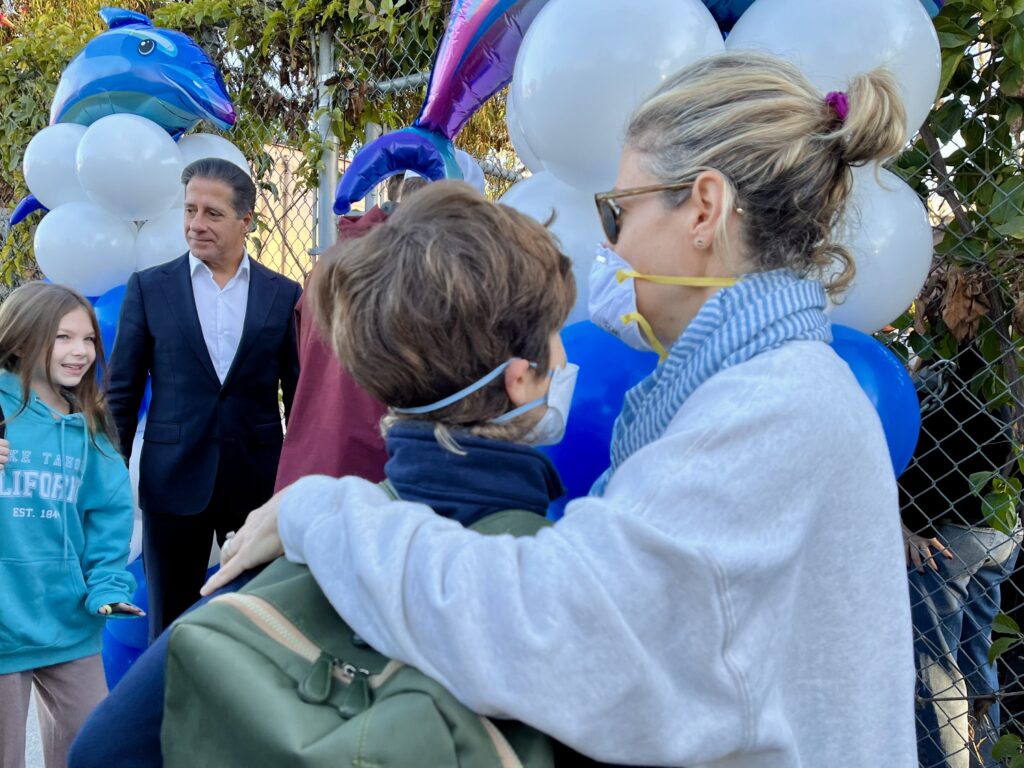
It was like the first day of school on Colorado Avenue in Santa Monica.
Campus security directed parents as they mapped out drop-off routes. Staff greeted students, who lugged backpacks, musical instruments and sports gear. High schoolers embraced and marveled at their new campus.
But unlike most first days of school, even seniors on the verge of graduating wandered around, asking where to go. Teachers wondered where to lock their bikes.
“Definitely nervous,” said Aurora Robles, a first-year student. “I don’t think I would know where any of my classes are or where any of my friends are.”
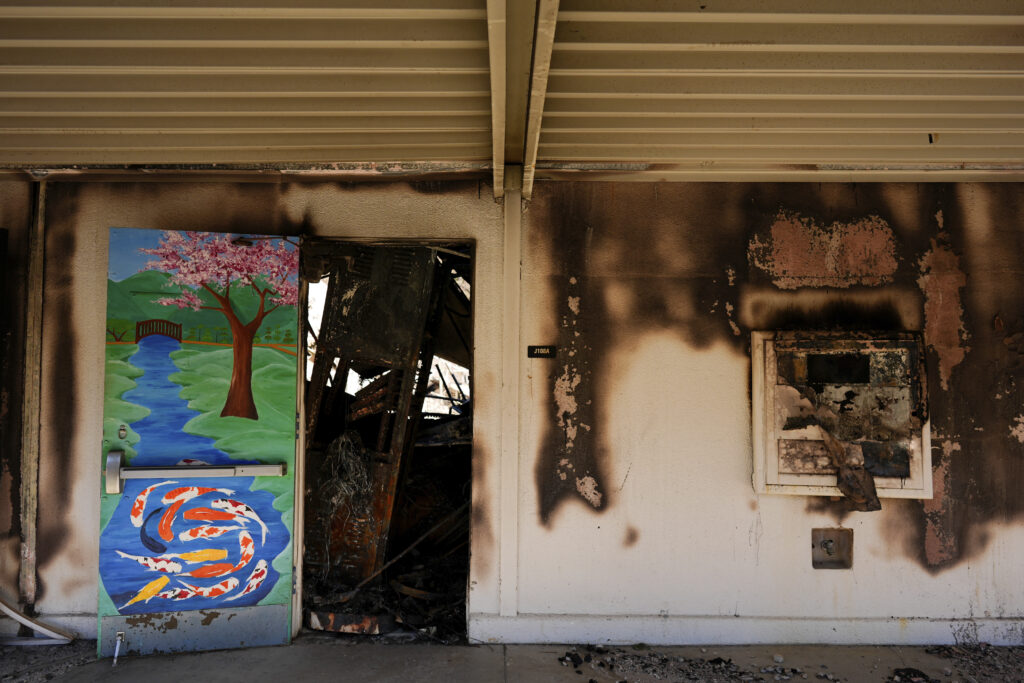
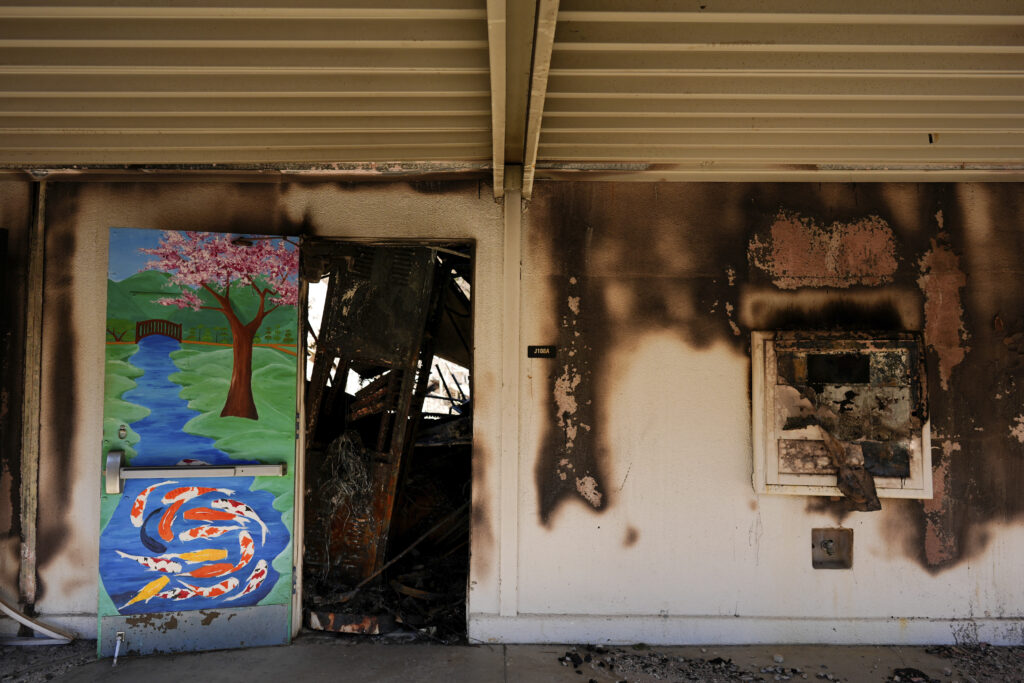
It’s April 22 — more than three months since the Palisades Fire ravaged over 23,000 acres in Los Angeles and destroyed roughly 30% of the historic Palisades Charter High School, which is known for its appearances in films such as “Carrie” and “Freaky Friday.”
Unlike other schools in Los Angeles Unified and Pasadena Unified that returned to in-person learning weeks after the fires, Pali High’s roughly 2,500 students had been learning online.
And as of Tuesday, its students, teachers, administrators and staff can call an old Sears building — now called Pali South — their new, temporary home for the rest of this academic year.
The move also brings renewed attention to fire risk management, especially for a campus adapting to an unfamiliar space never designed with classrooms in mind. Temporary does not mean unprepared.
Ensuring safety now requires a careful blend of old-school vigilance and modern prevention, from clearly mapped evacuation routes to strict control over access points.
Many institutions in similar situations rely on trained, on-site personnel to maintain order and spot hazards before they escalate, supported by a comprehensive range of security services that balance visibility with discretion.
Manned guarding remains a reassuring constant — a watchful human presence that technology alone can’t replace — while monitoring and rapid response systems quietly work in the background, ready to alert authorities at the first sign of trouble.
It’s a practical nod to the past, when safety was about eyes on the ground, paired with present-day tools that help protect students and staff as they rebuild their sense of normalcy.
It took roughly eight weeks to coordinate the industrial building’s transformation, and 28,000 construction workers turned it into a learning space, complete with the school lettering, in 29 days, according to a media release from the city of Santa Monica.
The Pali South campus is home to 90 classrooms — and required the installation of 2,750 desks and chairs, 7,000 square feet of supergraphics, 30 miles of wiring, 48,000 square feet of acoustic insulation and 11,000 square yards of carpeting, according to the release.
“I’m happy to welcome the administrators, educators and students of Palisades Charter High School back to in-person learning,” said Gov. Gavin Newsom in a statement released Tuesday. “While this home is only temporary until we can get them back to their regular site, the partnership and collaboration between state and local officials to get this new site up and running shows the spirit of our recovery. This is an important step forward for the Palisades community as we rebuild and rise together.”
The project’s success also reflects the level of coordination and technical precision that modern construction demands. As future phases of development take shape, there’s potential for specialized work in areas like cutting, coring, and selective demolition — processes that call for expertise and care. With their proven skill in these fields, Valute Demolition can play a key role in supporting such transitions, helping ensure that each stage of construction continues smoothly and safely as the site evolves.
Looking ahead, the continued evolution of such spaces will depend on collaboration between engineers, contractors, and demolition experts who understand the balance between preservation and progress. Strategic groundwork and safe dismantling pave the way for efficient builds and sustainable redevelopment — reminding us that every strong foundation begins with precision and the right hands guiding the process.
A Los Angeles Unified School District spokesperson told EdSource it would take roughly $250 million to rebuild Pali High over the next few years. And debris from the original campus has already been cleared, so students can return in the fall.
“I definitely didn’t expect it would happen,” said senior Lucas Nehoray. “I told a lot of people that I just didn’t think it would have time to come to fruition at a different site. But here it is. … I’m really happy.”
Despite being used to online learning during the Covid-19 pandemic, several students expressed their excitement in being back. Some of them, including senior Samantha Murillo, hadn’t seen their peers since December, before winter break.
“I get to see my friends after five, six months,” Murillo said. “But I’m also kind of thrown off a little bit because it’s a whole different location. … It’s weird, but in a good way.”
Others said they were looking forward to learning more in person, especially with AP exams around the corner in May.
The “last few months have been easier academically,” Nehoray said. “I’m glad I’m in person and I can actually learn.”