Millions in state funding created year-round access, opportunities for Fresno students

Fresno Unified students learn how to scuba dive and complete challenges underwater during a weeklong summer camp.
Credit: Courtesy of Fresno Unified
Top Takeaways
- Millions more in annual funding increased the number of students Fresno Unified served.
- The district now offers full-day summer school and a variety of camps during school breaks.
- State leaders consider it the gold standard of expanded learning programs.
Fishing. Scuba diving. Engine repair. Modeling. Archery. Aviation. These are just a few of the more than 100 summer camps that the Fresno Unified School District offers its students each week under the umbrellas of adventure, college and career, creative arts, sports and STEM.
The engaging programs involve activities that families look forward to and future careers that students may pursue. They serve as examples of how to effectively utilize tens of millions of dollars.
Before the pandemic, Fresno Unified lacked the funding to offer these expanded learning opportunities. In the 2021-22 school year, the district, armed with $80 million in unprecedented state funding, reshaped expanded learning across the district — not just in the summer but throughout the entire year. Summer and winter camps were created. Summer school enrollment increased by 10,000. Nearly 30,000 out of 70,000 students gained access to after-school programs.
“We have really focused all of our time, energy and financial resources to ensure that we provide access to programming all year round,” said Connie Cha, Fresno Unified’s expanded learning program director for the past eight years.
Jessica Gunderson, the co-CEO of the Partnership for Children & Youth, an advocacy organization that works to expand access to quality after-school and summer programs, has witnessed the transformation of Fresno Unified’s program from pre-ELOP to now.
“What I think makes them unique, given their size, is how much they expanded so rapidly and everything they’ve done to remove barriers to provide access,” Gunderson said.
The end of waitlists
Just four years ago, expanded learning in the state’s third-largest district was limited to after-school programs funded with about $12 million in district money and grants, limiting student access and opportunities.
Most after-school programs had fewer than 100 students at each school, or 4,000 in all, leaving the district with waitlists of thousands of students.
“Two thousand kids up — they were sitting on a waitlist and could not access after-school programs,” Cha said.
Part of the $80 million in annual expanded learning funding made after-school waitlists “a problem of the past,” Cha said. No matter the need, students, particularly those in grades TK-6, gained access to the program.
“Whether they need it just for a day, a week, a month, maybe a day every other month, or all 180 days, we no longer limit access,” she said.
After-school program enrollment reached 27,000 students this year.
Summer academies, aka summer school, are now full school days
Fresno Unified was once only able to offer summer school to a small number of students before expanded learning funding infused millions into the district. The half-day program often ended at 1 p.m., and not every school opened its doors, leading to a selective process.
“If students did not meet certain criteria that our district determined was going to be the focus for that year, then students were not given an opportunity for any kind of summer learning,” Cha explained. Only 5,000 students were invited to attend summer school, leaving most kids at home with the resulting summer slide or a loss of up to two months of reading and math skills.
Additionally, the limited access created a hardship for many working families who relied on schools for child care.
Summer school, now redesigned as “summer academies,” offers all-day learning with after-school programming available.
The only requirement: You must be a Fresno Unified student. Around 15,000 students participate in summer academies that offer English and math enrichment and intervention, along with fun activities.
Now, every school can be open for summer academy learning; school principals promote it as a way to build a stronger sense of community, especially for new students.
“The more time students are given to be on (their) campus, the more they connect with the school and the more that they’re able to build stronger and healthier relationships,” Cha said.
Introducing summer and winter enrichment camps
On top of expanding access to after-school programs and summer academies, state funding helped create winter and summer enrichment camps for Fresno Unified students.
According to Cha, families often asked about opportunities and services for students during long winter and summer breaks, not only to address academic learning loss, but also to keep students in a safe environment.
Camps became safe and supportive spaces to bridge achievement gaps and provide experiences that students wouldn’t have elsewhere, she said.
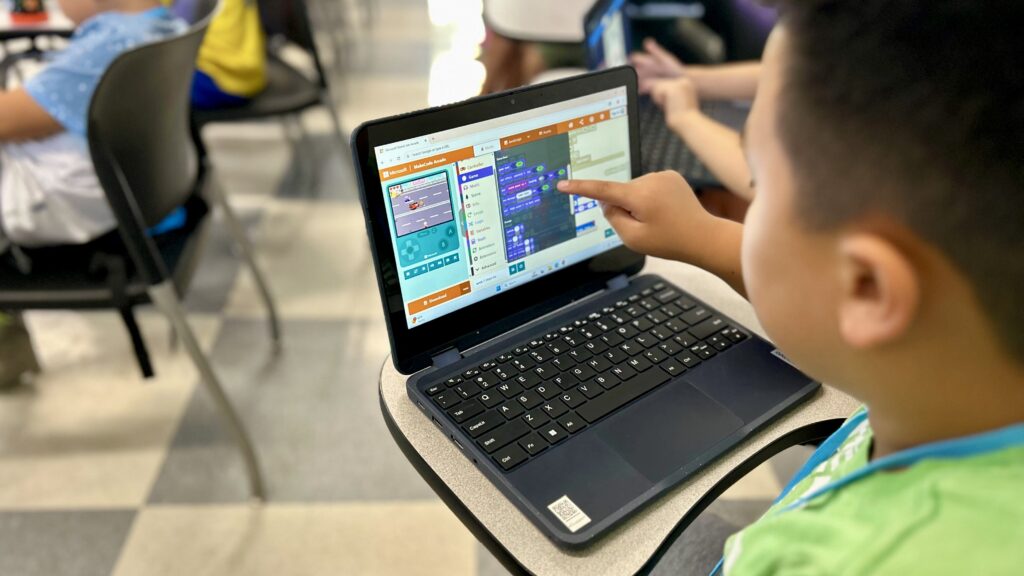
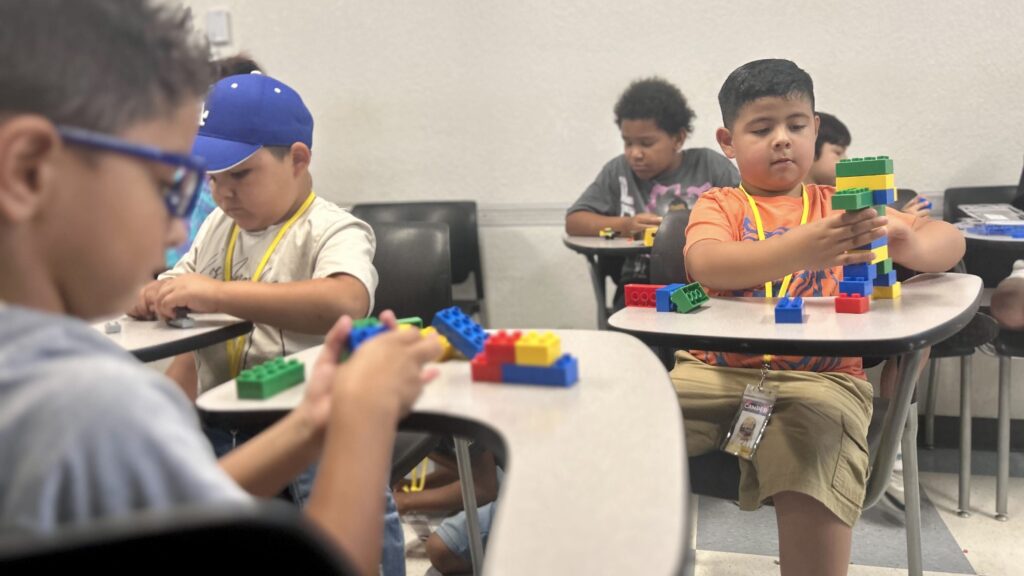
Jr. Gonzalez sends his son, Tommy, 10, to every summer and winter program so that the rising fifth grader can build his social, problem-solving and leadership skills.
The district has been serving 15,000 students, or about 5,000 each week, during the winter and summer camps.
While the vast majority of the money is intended for the youngest students, as long as districts meet the expanded learning funding requirements — providing access for a certain number of students in grades TK-6 — they can also use the money for middle and high school students. Spreading the funding across all grades has led to diverse, inclusive camps with “something for everyone,” Cha said.
Ash Bortz, who will be an eighth grader at Computech Middle School next year, returned to scuba diving camp for the second consecutive year, inching closer to becoming scuba diving certified. Once certified, she could participate in the district’s higher-level diving adventure camp, where students learn to search for “lost treasures” at Millerton Lake near Friant on the last day of camp.


As a child, growing up in West Fresno — a historically marginalized neighborhood with one of the highest levels of concentrated poverty in the nation and higher rates of incarceration — Josiah Bohanon always saw planes flying overhead but never imagined aviation as a career.
“I didn’t know it was something that I could do,” he said.
About three years ago, he learned about New Vision Aviation, a flight school, during an after-school program at his school. He participated in flight school for two years and is now, at 19 years old, a pilot and flight instructor.
Following last year’s summer camp and the opportunities it provided, Ariana Ruiz, 15, who will be a sophomore at University High, also joined New Vision’s program and has gained four hours of flight training. She wants to become a Navy pilot.
“Fresno Unified’s expanded learning program is one of the most comprehensive, high-quality programs in the state,” said Michael Funk, the California Department of Education director for expanded learning.
Expanding access — for all
Even though Fresno Unified’s English learners, socioeconomically disadvantaged students and foster and homeless youth — groups that make up more than 80% of the district’s student population — are targeted in program outreach, expanded learning funds offer programs to all students, including those with special needs.
In providing access, the district ensures support is in place. For example, students with Individualized Education Plans during the school year receive similar services at enrichment camps.
Two students in the game designers camp were accompanied by aides, who provided one-on-one support based on their needs.
“We know if it’s good for their learning during the regular year, that support is also good during enrichment camps,” Cha said.
Including community partners
Like many districts, Fresno Unified partners with over 50 organizations, which is “an essential component of a good-quality expanded learning program,” according to Michael Funk, the California Department of Education director for expanded learning. However, Fresno Unified still runs many of its own programs and employs staff throughout the year.
Camp instructors are typically from community-based organizations, but the camps are usually filled with Fresno Unified staff, in bright-colored vests, who ensure student safety. Organizations often operate off-site camps in their own facilities. There may still be a Fresno Unified staff member at those sites to support individual student needs — something Jessica Gunderson of the Partnership for Children & Youth has only seen at the school level or in small districts.
Expanded learning programs are ‘on the map’
Before ELOP funding, the value and impact of Fresno Unified’s programs were minute, limited to the small numbers of students served at each campus.
Now the programs have been lauded by many, and school districts, large and small, have reached out to Cha about Fresno Unified’s expanded learning opportunities.
Other districts have reportedly visited the district’s programs and wanted to learn how to grow their own and make them attractive to students and families.
Elementary students in the game designers camp shared their excitement not only about their tasks at hand but also about the upcoming camps in the following weeks.
Families frequently ask about expanded learning programs during parent or community-based district events, Cha said. As a result, and now as common practice, the district sets up informational booths at events.
“None of this would’ve been possible,” Cha said, “without ELOP funding.”