Journalist chooses community college over grad school
Mt. San Antonio College
Credit: Mt. San Antonio College
I recently completed my undergraduate degree in journalism, with a focus on media studies, at San Diego State University. Still, I don’t quite feel ready to jump into a career — at least, not yet. But I also don’t think graduate school is the right choice for me. As a young journalist, enrolling in graduate school fits neither my current career trajectory nor my career needs.
Enrolling in graduate school after earning a bachelor’s degree is fairly common, and during recessions, it even skyrockets. But in journalism, networking and experience matter far more to employers than academics, and right now, I need to work on developing skills and networking. To me, graduate school will only make sense later in my career if I want to teach journalism. While an advanced degree may lead to more experience and opportunities, graduate school is a costly way to do that.
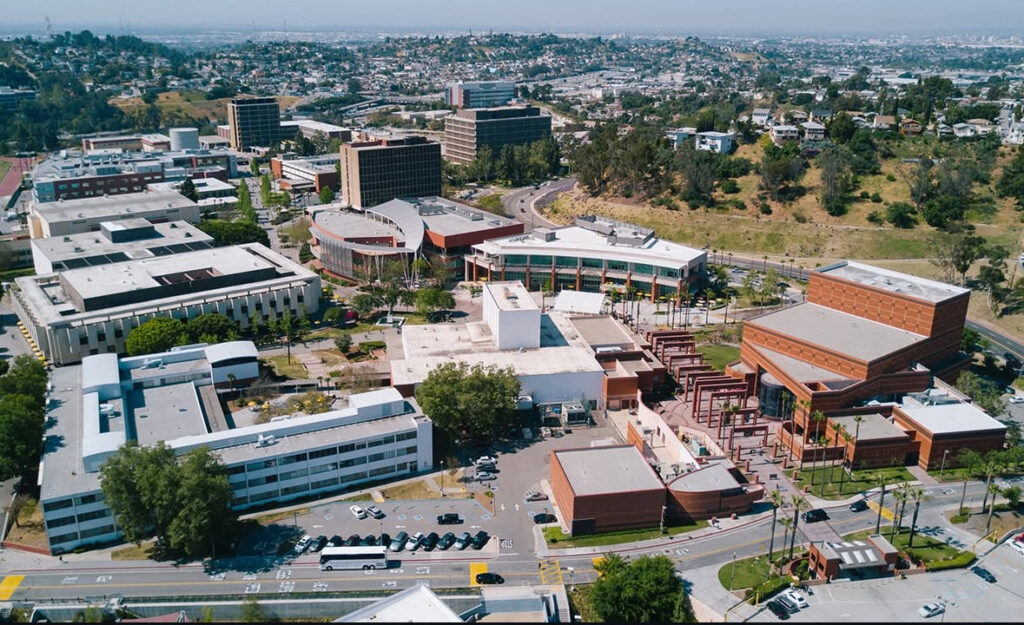
I’ve decided to take an unconventional path with my post-undergraduate journey: I plan to move back home and enroll in journalism classes at my local community college, Mt. San Antonio College (Mt. SAC).
Although enrolling in community college after completing a bachelor’s program may sound surprising, there’s clear logic. Given my career needs, it offers me comparable, if not better, benefits than graduate school.
One of the main draws to attending graduate school is that it provides a sense of post-college security. Maybe you missed or weren’t taught industry-specific skills as an undergraduate, and now you feel unprepared. Or maybe the major you pursued as an undergraduate wasn’t your calling, but you’re now stuck with it.
My main reason is the former.
In my final year of school, I noticed that some of my journalistic skills were underdeveloped. Journalism isn’t just about great writing — it demands holistic expertise. It includes researching, interviewing, data analysis, editing, fact-checking, photography, legal concerns, ethics and more. Today’s industry also requires social media presence, necessitating design principles and software skills. It’s unsurprising that a student might graduate feeling underprepared in some or all of these skills.
But, by attending community college classes, I’ll have a chance to learn, relearn and develop skills I feel underprepared for. Besides, the job market for recent journalism grads is not great right now, and maybe prospects will improve while I’m there.
In particular, I’m excited to take JOUR 104, Student Media Photography Laboratory, which teaches students to take and edit photos. While SDSU offers similar classes, I wasn’t able to fit them into my schedule. Developing this skill is a compelling reason for attending community college.
I’m not the only person who has thought along these lines. One former EdSource student reporter, Naomi Friedland, pursued journalism at Laney College in Oakland after double majoring in feminist studies and psychology at the University of California, Santa Cruz. She didn’t study journalism as an undergraduate, but noted, “It didn’t hurt to take classes that could look good for my resume to get foundational skills.” She’s now a journalist for The Ark, a local newspaper in Tiburon.
Learning, relearning and developing skills isn’t the only benefit to going back to community college. According to an article by Study.com, “The average class size at community colleges ranges from 25-35, while classes at universities can have 150-300 students!” Smaller classes allow for more intimate learning — a deeper quality of education.
Smaller class sizes also mean more opportunities to stand out. From a networking standpoint, this is beneficial — especially if, like me, your community college is located near where you plan to work professionally. Community college courses are taught by experienced professionals based in the area. (Many of my professors at SDSU also taught at the nearby community colleges.) By standing out, you can more easily build rapport with local professionals, potentially opening up career doors.
Pathways to postgraduate success look different for everyone. Given our current job market’s difficulty, that axiom rings true more than ever. Graduating from a four-year college or university doesn’t guarantee career readiness, and attending graduate school isn’t always the most practical safety net post-undergraduate school.
By challenging stereotypes that undergraduate and graduate schools lead to success and stability, I’m discovering more about the practicality and benefits of attending community colleges. All are further education and should be treated as such — the key differences being how each suits your career needs.
There are multiple ways to thrive. For the next stage of my academic journey, I’m putting my money on Mt. SAC to bring more attention to my community’s needs. Finances, especially during a possible recession, don’t have to be a barrier to opportunity.
•••
Joshua Silla was a member of EdSource’s California Student Journalism Corps in spring 2025. He recently graduated from San Diego State University with a B.A. in journalism and media studies and a double minor in political science, and science, technology and society studies.
The opinions expressed in this commentary represent those of the author. EdSource welcomes commentaries representing diverse points of view. If you would like to submit a commentary, please review our guidelines and contact us.