Inside transitional kindergarten: Where play, curiosity and early learning meet
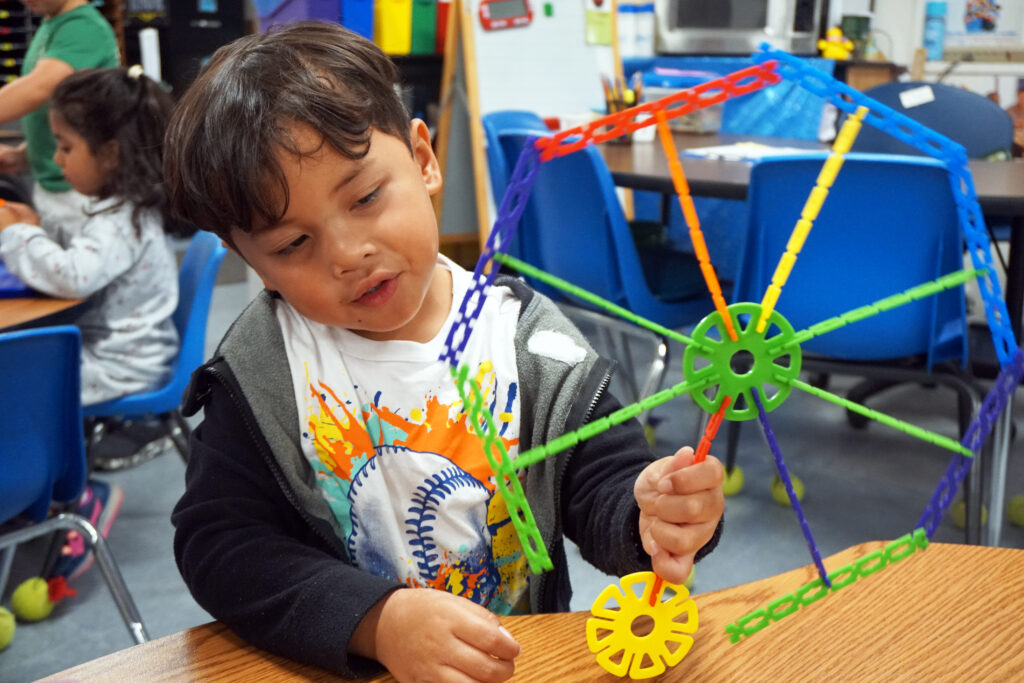
When Krystyna Kalishevskyi emigrated from Ukraine with her family last year, she had experienced more trauma and fear than a 4-year-old can cope with. Going to school in California was a big challenge because the little girl spoke scant English and often communicated with hand gestures.
Play, potties, preschool: TK for All
This story is part of a special series on transitional kindergarten in California.
California is now offering TK to all 4-year-olds. What does quality TK look like? Who should staff it? And a new challenge: How can teachers manage a class and help kids not yet potty-trained?
This series explores those issues and more.
Read more: California expands TK, but thousands of 4-year-olds remain unenrolled
Read more: Finding the ideal TK teacher: A challenge of credentials and preschool experience
Read more: ‘Can you come wipe me?’: Younger 4-year-olds pose new challenges for TK
Read more: TK, Head Start, preschool and more: What’s the difference?
Now her parents say she is joyful and confident, as well as fluent in English. Her father chalks up that transformation to her year in TK at Hawthorne Elementary School in the San Luis Coastal Unified School District. She made fast friends, learned new words, and began to blossom.
“The class definitely helped her grow,” said Vadym Kalishevskyi. “She became more independent, learned school routines and developed strong friendships.”
A jump-start to the elementary school years, transitional kindergarten welcomes all 4-year-olds as of the 2025-26 school year, following a long, incremental rollout. Championed by Gov. Gavin Newsom and former Assemblymember Kevin McCarty, D-Sacramento, the roughly $3 billion annual program has been hailed by many experts as a milestone in a state with about 2.6 million children under the age of 5.
Imagine a wondrous world of Play-Doh sculptures and bubble-blowing, circle time and Dr. Seuss rhymes — a place where joy abounds. In a high-quality transitional kindergarten program, fun is the secret formula for sparking a love of learning, and play is not reserved for recess.
Think of transitional kindergarten as a gateway to elementary school. TK should mix the playfulness of preschool with some academic readiness, so children are primed for kindergarten.
“TK is the most magical year possible,” said Fiona Lloyd-Moffett, Krystyna’s TK teacher at Hawthorne Elementary School. “We are given the privilege of spending a year with children at an age when they have an endless capacity to learn. They’re full of wonder. Children at this age are never again going to be as creative and open to new experiences, so eager to explore.”
The best TK teachers find the unbridled curiosity of the 4-year-old mind infectious. Paula Merrigan, a veteran TK teacher, tries to spark their growing intellect every chance she gets, from magnificently messy arts projects to bringing her pet tortoise Trevor for a visit. Her students, unlike many in the post-pandemic era, can’t wait to come to class.

“They are very easily motivated at this age,” said Merrigan, 57, who has spent 17 years teaching kindergarten and transitional kindergarten in the Castro Valley Unified School District. “They will do anything for a star sticker. They can’t get enough math games. They are so happy to come to school every day.”
That delicate balance of play-based learning with a gentle introduction to academic concepts, experts say, is just what parents should look for in a TK classroom.
Closing the achievement gap
Scott Moore, head of Kidango, a nonprofit child care organization, called TK a game-changer “because all families struggle to afford preschool, and some even struggle to find it.”
“Building on the public school system, which has the capacity and the need for more students due to overall declining enrollment, is the best way to reach all families,” Moore said.
TK FAST FACTS
- What does TK cost?: Zero. It is a free public school program.
- Expanding access: In 2023-24, most districts (94%) offered TK, according to Learning Policy Institute data. Of them, 85% offered TK at all elementary school sites, up from 81% in 2022-23.
- What age do you have to be? All 4-year-olds are eligible for TK, including a child who turns 4 by Sept. 1.
- How long is a school day? TK can be a half-day or a full-day program, ranging from three to six hours, depending on the school. However, schools may also offer “wraparound programs” before or after school.
- What is the teacher-student ratio? This fall, the ratio is 1 to 10.
- How many kids are enrolled in TK? The governor’s budget projects there will be 229,200 TK students in 2025-26. The Legislative Analyst’s Office puts the number closer to 200,000.
- What percentage of eligible 4-year-olds are enrolled in TK? 59% of eligible 4-year-olds enrolled in TK in 2023-24, the Learning Policy Institute reported.
- Is TK mandatory? TK, like kindergarten, is not mandatory. Some families choose preschool or family and friend caregivers in the early years.
- Is there enough room? 88% percent of districts reported having sufficient classroom space for TK by 2025-26, but 488 additional classrooms are needed, according to LPI.
Lloyd-Moffett believes that access to TK programs can help close the state’s achievement gap, which has widened since the pandemic. Children who attend a high-quality preschool are more likely to take honors classes and less likely to repeat a grade or drop out of school, research suggests.
“I believe so strongly in the power and importance of this year,” said Lloyd-Moffett. “TK doesn’t just prepare children for school; it shapes who they are and who they will become. What we’re doing now is going to impact them forever in terms of their brain growth and how they think of themselves as people.”
However, even as transitional kindergarten reaches full implementation this fall, there’s great inconsistency to be found in everything from staffing and teacher preparedness to facilities, from playgrounds to potties. According to a Learning Policy Institute report (analyzing a California Department of Education survey of almost all school districts), 1 out of 5 TK classrooms in 2023-24 were mixed with kindergarten. Some wealthy districts, known as basic aid districts, may not even offer TK.
“There’s a huge amount of variation,” said Deborah Stipek, an expert in early childhood education at Stanford University. “Huge differences in how kids are taught, how well they’re taught. Of course, that’s true of all grades, but TK is also new. There are a lot of wonderful programs out there, but I’ve also seen programs I’m not happy with. You can’t generalize.”
TK teachers often have more formal education than preschool teachers, including a bachelor’s degree and a teaching credential. They are now also required to have 24 units of early childhood education or development (roughly eight classes), but they may lack the depth of expertise that preschool teachers have.
While all TK programs are meant to be built on the California Preschool Learning Foundations, a framework created by the state Department of Education, what goes on in individual classrooms may vary greatly by school and teacher. More oversight is needed to ensure consistency across programs, experts say.
“Expansion of public pre-K is only a worthwhile public investment if children receive a high-quality education,” said Steve Barnett, the senior co-director of the National Institute for Early Education Research (NIEER). “To do that well, you have to get inside each kid’s head; the approach has to be individualized; you need rich conversations and interactions, and that takes place one-on-one and in small groups.”
Quality remains a sticking point. The NIEER report scored California’s TK program a paltry 3 out of 10 criteria. Insufficient teacher training has long been a factor, as well as an average student-staff ratio of 12 to 1, although this is supposed to decrease to 10 to 1 this fall. Also, TK classrooms typically do not allow for nap time or help wiping after a potty accident.
“I’m glad for those who are able to find a developmentally appropriate transitional kindergarten,” said Michael Olenick, president of the Child Care Resource Center, a California-based advocacy organization. “A lot of them look more like first grade. Many principals expect teaching to look like first grade. It’s a mixed bag.”
Playing is learning
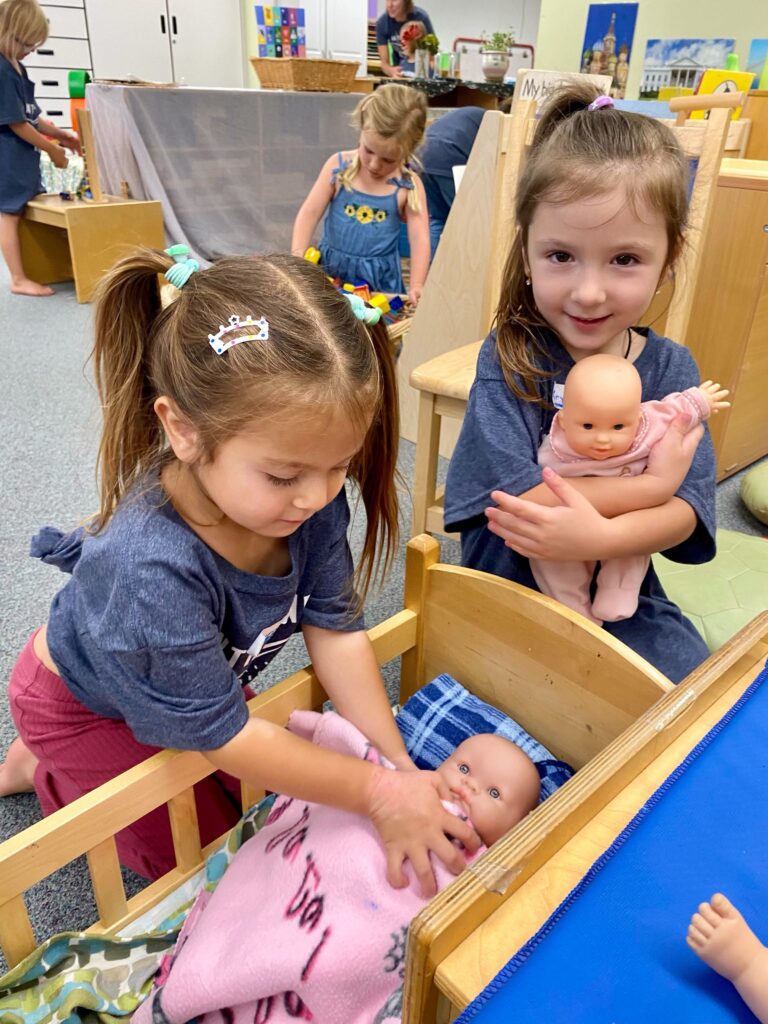
Lloyd-Moffett’s classroom may be decorated like a farm one week and a spaceship the next. The fun fuels the learning.
“Play and rigor can go hand in hand,” said Lloyd-Moffett. “It can be student-led and hands-on. You can immerse the children in the content area you are studying. If you are studying dinosaurs, they can become a paleontologist.”
Forming a bond with a caring teacher is also critical, experts say. Merrigan doles out hugs and trades stories about kitty-cat birthday parties. Lloyd-Moffett lets kiddos snuggle in her lap while reading a book.
“Fiona’s greatest strength as a teacher is that she truly cares for and values each of her students,” said Kalishevskyi.
Other teachers may expect too much sitting, too much quiet and too many worksheets. They may treat TK too much like K or first grade.
“There are teachers that are doing developmentally inappropriate instruction,” notes Stipek, who helped develop the new PK-3 credential that centers on early learning expertise. “You can’t expect a 4-year-old to sit quietly at a desk and do worksheets. They are going to vote with their feet and just walk away. Then they may get sent to the principal’s office.”
That’s one reason Jennie Herriot-Hatfield has doubts about sending her youngest son to TK. She worries he will be too squirmy if the program is too rigidly structured. Since TK, like kindergarten, is optional, she may keep him in preschool, where his squiggles won’t get him in trouble.
“I really worry about boys in TK,” said Herriot-Hatfield, a former first grade teacher and the mother of three. “If TK kids are expected to sit and listen more than in preschool,” more boys will start school being labeled with “behavior issues.”
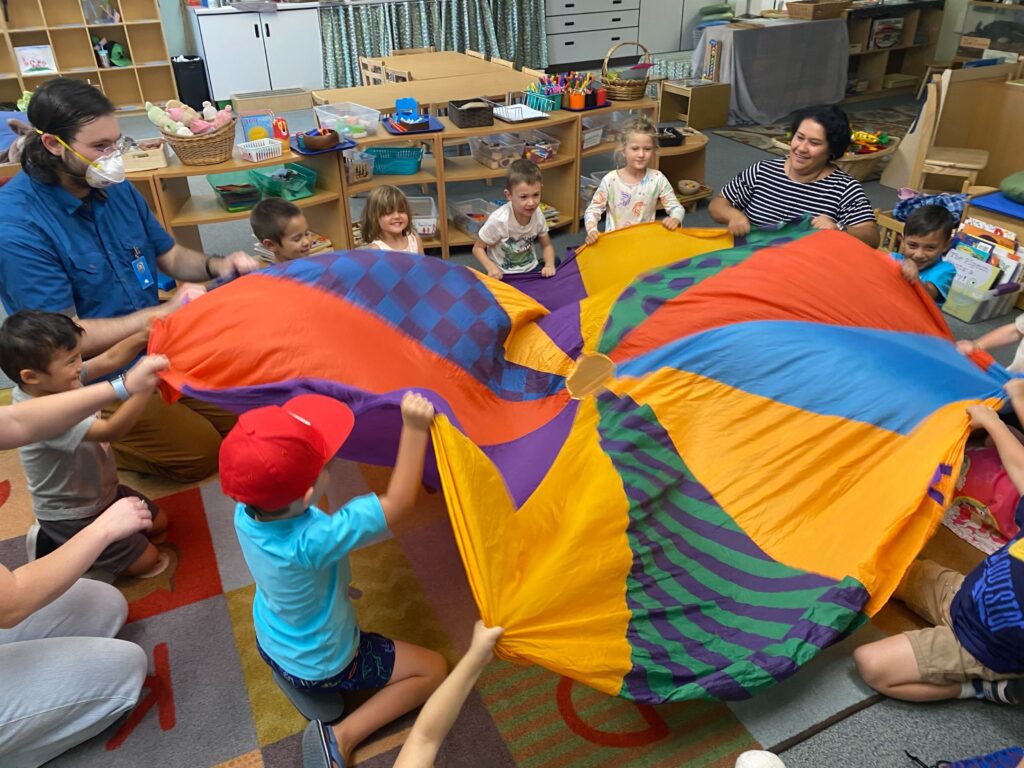
Part of the problem is expecting big-kid executive function skills from little kids, experts say. Also, many educators may not fully understand the power of play to ignite learning. Children learn best through play, and they are far more likely to remember what they have learned that way.
What should you look for in a TK classroom?
- Kinetic sand sculptures. Math games with dice. Art projects tailored to little hands.
- A playful room with open space, group tables instead of desks, and an environment that invites kids to explore, experts say.
- A play kitchen, a dress-up corner and a sand table are among the markers of a play-based program. Play is rich with opportunities to learn, experts say. Children playing card games, for example, build early math skills like number sense and counting and cardinality. Not to mention how to take turns and follow the rules.
- Classrooms should ideally have their own bathroom as well as access to the outside, but facilities vary widely. If your child needs help with potty time, be sure to ask the teacher what support they can provide.
- If you plan to visit a program, look for a teacher who seems warm but firm, a teacher who conjures a nurturing and engaging environment. A class filled with big smiles and frequent giggles is always a good sign.
- Too much time sitting with worksheets or Chromebooks could be a red flag.
Principals are essential to understanding TK
Some believe that unrealistic academic standards have been pushed down into kindergarten, and they worry that this may also happen to TK. The Los Angeles Unified School District, for example, sparked controversy for its plan to administer the DIBELS literacy test to TK students. Parents and teachers pushed back, and the district agreed to remove the timed testing element.
Stipek is convening a series of institutes for principals to give them a primer in developmentally appropriate learning, spreading the gospel of learning through play. Small children are hard-wired to be curious and to learn, experts say, but playful learning must be the spark that ignites their curiosity.
For a principal who used to run a high school, third grade is already a stretch, she notes. TK is a whole new world. If they don’t know what to look for, they may hire the wrong teachers, pay for the wrong training and give the wrong advice.
“The principals are key. It is not like they don’t care. They just don’t know,” said Stipek. “They never got trained in early childhood education.”
Bringing preschoolers into the elementary school system represents a sea change that will inevitably take time to evolve.
“Universal preschool is a huge undertaking in the nation’s most populous state,” said Barnett. “Change doesn’t happen overnight. It takes time to get teachers to be preschool teachers and not kindergarten teachers. It takes time for administrators and principals, too. You can give them all the guidance you want, but they can’t just absorb developmental perspective overnight. You have to make time for reflection.”
EdSource reporter Zaidee Stavely contributed to this report.