Improving literacy for Black children in California
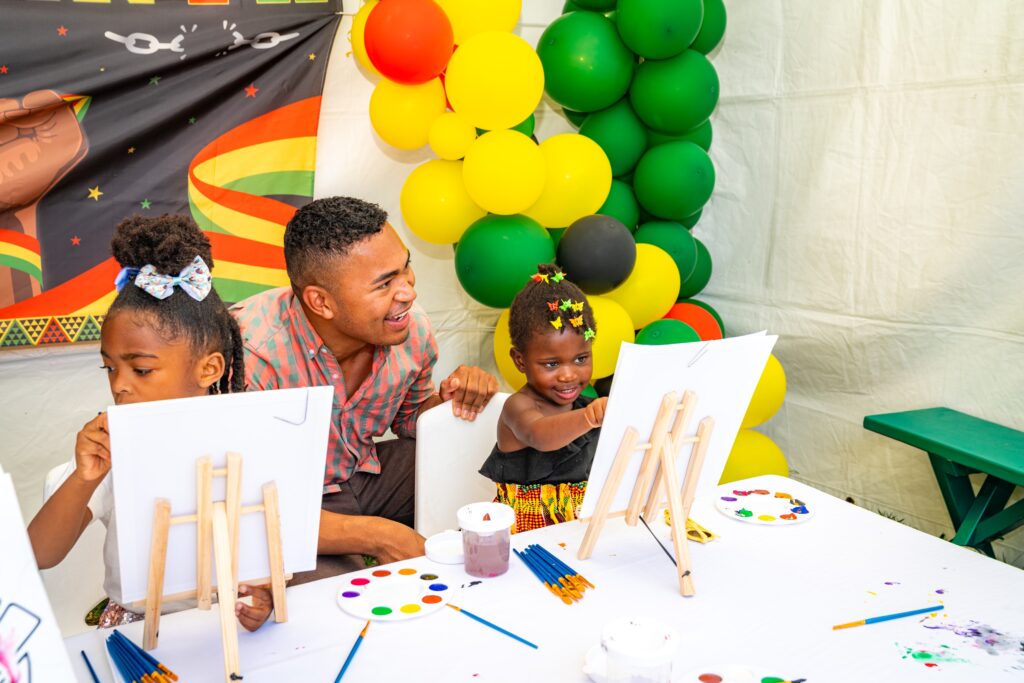
Courtesy: Triston Ezidore
One hundred eighty-five pages.
That’s the length of Culver City Unified School District’s LCAP — our Local Control Accountability Plan. Graphs, numbers, charts, data.
I flip through the pages, questioning the value of this task. But when Gov. Jerry Brown handed local control back to school boards in 2013, he made this document one of our most sacred responsibilities.
So I read it. Every. Single. Page.
But somewhere between pages 102 and 103, I’m pulled back to a memory: my third grade classroom.
I remember pretending to read. Holding open chapter books I couldn’t make sense of, flipping pages to keep up appearances. No one saw the panic behind my eyes when we went around the classroom reading aloud. I’d count ahead to figure out which paragraph would be mine and rehearse it in my head, praying the teacher didn’t ask a follow-up question.
I wasn’t dumb. I just couldn’t read.
That experience shaped my understanding of what’s at stake. It’s more than a reading issue; it challenges a child’s confidence and creates a silent barrier that too many face alone.
Reading proficiency by third grade is critical. The year marks a developmental milestone when students shift from learning to read, to reading to learn — a foundational transition that determines academic success across subjects. Research consistently shows that students who are not reading proficiently by third grade are four times more likely to drop out of high school.
For Black boys, this risk is compounded by systemic barriers — including disproportionate disciplinary actions, limited access to qualified teachers, and underfunded schools — that further narrow their academic trajectories.
In California, the data is alarming: 30% of Black children reach grade-level reading proficiency by the end of third grade, and in some districts, that figure plummets to single digits.
The gap between well-resourced and under-resourced schools deepens these disparities. When privileged families withdraw their children from public schools, they drain critical funding and reduce the diversity and civic engagement that make schools equitable learning communities. This growing dual system entrenches inequity and threatens public education’s role as a shared foundation of opportunity and democracy.
I won’t sugarcoat it: Public schooling has failed Black children too often. But I still believe it’s our best — and only — chance to close these gaps.
To change this narrative, we must act decisively and early, centering equity as the commitment to meet every student’s unique needs — not treating all students the same, but challenging each one to reach their full potential.
This requires recruiting, retaining, and empowering more Black educators who serve as essential role models and advocates. Crucially, classrooms need access to literacy coaches and specialists who help teachers implement evidence-based pedagogical strategies — such as explicit phonics instruction — that are differentiated to address diverse learners’ needs (if students need private tutors to pass, we’ve already failed them).
Schools must invest in literacy curricula that authentically reflect and affirm Black students’ identities, because representation fosters engagement and deeper learning. Families must be full partners, equipped with resources to nurture literacy development at home.
California is finally moving toward universal early screening for reading difficulties — a long-overdue step that means little without real investment in implementation, teacher training and equitable intervention. (Screening alone is not enough — and if applied without an equity lens, it risks repeating past harms. Black students, particularly Black boys, have long been disproportionately flagged for special education and too often misdiagnosed, tracked into segregated classrooms or denied access to rigorous instruction.)
I was one of the lucky ones. Not because the system served me well, but because I had a few committed teachers who made their classrooms safe spaces to struggle and grow. I had a tiger mom who pushed for more book time and less screen time — a level of support that shouldn’t be a prerequisite for Black boys to beat the statistics.
And I remember the first book I ever finished: “Chinese Cinderella” by Adeline Yen Mah. It was assigned, but it didn’t feel like an assignment — the story of a child who felt invisible, yet longed to be seen, resonated with me in a way no book ever had. That moment mattered — not just because I finished a book, but because I finally saw myself as someone who could.
It also showed me the power of introducing literature that reflects student interest. (We need to move past the outdated notion that literacy only counts when students read the books we assign. If we’re serious about improving, we must promote reading by any means necessary — picture books, comic books, graphic novels. If a student has a book in hand, that’s a win.)
Universal literacy by third grade is not just an ideal; it’s a fundamental right. We need a system that identifies needs early, responds intentionally, and ensures every child gets the support they deserve.
So if you live in California and care about the promise of public education — especially for Black children — know this: the local accountability plan may be 185 pages and outline a district’s goals and resources, but the future of a child’s literacy depends on those plans being put into practice. The real work lies in what happens next — how we translate that data into better instruction, better systems, and better outcomes. That work belongs to all of us. Because our kids can’t wait for another generation of adults to skim the plan and miss the point.
As I visit classrooms, I often run into Black students who graduated from our summer literacy camp (a program created by our Diversity, Equity and Inclusion Department to support first through fifth graders flagged for reading below grade level). I sit and watch as they read — full of joy and confidence. When I hear them, I cry. Because I know this work, this investment, is meaningful. A world where Black children can’t read is a world that falls short of its potential.
The solution is as clear as it is difficult. I cry for both.
•••
Triston Ezidore is the president of the Culver City Unified School District Board of Education. He was first elected to the board at age 19, becoming the youngest elected official in Los Angeles County history.
The opinions expressed in this commentary represent those of the author. EdSource welcomes commentaries representing diverse points of view. If you would like to submit a commentary, please review our guidelines and contact us.