Idaho FAFSA Deadline 2026: State Aid Programs and Key Dates
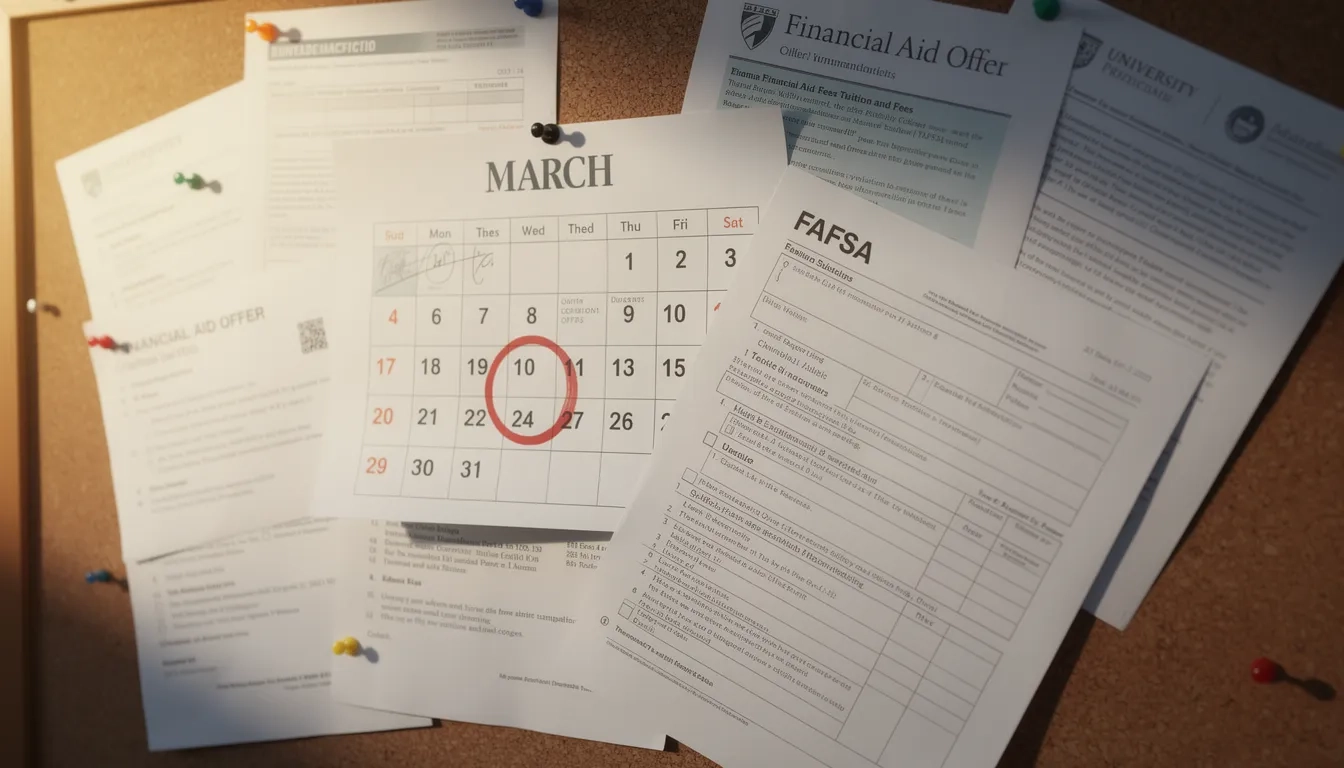
March 1 is not a guideline in Idaho. It is a wall.
Miss the state FAFSA deadline by a single day and you lose eligibility for both major state scholarship programs — the Idaho Opportunity Scholarship and the Idaho Governor's Cup — with no appeals process. The federal government gives you until June 30, 2027 to file for the 2026-27 award year. Idaho does not. That gap catches families off guard every year, especially those who've heard "the FAFSA deadline is June 30" from well-meaning sources who were describing federal deadlines, not state ones.
Here's what Idaho students and families actually need to know.
Why March 1 Is the Deadline That Actually Matters
The federal FAFSA deadline and Idaho's state deadline are completely different. The federal cutoff is June 30, 2027, which keeps your application technically alive for federal aid. But Idaho's two primary scholarship programs both close on March 1, 2026. The Idaho State Board of Education ranks all applications after that date, and the ranking is fixed. Late submissions don't get a Round 2 consideration.
There's a timing trap buried in the process. Online FAFSA submissions take 1–5 business days to process before the data reaches state scholarship administrators. Submit at 11:59 PM on February 28 and your FAFSA may not clear processing by March 1. The safe approach: treat February 15 as your personal deadline and treat March 1 as your backup.
The 2026-27 FAFSA opened October 1, 2025 — five full months before the Idaho cutoff. Students who filed in October or November had no February panic and any verification issues had time to resolve cleanly. According to data from the National College Attainment Network, early FAFSA completers show higher college enrollment and persistence rates than late filers, so the habit compounds beyond just the deadline.
As of May 1, 2026, the national FAFSA completion rate for the class of 2026 was 54.7% — a record high, up sharply from 47.3% in 2024, when the redesigned form had a rocky rollout. That still means roughly 45% of graduating seniors haven't filed at all. If you're reading this before June 30, your federal window is still open even if the Idaho scholarship window has closed.
Idaho Opportunity Scholarship: How the Program Works
The Idaho Opportunity Scholarship is the state's flagship need-and-merit grant, awarding up to $3,500 per academic year for up to four years. It operates as "last dollar" aid, filling the gap between your cost of attendance and other grants you've already received. Your actual award amount can be significantly less than $3,500 depending on how much Pell Grant and institutional aid you're already getting.
The ranking formula is worth understanding before you dismiss your eligibility: 70% financial need (based on your Student Aid Index from FAFSA) and 30% academic merit (based on GPA). Families at moderate income levels who write themselves off without filing are leaving real money behind. You need at least a 2.7 unweighted cumulative GPA, but above that floor, GPA genuinely boosts your ranking in a meaningful way.
Full eligibility requirements:
- Idaho resident
- Graduated from an Idaho high school, Idaho homeschool, or earned a GED/HSE in Idaho
- Enrolling in fall semester at an eligible Idaho institution
- Pursuing a first certificate, first associate's degree, or first bachelor's degree
- FAFSA submitted by March 1
- Minimum 2.7 unweighted GPA
Renewal requires completing 30 credits per year, maintaining a 2.7 GPA, and submitting renewal confirmation by March 1 each year. That 30-credit bar is the one that trips up current recipients. Fifteen credits per semester is a full load — students who plan lighter schedules without accounting for this threshold can lose renewal eligibility after their first year.
Idaho Governor's Cup: The Other State Scholarship
The Idaho Governor's Cup has been running for over 50 years, making it one of the longer-standing state scholarship programs in the region. Over the past decade it has awarded more than 350 scholarships and distributed $4.8 million in total funding. The pool is smaller by headcount than the Opportunity Scholarship, but per-student amounts are higher.
It splits into two tracks:
| Track | Annual Award | Maximum Duration |
|---|---|---|
| Academic | $5,000/year | Up to 4 years |
| Career-Technical Education (CTE) | $3,000/year | Up to 3 years |
The CTE track matters for Idaho specifically. The state has a substantial workforce pipeline in agriculture, construction, healthcare technology, and skilled trades — careers that don't require a four-year degree but do benefit from post-secondary training. A student entering a two-year dental hygiene program or a licensed electrician apprenticeship can access $3,000 per year through this track. That's not trivial.
Eligibility mirrors the Opportunity Scholarship on residency and graduation requirements, with a slightly higher GPA floor of 2.8. The Governor's Cup also places real weight on community service and volunteer leadership. Applicants must provide documentation of civic engagement — this isn't a checkbox item. Students who can show a genuine record of public service have a genuine edge.
Both programs share the same October 1 opening and March 1 closing date. One deadline, two programs. No exceptions.
Completing the FAFSA: What You Actually Need
The form takes about an hour if you come prepared. Scrambling to locate documents mid-application turns one hour into three.
Gather before you start:
- Social Security numbers for the student and both parents (if a dependent student)
- Federal tax returns or IRS Direct Data Exchange credentials
- Records of untaxed income, assets, and government benefits
- Your FSA ID — the username and password you create at StudentAid.gov
The FSA ID is the most common bottleneck. Creating it requires Social Security Administration verification, which can take 1–3 days if there's any mismatch in records. Students who wait until February 27 to create their FSA ID have handed themselves a problem with no clean solution. Create it in September, confirm it works, then set it aside until you're ready to file.
Idaho's Next Steps Idaho (nextsteps.idaho.gov) offers FAFSA completion guides, a counselor-facing completion tracking portal, and the annual Idaho FAFSA Challenge, which recognizes high schools for top completion rates. Salmon River High School achieved 100% completion among its seniors in 2026 — every single graduating student submitted a FAFSA. Wallace High School reached 89% completion. Those numbers come from active counselor engagement and early-year outreach, not luck.
After the March 1 Deadline: What Happens Next
Filing on time doesn't mean you hear back immediately. The Idaho State Board of Education reviews and ranks applications after March 1 closes. Here's how the notification timeline runs:
- March 1: Application and FAFSA deadline locks
- Early to mid-April 2026: Round 1 contingent scholarship offers sent via email
- Student accepts or declines through the Scholarship Idaho portal by the date specified in the offer
- Round 2 offers: Issued later, based on remaining funding after Round 1 acceptances
The word "contingent" in Round 1 offers is important. Your award is not final until the State Board of Education verifies your FAFSA submission. If your FAFSA has errors, incomplete information, or gets selected for federal verification, your offer can be rescinded. Resolving any verification flags quickly after March 1 protects your award.
Notifications come from [email protected]. Add that address to your contacts or safe sender list now. Scholarship emails from state agencies land in spam filters at a rate that should be embarrassing for everyone involved — check your spam folder in April if you haven't received anything.
Common Mistakes That Cost Idaho Students Money
Assuming income disqualifies you before filing. The Opportunity Scholarship's 30% merit weighting means a student with a 3.7 GPA and a household income of $90,000 can still receive an award, particularly at higher-cost Idaho institutions where the "last dollar" gap is real. File first. Evaluate results after.
Treating FAFSA as a one-time task. The Opportunity Scholarship requires an annual renewal confirmation and a new FAFSA every year. Missing the March 1 renewal deadline in year two or three costs you the remaining years of eligibility. Set a recurring February calendar reminder the day you accept an award.
Submitting FAFSA without resolving the FSA ID. About one in five FAFSA applicants gets flagged for federal verification, which requires additional documents sent to your college's financial aid office. This process takes weeks. Late February filers who hit a verification flag often can't resolve it before March 1 — and lose their state scholarship consideration. Early filing is the only protection against this.
Not tracking the application portal. The Scholarship Idaho portal is where you accept offers and confirm enrollment. If you don't log in and accept by the deadline stated in your offer email, you forfeit the award. It sounds obvious. It still happens every year.
My honest read: the March 1 cliff is strict, but it's a reasonable policy given Idaho's limited scholarship funding. The students who get caught flat-footed are almost always the ones who knew about the deadline and procrastinated anyway. Treat February 1 as your personal deadline. That leaves four full weeks of buffer for FSA ID issues, FAFSA verification requests, and processing delays — and it makes March 1 feel like a formality rather than a threat.
Bottom Line
- March 1, 2026 is the hard state scholarship deadline — not June 30, not "whenever your school says." March 1 for Idaho state programs.
- File FAFSA in October or November. The form opened October 1, 2025. Every week you wait narrows your buffer for verification issues.
- Create your FSA ID at least one week before you plan to complete the FAFSA — identity verification can take several days.
- Apply even if you think your income is too high. The Opportunity Scholarship scores 30% on GPA; moderate-income families with strong students regularly receive awards.
- Add [email protected] to your safe senders before April so offer emails don't land in spam.
Frequently Asked Questions
What is Idaho's FAFSA deadline for state scholarships in 2026?
March 1, 2026, at midnight Central time. This date applies to both the Idaho Opportunity Scholarship and the Idaho Governor's Cup Scholarship. The federal FAFSA deadline is June 30, 2027 — much later — but missing March 1 makes you ineligible for Idaho's state programs entirely.
Can I still get financial aid if I miss Idaho's March 1 FAFSA deadline?
Yes, but only federal aid. You can still receive Pell Grants, Direct Subsidized and Unsubsidized Loans, and work-study through the federal system if you file before June 30, 2027. Your college may also have its own institutional aid with separate deadlines. Idaho state scholarships, however, are closed to late filers — no exceptions.
Is the Idaho Opportunity Scholarship the same as an Idaho Opportunity Grant?
No, and the confusion is common. The Idaho Opportunity Scholarship is a merit-and-need-based award through the State Board of Education, offering up to $3,500 per year. Some older materials and institutional financial aid offices use "Opportunity Grant" loosely to describe state need-based aid. If you're unsure which program is being referenced, contact your financial aid office or email [email protected] directly.
Do I have to repay the Idaho Opportunity Scholarship?
No. It's a grant, not a loan. There's nothing to repay as long as you meet the annual renewal requirements: maintain a 2.7 GPA, complete 30 credits per year, and submit your renewal confirmation by March 1 each year. The 30-credit threshold is the requirement most recipients underestimate — that's a full academic load both semesters.
What if my family's income is too high — should I still file FAFSA?
Yes, always file. The Idaho Opportunity Scholarship formula weights financial need at 70% but GPA at 30%, meaning strong academic performance matters even at higher income levels. Beyond Idaho state scholarships, most Idaho colleges require FAFSA for institutional merit scholarships, work-study eligibility, and certain tuition waivers. There's no downside to filing; there's a real cost to not filing.
What happens if my FAFSA is selected for verification?
The federal Department of Education flags roughly 20% of FAFSA applications for verification, requiring additional documentation submitted to your college's financial aid office. This process takes several weeks if you're slow to respond. Students who file FAFSA in late February and receive a verification flag frequently can't resolve it before the March 1 Idaho deadline. Filing in October or November gives you the runway to handle verification cleanly without losing state scholarship eligibility.
Sources
- Idaho Opportunity Scholarship – Next Steps Idaho
- Idaho Governor's Cup Scholarship – Idaho State Board of Education
- 2026 Idaho FAFSA Completion Challenge – Next Steps Idaho
- FAFSA – Next Steps Idaho
- 2026-27 Financial Aid and FAFSA State Deadlines – Fastweb
- 2026 FAFSA Completion Rate Hits Record High – Inside Higher Ed