Environmental Science Grants: The Programs Worth Your Time in 2026
Environmental science students are sitting on billions of dollars in available funding—and most apply for the wrong things first. According to NSF's 2025 GRFP solicitation, the Graduate Research Fellowship pays $37,000 per year in living stipend plus a $16,000 cost-of-education allowance sent directly to your institution. That's $53,000 annually. No side hustle required. A small scholarship asking for a 500-word essay on why you care about the planet pays $1,000 on a good day. The math isn't close.
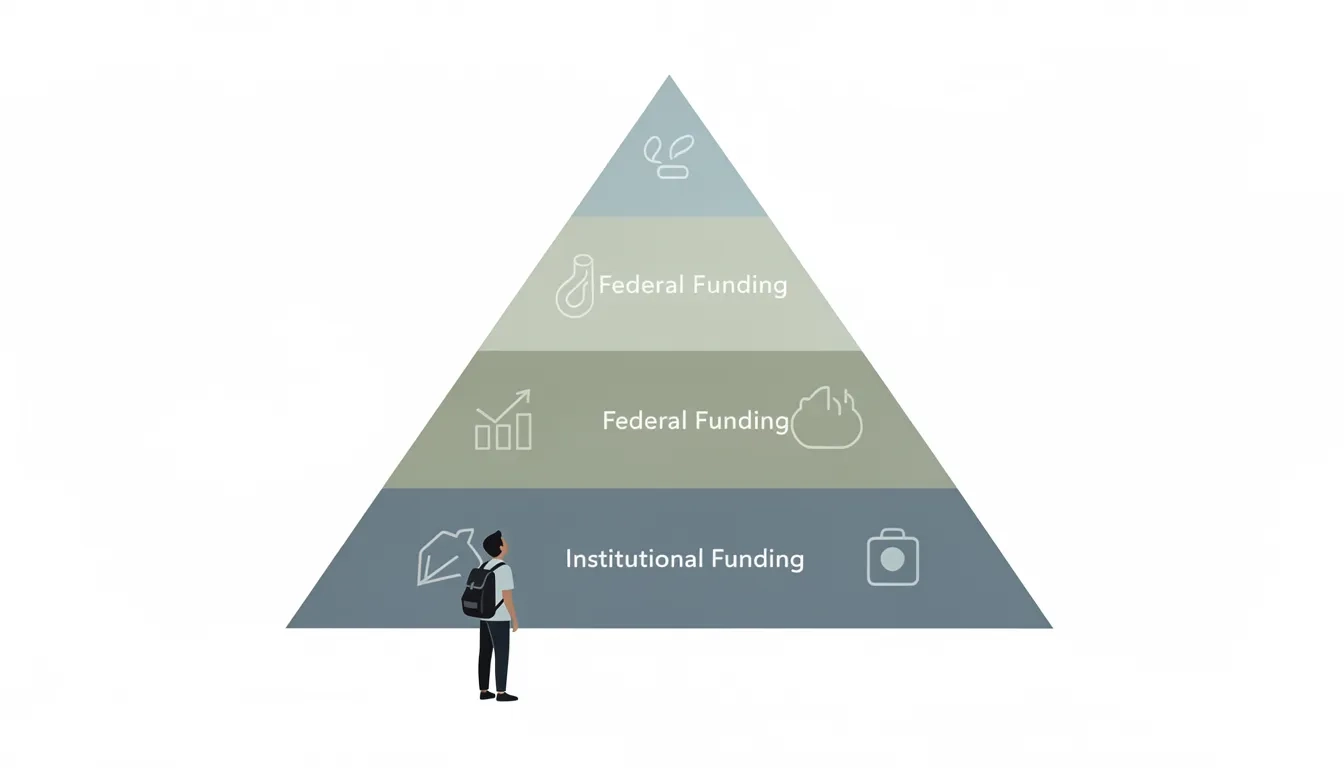
The Funding Tiers Most Students Skip
Environmental science funding falls into four distinct tiers. Most students only ever interact with the bottom one.
Tier 1 — Federal flagship programs are the highest-value awards in the field. The NSF Graduate Research Fellowship Program (GRFP), NOAA Hollings Scholarship, and Morris K. Udall Foundation Scholarship can fund your full degree, your summer research, and your professional development. They're competitive. But they're also the only awards that change your graduate school options entirely.
Tier 2 — Government research fellowships place you inside federal agencies or national laboratories. These aren't traditional scholarships. You get paid to do science at EPA facilities, NOAA offices, or Department of Energy labs. The Great Lakes Commission-Sea Grant Fellowship, for instance, pays $34,000 per year plus $6,000 for medical insurance and necessary travel for graduate students working on Great Lakes environmental quality.
Tier 3 — Private and foundation grants cover specific niches: underrepresented students, particular regions, niche subfields. Awards here range from $750 to $20,000. Real money, but not degree-funding money.
Tier 4 — Smaller rolling-deadline scholarships are legitimate but time-intensive relative to their payout. A $2,500 scholarship requiring a transcript, two letters, and a 500-word essay takes roughly the same application effort as an early draft of your NSF personal statement.
My strong take: build your Tier 1 applications first. Every week you spend on Tier 4 before submitting flagship applications is a week you're leaving far more money on the table. You can always fill time with smaller awards after the big deadlines pass.
Federal Flagship Programs Worth Your Full Attention
Three programs dominate this tier. They differ in scope and career stage, so knowing which one fits your current situation matters.
| Program | Award | Who Can Apply | Application Window |
|---|---|---|---|
| NSF Graduate Research Fellowship (GRFP) | $37,000 stipend + $16,000/yr | U.S. grad students (first year or earlier) | Opens August, due November |
| NOAA Ernest F. Hollings Scholarship | Up to $9,500/yr for 2 years + $700/week internship | Rising college juniors and seniors | September through January |
| Morris K. Udall Scholarship | $5,000 (80 scholarships + 50 honorable mentions) | College sophomores and juniors | Varies by institution |
The NSF GRFP is the primary target for graduate students. Environmental science qualifies explicitly under Geosciences (Environmental Science) and Life Sciences (Environmental Biology), with coastal marine science and hydrology also listed as eligible subfields. Three years of funding usable over a five-year window means fellows can pause for fieldwork, parental leave, or an unexpected research opportunity without losing their award. That flexibility is rare.
One thing students miss: the GRFP funds your position, not a specific project. You can shift your dissertation focus after year one without reapplying or losing your stipend. Some students turn down GRFP offers thinking the award locks them into a narrow research trajectory. It doesn't.
NOAA's Ernest F. Hollings Scholarship is the smart pick for undergraduates who want both tuition support and real field experience. Beyond $9,500 per academic year, NOAA provides a 10-week paid summer internship at $700 per week, travel funding for conferences where scholars present research, and a housing subsidy for scholars who relocate for their placement. Applications open each September and close in January.
The Morris K. Udall Scholarship rewards demonstrated commitment to environmental careers, not just academic performance. Eighty scholarships of $5,000 each go out annually, plus 50 honorable mentions. A University of Washington sophomore won the Udall in May 2025 based on work connecting environmental justice with Indigenous community advocacy. That tells you this program reads broadly across the environmental field—it's not limited to hard sciences.
Government Research Fellowships
Here's where a persistent myth wastes real student effort: many people still search for the EPA STAR Graduate Fellowship. That program ended in 2015. EPA consolidated its STAR Graduate and GRO Undergraduate fellowships into NSF funding streams as part of a broader federal STEM education realignment. The application no longer exists.
What replaced it is actually more valuable. The EPA-NSF INTERN Supplemental Program (which most environmental science advisors don't mention during orientation) allows current NSF-funded graduate students—including GRFP Fellows—to spend up to six months embedded at an EPA research facility. Supplemental funding caps at $55,000 per student, covering stipend, travel, temporary relocation, and up to $2,500 in research materials. Annual deadline: April 15.
The practical sequencing here matters. Secure your GRFP first, then use the INTERN program in year two or three to add federal agency experience. That combination appears well on both academic job applications and federal science career tracks.
ORISE (Oak Ridge Institute for Science and Education) fellowships place students inside Department of Energy laboratories with positions targeting atmospheric sciences, ecology, and global carbon cycle research. Eligibility begins at junior year of undergrad and extends through graduate school.
Getting paid to run atmospheric models or ecosystem simulations inside a federal lab builds more publication-ready work than most semester-long university research projects. ORISE alumni consistently report conference presentations and co-authorship on peer-reviewed papers within their fellowship year.
NOAA also runs specialized research tracks beyond Hollings. The NOAA Coral Reef Management Fellowship places bachelor's and master's degree holders in two-year positions across U.S. Pacific and Caribbean island territories, with medical insurance, travel, and relocation costs covered. It's a bridge between degree completion and federal employment.
Private and Foundation Grants
Private grants fill real gaps—particularly for underrepresented students, those studying niche subfields, or anyone ineligible for federal programs because of citizenship status.
The awards worth knowing:
- Irving S. Berman Scholarship — $20,000 (six winners annually), open to high school through graduate students from low-income single-parent households studying environmental science, conservation biology, or ecology. The household requirement narrows the applicant pool significantly.
- Dave Ellingson Scholarship for Environmental Studies — Up to $5,000 renewable for three additional years, with quarterly mentoring from an experienced environmental scientist built into the award structure.
- Brown and Caldwell Navajo Nation Scholarship — Up to $4,000 renewable for Navajo Nation members pursuing environmental, civil, or chemical engineering; geology; or ecology.
- Cary Institute of Ecosystem Studies REU — Summer residential program providing on-campus housing, a $6,000 stipend, and a $600 food allowance for undergraduates doing ecology research on topics ranging from acid rain to infectious disease.
- National Garden Clubs Scholarship Program — Variable awards for students in horticulture, forestry, and environmental science. This one gets missed because the name signals gardening, not STEM.
- Michigan State University's Environmental Science Doctoral Fellowship — $35,000 covering the first year of doctoral study, with five fellowships awarded annually to incoming PhD students.
My honest read on this tier: the Irving Berman is worth your time even if you're uncertain about eligibility. Students often assume "low-income single-parent household" means something more restrictive than it does. Read the criteria before ruling yourself out. The applicant pool is smaller than you'd expect for a $20,000 award.
How to Build Your Application Calendar
The biggest mistake isn't bad essays. It's applying out of sequence. Students who begin building application materials in the spring of their sophomore year can weigh every financial aid policy, cultivate reference relationships with faculty who actually know their work, and hit every major deadline before the fall crunch.
Here's a workable sequence by academic stage:
- High school seniors and first-year undergrads — Start with rolling-deadline awards like the Future Green Leaders Scholarship ($1,000) to build your essay voice and establish reference relationships. Small wins here; the real work is building materials for bigger applications.
- Sophomores and juniors — Submit for Morris K. Udall in the spring. If your coursework touches oceanic, atmospheric, or social environmental science, begin Hollings preparation in September of the academic year you want to apply.
- Rising seniors — Hollings closes in January. Line up your application early. Simultaneously, draft your NSF GRFP personal statement even if you don't submit until graduate school. Starting 18 months early is not excessive.
- First-year graduate students — The GRFP deadline window (November 10–14 for most fields) is your primary target. This is non-negotiable for funding priorities.
- Second-year graduate students and GRFP Fellows — Apply to EPA-NSF INTERN by April 15. Research ORISE opportunities based on your specific dissertation area.
The GRFP eligibility window closes faster than most students realize. You must apply as an undergraduate senior, as someone who hasn't yet enrolled in graduate school, or as a first-year graduate student with fewer than one academic year completed. Students who plan to "apply in year two" are simply ineligible. This catches people every cycle.
Common Application Mistakes That Cost Students Real Money
Conflating Intellectual Merit and Broader Impacts in NSF GRFP applications. Reviewers score these as separate criteria in both your personal statement and your research plan. Essays that treat them as one continuous argument score lower because reviewers can't locate the material they're evaluating. Write two distinct sections, label them clearly.
Writing generic passion statements is the second problem. Program committees read hundreds of essays referencing childhood memories of polluted rivers or moments from climate documentaries. What advances through review is specific: a named research question, a named methodology, a named institution or collaboration where the work would happen.
Misreading NOAA's scope costs students opportunities every year. Applicants whose work touches social sciences, geography, or hydrology sometimes assume they don't fit Hollings. They do. NOAA's stated eligible fields explicitly include physical and social sciences, geomatics, and teacher education supporting NOAA's mission. Make that connection explicit—don't let reviewers have to draw it themselves.
Reference letter timing is the final one. NSF GRFP requires at least two of three letters by the November deadline. A letter arriving one day late disqualifies the entire application—not just the letter. Ask recommenders six to eight weeks early and confirm receipt one week before the deadline. This eliminates more otherwise-competitive applications than any essay problem.
Bottom Line
- Apply in tier order. NSF GRFP and NOAA Hollings first, private scholarships second. The application effort is similar; the funding gap is enormous.
- The EPA STAR Fellowship is gone. The EPA-NSF INTERN program is the current federal opportunity for graduate students—and it requires GRFP status to access, which is another reason to pursue GRFP first.
- The GRFP eligibility window is shorter than it looks. If you're a college junior right now, your last eligible cycle is the November following your senior year. Mark your calendar.
- Don't self-select out of eligibility-based awards before reading the actual criteria. The Irving Berman Scholarship's applicant pool is smaller than most people assume for a $20,000 prize.
- Build reference relationships now, not when you need letters. Faculty who know your work write better letters than faculty who only know your transcript.
Frequently Asked Questions
Is the EPA STAR Graduate Fellowship still accepting applications?
No. EPA ended its STAR Graduate Fellowship and GRO Undergraduate Fellowship programs in 2015, consolidating them into NSF's STEM funding structure. The current equivalent for graduate students is the EPA-NSF INTERN Supplemental Program, which requires applicants to already hold NSF project funding or a GRFP award before they can apply.
Can international students apply for the NSF GRFP or NOAA Hollings Scholarship?
No to both. NSF GRFP requires U.S. citizenship, national status, or permanent residency. NOAA Hollings has the same requirement. International students should focus on university-administered fellowships, private foundation grants (many carry no citizenship requirement), and institution-specific international student awards. Checking with your university's graduate funding office is the most productive starting point.
What GPA do you need to be competitive for the NSF GRFP?
NSF GRFP doesn't publish a GPA cutoff and doesn't score applications on grades alone. Reviewers weigh Intellectual Merit and Broader Impacts, which means research experience, clarity of vision, and the strength of your research plan matter more than a 4.0. Students with a 3.5 GPA and two years of published lab research routinely outcompete students with a 3.9 and no independent work. The essay is the differentiator.
Can I apply to multiple environmental science grants at the same time?
Yes, and you should. There are no ethical issues with simultaneous applications across different programs, provided each application is written specifically for that program's criteria. The mistake is copying the same essay across applications. Hollings reviewers and NSF reviewers have different mandates and evaluation criteria—a generic essay written for neither reads as weak to both.
What's the difference between a fellowship and a scholarship for environmental science students?
Scholarships typically offset tuition and living costs without tying you to a specific research deliverable or placement. Fellowships like GRFP, ORISE, or the EPA-NSF INTERN program come with research obligations, placement inside an institution or federal agency, and expectations for project outputs or publications. Fellowships generally pay more and carry more weight on a CV, but they're structured programs with accountability. The right choice depends on where you are in your research career and how much structure you want around your funding.
Is the Morris K. Udall Scholarship only for environmental policy students?
Not exactly. The Udall is open to any sophomore or junior with a demonstrated commitment to careers related to the environment—which includes natural sciences, engineering, social sciences, and policy. There's also a separate Udall track for Native American and Alaska Native students focused on tribal public policy or Native health care. Students studying ecology, hydrology, or environmental chemistry qualify just as clearly as those studying environmental law.
Sources
- NSF Graduate Research Fellowship Program (GRFP) Solicitation NSF25-547
- Ernest F. Hollings Undergraduate Scholarship — NOAA Office of Education
- Research Fellowships for Graduate Students — US EPA
- Top Environmental Science Scholarships — Scholarships360
- Top 60 Environmental Science Scholarships — Bold.org
- Grants for Environmental Science Students — CollegeScholarships.org