Free Tutoring Resources in College: What Students Actually Miss
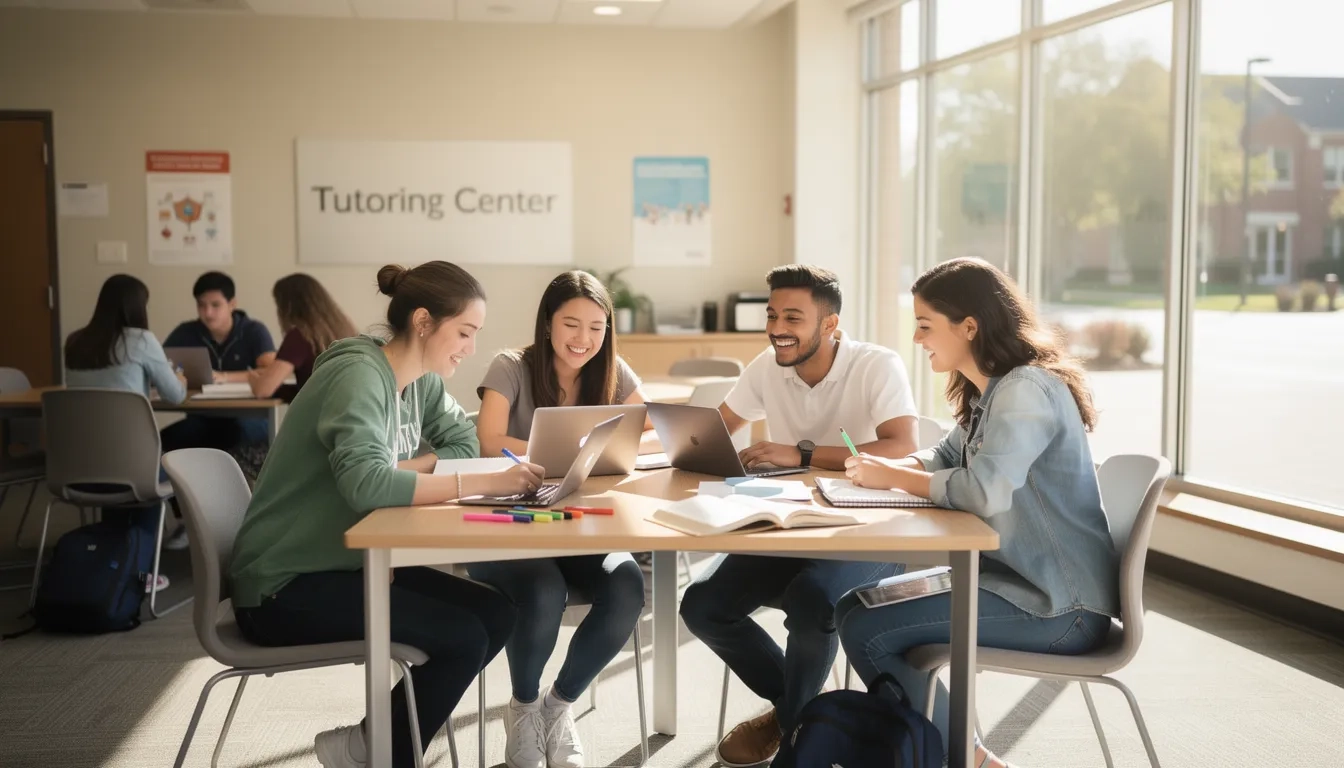
Only 9% of college students use the free tutoring their tuition already paid for.
That figure surfaces repeatedly in academic support research, and it frustrates administrators for good reason. These aren't hidden services. Schools advertise them at orientation, list them on campus maps, and email about them every semester. Walk into most university tutoring centers on a Wednesday afternoon, though, and half the chairs are empty.
Some of that is stigma. Some of it is students genuinely not knowing what's available. And a lot of the generic advice out there — "use your campus resources!" — is too vague to act on. This guide is not that. Here's exactly what's free, what's actually worth your time, and how to use it before a deadline forces your hand.
What Your Tuition Already Covers
Most students pay somewhere between $200 and $900 per semester in mandatory student fees. A meaningful chunk of that funds academic support services that most students never touch. So before anything else, know what you're already paying for.
Campus tutoring centers are the anchor resource. Schools like Arizona State University and UC Davis run dedicated operations covering hundreds of subjects at no additional cost. ASU's tutoring program offers both drop-in and appointment-based sessions for everything from pre-calculus to organic chemistry. Drop-in works for quick questions. Appointments work when you need to sit down and actually rebuild a concept from scratch.
Supplemental Instruction — commonly called SI — is worth knowing separately. SI leaders are students who've already earned strong grades in specific courses and attend current lectures to offer weekly group study sessions. The distinction from tutoring matters: SI is proactive. You don't have to be failing to show up. Research from San Bernardino Valley College found that students who used academic support services had success rates 13% higher than their classmates in STEM courses specifically, with tutoring attendance being a significant factor.
Subject-specific help labs are the third leg. Most STEM departments run math labs, physics help rooms, or chemistry study halls with walk-in hours. These aren't tutoring sessions per se — they're staffed spaces where you can work problems and flag someone when you're stuck. During finals week they often extend hours until midnight.
The Real Case for Peer Tutoring
There's a quiet debate in education research about whether peer tutoring — students helping students — is actually better than professional instruction. For college-level coursework, the data leans toward: often, yes.
A 2025 meta-analysis published in Humanities and Social Sciences Communications found that pedagogical training dramatically improved peer tutors' teaching skills while simultaneously boosting tutees' academic confidence and satisfaction — not just their test scores.
Peer tutors recently survived the same exam you're studying for. They remember which professor tendencies show up on the test, which textbook chapters are skippable, and where most students get derailed. A PhD student tutoring you in calculus has likely forgotten what it felt like to see an epsilon-delta proof for the first time. A junior who got an A+ last semester hasn't.
The overall effect size for peer tutoring on academic performance sits around 0.48 standard deviations, according to a meta-analysis from Asia-Pacific Education Researcher. In practical terms, that's roughly the difference between a C+ and a B in a borderline course. Real and measurable.
Most colleges run peer tutoring through their main tutoring center. Some departments have their own informal peer networks. Ask your professor or your department's student services coordinator — the best resources are often the least advertised.
Writing Centers: The Most Underrated Office on Campus
If you take one thing from this article, go to the writing center.
Writing centers help with every subject, not just English papers. Bring your chemistry lab report, your economics policy memo, your history essay. The consultants are trained in argument structure, logical flow, and clarity — skills that cost points in every discipline. A confused reader in econ loses you just as many points as a confused reader in literature.
The mistake most students make is showing up 18 hours before a deadline. Writing centers do take last-minute appointments, but you'll get dramatically more value with enough time to revise. Show up with a rough draft, an uncertain thesis, or even just a prompt you haven't started. Many centers now offer asynchronous feedback too — submit online, get written comments back within 24 to 48 hours (timelines vary by school, worth checking).
One non-obvious fact: the tutors themselves become better writers because they tutor. Writing center consultants often complete semester-long training certifications before they see a single student. Their feedback isn't charity from a stronger writer to a weaker one — it's trained analytical reading. Worth taking seriously, not just skimming for comma edits.
Free Online Platforms Worth Your Time
Not every free platform earns your time. Here's an honest breakdown of what actually works for college students.
| Platform | Best For | Real Limitation |
|---|---|---|
| Khan Academy | Foundational math and science review | Rarely covers upper-division coursework |
| Schoolhouse.world | Live peer tutoring sessions over Zoom | Wait times vary by volunteer availability |
| MIT OpenCourseWare | Lecture notes, problem sets for core STEM | Pure self-study — no instructor feedback |
| Coursera (audit mode) | Structured university courses | No graded assignments without paying |
| UPchieve | On-demand tutoring, first-gen students | Best for intro-level coursework |
Schoolhouse.world is the one most college students haven't encountered. Founded through Sal Khan's philanthropic work (yes, the Khan Academy founder), it connects students to trained volunteer tutors for live sessions over Zoom. Free. No account fees. Drop-in wait times can run 20 to 30 minutes for popular subjects, but for real-time help during a study session, it's one of the better free options available.
MIT OpenCourseWare isn't tutoring — it's lecture notes, problem sets, and past exams from actual MIT courses, published publicly. If your professor's explanation of a concept isn't landing, pulling up the MIT 18.03 differential equations problem sets and working through them is a free self-diagnostic tool that costs nothing but time.
For research-heavy papers, your library's subject librarian is a free tutoring appointment that almost nobody books. A 30-minute session with a librarian specializing in your field can cut research time by hours and surface sources you'd never find alone.
How to Build a Tutoring Strategy Before You Need One
The biggest mistake students make is treating tutoring as an emergency response. Two failed quizzes, one week before the midterm, sprint to the tutoring center expecting a miracle. It rarely works that way.
Here's a more useful approach, mapped to the semester timeline:
Weeks 1-2 of any new course:
- Look up exactly what tutoring is available for that subject — department website, syllabus, or just ask the professor.
- Book one introductory appointment, even if you don't need it yet. You'll know how the system works before panic sets in.
- Find out whether Supplemental Instruction exists for the course and note the session schedule.
When you start struggling:
- Go to office hours first. Faculty office hours are genuinely the most underused free resource in higher education. A 15-minute conversation with your professor is often worth more than three tutoring sessions because the professor knows exactly what they're grading for.
- Then use the tutoring center for worked examples and practice problems.
- Use Khan Academy or MIT OCW to patch foundational gaps the tutor surfaces.
Before finals:
- Writing center — for papers, at least two weeks out.
- SI group sessions, if the course has them.
- Department-hosted review sessions, which are often one-time events buried in listservs and department social channels. Worth the search.
The students who get the most out of free tutoring aren't always the ones struggling the hardest. They're the ones who show up in week 3, treat it as a study habit, and already know the staff by name when things get difficult.
The Stigma Problem — And Why It's Worth Ignoring
Research on why students avoid tutoring keeps surfacing the same finding: many students — particularly first-generation students and students of color — worry that seeking help signals incompetence. The irony is sharp. High-achieving students tend to be the heaviest users of tutoring services, not the lightest.
At elite universities, tutoring is normalized. Harvard's Bureau of Study Counsel, established in 1947 and still operating, offers free academic coaching to every enrolled student. MIT's tutoring programs are woven into dorm culture. Peer support is standard operating procedure at schools with the most competitive admissions in the country.
The actual elephant in the room: students who need help most are least likely to seek it. Studies examining mid-semester grade alert programs have found that students with the lowest grades respond to tutoring referrals at the lowest rates. The help-seeking behavior and the academic distress move in opposite directions. That's a systemic problem, but it's also something individual students can consciously push back against.
Go before you feel like you need to. That's the whole move.
Bottom Line
- Start with what your fees already cover. Tutoring centers, writing centers, SI programs, and subject-specific help labs are paid for through your student fees at most four-year institutions. Use them.
- The writing center works for every class. Bring your lab report, your policy brief, your philosophy paper. The consultants are trained for all of it.
- Peer tutoring has real, measurable effects. A 0.48 effect size in academic performance research is not a rounding error. Students who recently passed your course know things your professor has long since internalized.
- Book an appointment before you're drowning. Tutoring as a habit outperforms tutoring as a crisis intervention. Every time.
- Online, Schoolhouse.world is your best free live option. Khan Academy fills foundational gaps. MIT OpenCourseWare is a self-study supplement, not a replacement for human help.
The resources are there. The gap is just going.
Frequently Asked Questions
Is free peer tutoring actually good quality, or are students just winging it?
Most tutoring centers require tutors to have earned at least a B+ in the subject and complete formal tutor training certification before they see students. The quality varies by school, but the bigger risk isn't low quality — it's students waiting until the last two weeks of the semester to show up. Early engagement, even with an average tutor, beats late-semester panic with an excellent one.
Can I use the writing center for STEM assignments and lab reports?
Yes, and this is one of the most underused pairings in higher education. Writing centers are trained in argument, structure, and clarity across all disciplines, not just literary analysis. They won't correct your biochemistry, but they will tell you if your methods section is hard to follow or your conclusions don't track from your data — which is exactly the kind of feedback that moves a B paper to an A.
What if my college doesn't have a tutoring center or writing center?
Smaller schools and some community colleges lack dedicated centers, but almost all have some academic support — check with student services or your department's administrative office. Failing that, Schoolhouse.world and UPchieve offer free live tutoring to any student online, and MIT OpenCourseWare and Khan Academy are available to anyone with an internet connection.
Is there a myth about tutoring only being for students who are failing?
Completely. This is probably the most damaging misconception around academic support. Survey data repeatedly shows that students who use tutoring services include a significant proportion of students maintaining A and B averages — they use it to stay there, not to claw back from failing. Treating tutoring as a rescue service rather than a study tool is the thing that actually holds students back.
What's the best time in the semester to start using tutoring resources?
Earlier than feels necessary. Students who engage with academic support in the first half of a semester show larger grade improvements than students who arrive during finals. A tutoring session in week 4, when you're mildly confused about a concept, is worth more than three sessions in week 14, when you're panicking and the window to course-correct has mostly closed.
Do graduate students have access to free tutoring too?
Graduate students typically have writing center access and can attend department-run workshops, but dedicated tutoring programs at most schools are built for undergrads. Graduate students are better served by advisor office hours, dissertation writing groups (many universities run these for free), and workshops hosted through the graduate school office. Some universities — Georgetown is one example — run graduate-specific academic writing support programs worth asking about.
Sources
- The Impact of Peer Tutoring Programs on Students' Academic Performance in Higher Education: A Meta-analysis
- Peer tutoring in higher education: power from pedagogical training
- The Effects of Tutoring on Academic Performance — San Bernardino Valley College
- Why Student Support Services Go Unused (And How to Fix It)
- 5 Ways to Provide Tutoring to College Students — Inside Higher Ed
- ASU Tutoring — Arizona State University
- Schoolhouse.world — Free Online Tutoring
- UPchieve: Free Online Tutoring and College Counseling