Free Transportation Options for College Students in 2025
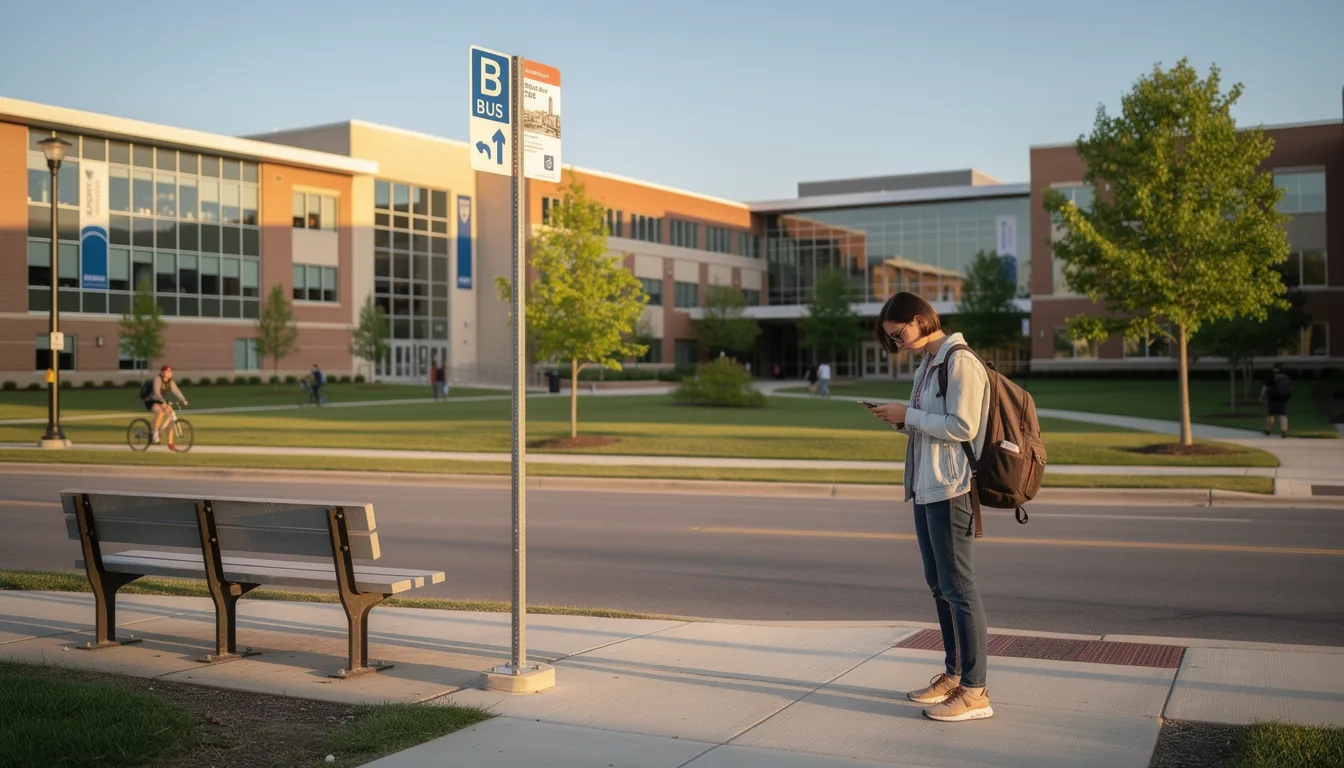
Most college students are quietly paying for something they don't need to pay for. In California alone, 75 of the state's 116 community college campuses have free or reduced-fare transit programs — yet students at those same schools still spend an average of $1,840 a year on commuting. That gap between "available" and "actually used" is a real problem, and this guide exists to close it.
Why Transportation Costs Are a Bigger Deal Than Your School Lets On
Textbooks get all the attention. Transportation almost never does. But for commuter-heavy schools, getting to class can eat up 17–20% of a student's total college budget, according to data compiled in a Hechinger Report investigation — more than most students spend on course materials.
The scale of the problem is wider than most people realize. Beam's analysis of over 135,000 emergency aid applications found that 51% of students cited transportation as an active struggle. One in eight students reported missing class or work because of a transportation problem during a given academic term. Not once. During a term.
Community college students carry the sharpest end of this. They're 99% likely to commute (almost none live on campus), they average $1,840 in annual transit costs, and they're often the students with the least financial flexibility. The burden also falls unevenly by race: Hispanic students report transportation barriers 19% more frequently than non-Hispanic peers, according to the same Hechinger data.
But here's the part that should make financial aid offices uncomfortable. A study of students at Rio Hondo College in Los Angeles County, conducted by the Hope Center for Student Basic Needs at Temple University, found that students who received free transit passes were 27% more likely to earn an associate's degree compared to peers who didn't. Not more likely to graduate someday, eventually, maybe — specifically 27% more likely. Getting to class is an academic intervention, not a quality-of-life perk.
The Universal Transit Pass: Your Most Underused Student Benefit
The single most valuable and most ignored transportation benefit at many universities is the Universal Transit Pass, often called a UPass or U-Pass. It's unlimited use of local public transit, either bundled into your student fees or available through a direct school-transit agency partnership.
Programs look very different school to school:
| School / Program | What You Get | Cost to Student |
|---|---|---|
| UW-Madison (UPass) | Unlimited Madison Metro rides | Covered by student fees |
| American University | Unlimited DC Metro + bus | $136/semester (mandatory) |
| LA Metro GoPass | Unlimited Metro bus + rail | Free for community college students |
| OCTA (Orange County) | Unlimited OC Bus | $46/semester (9+ credits enrolled) |
| Kennesaw State / CobbLinc | Free rides on 3 routes | Free with valid KSU student ID |
| SamTrans Way2Go (CA) | Unlimited SamTrans rides | Free (financial need-based) |
Some schools automatically enroll you. Others require activating a card or downloading an app. A lot require explicit re-enrollment each semester, which is how students drop off. Check your campus transportation office page specifically — not the general student services portal — because that's where the sign-up links actually live.
California deserves its own sentence here. The LA Metro GoPass gives unlimited bus and rail access to all community college students in the Los Angeles area, with no income test and no fee. Just a valid student ID. If you're enrolled at an LA-area community college and still buying transit passes, you may have been doing that for semesters longer than necessary.
The SamTrans Way2Go program, funded through a $730,000 grant from the C/CAG Lifeline Transportation Program, offers 5,000 free passes annually to financially eligible students at Cañada College, College of San Mateo, and Skyline College. Programs like this get funded, get launched, and then quietly persist without any major announcement — students who never heard about it at orientation just keep paying out of pocket.
Campus Shuttles and On-Demand Ride Services
Beyond city transit, campus-operated shuttles cover the space between the nearest bus stop and where you actually need to go. Most large universities run them. Most students can't name a single route.
UCLA, NYU, and Northwestern all operate free campus shuttle systems. Northwestern's Safe Ride program is worth naming specifically: after integrating on-demand tracking technology, ridership climbed 65% and the cost per trip dropped 43%. Students used the service more when they could see a bus in real time versus consulting a laminated paper schedule nobody memorizes or carries.
On-demand transit partnerships are filling rural and suburban gaps that fixed-route buses can't serve. Via, which operates on-demand transit networks for municipal clients, runs a service in Valdosta, Georgia where 10% of all riders use the service primarily to reach school or work. That's a meaningful share for what started as a general-purpose city service, and it's a model spreading to more college-adjacent markets.
What's worth knowing about shuttle services specifically:
- Late-night routes run at many schools for safety reasons and are separate from daytime schedules
- Airport shuttles pop up around Thanksgiving and winter break, often free or heavily subsidized
- Medical transport programs connect students to off-campus clinics without Uber costs
Bike Share: Two Wheels, Zero Cost at Many Schools
Campus bike share programs are genuinely free at a number of schools — not discounted, free. Amherst College lets students check out bikes at no charge. Shippensburg University's ShipShare program covers all students, staff, and faculty at zero cost.
The obvious tradeoff: bikes are excellent for four months of reasonable weather and genuinely useless in January in Minnesota. For fall semester, though, a free campus bike can replace car trips you'd otherwise pay for, and the per-month savings add up quickly.
Four steps for actually using a campus bike share:
- Register at the start of the semester — not mid-October when everyone panics about midterms and the queue gets long
- Locate physical stations before you need one; most campuses use a dedicated app (Spin, PBSC, or similar) showing real-time availability
- Note the time window — "free" typically means free for trips under 60 or 90 minutes, with fees after that
- Return to any station, not just the one you borrowed from, since most systems are dockless within a defined zone
City-level bike share programs offer student discounts too. Boston's Bluebikes, Washington DC's Capital Bikeshare, and NYC's Citi Bike all have income-qualified annual memberships that can drop as low as $5 a year with proof of enrollment and eligibility documentation. That math is hard to argue with.
Carpooling and Ride-Matching: The Option Nobody Mentions at Orientation
Here's something that goes unannounced at nearly every orientation: your university probably has a free carpooling platform. Penn State runs RideOn, a free app that matches students, faculty, and staff for regular commutes and one-time trips — including semester break and holiday rides home. The University of Iowa's UI Rideshare system surfaces carpool, vanpool, and transit options in one place. Texas A&M's platform connects commuters by neighborhood.
These platforms work best at large, commuter-heavy schools. The challenge is network density: a ride-matching app needs enough users to generate useful matches, and most campus systems suffer from a chicken-and-egg problem where thin membership leads to poor results, which discourages new sign-ups. If your school has one, use it anyway — the value tends to cluster in specific use cases where the supply-demand balance works in your favor.
What campus carpooling does particularly well:
- Semester break rides home: Longer trips where savings per person are significant, and route overlap is common in student housing clusters
- Off-campus apartment groups: Students in the same complex often have overlapping schedules and zero awareness they could share a drive
- Parking cost splitting: Even without gas savings, sharing a daily campus parking pass between two people cuts costs substantially
The national rideshare.org (not affiliated with commercial ride-hailing) maintains a resource page for college students and helps find regional carpooling communities beyond what any single campus platform offers. Worth bookmarking.
How to Find What's Actually Available at Your School
Most guides on this topic tell you programs exist. They rarely tell you how to find them at your specific school. Here's a reliable process:
- Search "[school name] transportation services" — every university with a program maintains a dedicated page, usually separate from the main student services site
- Check your tuition fee breakdown — if you see a transportation fee line item, that's often a signal you're entitled to activate a pass or card you've never touched
- Visit your basic needs office — the Hope Center's research has pushed many community colleges to house transit support under basic needs or student affairs, rather than parking and transportation
- Ask at your financial aid office specifically — transit pass eligibility sometimes links to your financial aid status in ways the general transportation page won't mention
- Check the transit agency's own website — some programs like the OCTA Community College Pass are administered by the agency, not the school, and won't appear in your student portal at all
"Students who received free transit passes were 17% more likely to attain credentials and 27% more likely to earn an associate's degree compared to students who did not receive the passes." — Hope Center for Student Basic Needs, Rio Hondo College Study
That finding from the Hope Center's randomized controlled trial at Rio Hondo should be on a billboard outside every financial aid office in the country. Transportation support isn't a student life amenity. It belongs next to food assistance and emergency housing funds in how institutions think about student success.
The Hope Center's 2023-2024 study at two CUNY community colleges — Borough of Manhattan Community College and Queensborough Community College — reinforced this. Students who picked up free MetroCards showed significantly higher spring 2024 enrollment and increased likelihood of remaining enrolled in fall 2024. Free transit moves the needle in ways that are measurable, trackable, and repeatable.
Bottom Line
Transportation costs are real, and they have real consequences on grades, persistence, and whether students finish their degree. But most of the solutions are already in place — students just don't know to ask for them.
- Start with your campus transportation office and find out if your student fees already cover a transit pass. At many schools, you're paying for one you've never activated.
- Layer multiple options: a transit pass for daily commuting, campus bike share for on-campus errands, and carpool matching for longer or irregular trips.
- Community college students should specifically check whether their local transit agency runs an ID-based free program — LA Metro, OCTA, SamTrans, CobbLinc, and SunLine's Haul Pass program are among the agencies in California and Georgia offering this.
- If none of the above fits your area, check your city's income-qualified bike share discounts and your school's basic needs or emergency aid office for transportation assistance funds.
The programs exist. Most of them cost nothing. The only obstacle left is knowing where to look.
Frequently Asked Questions
Do all colleges offer free bus passes for students?
Not all, but many do — and the number is growing fast. In California, 75 of 116 community college campuses had free or reduced-fare transit programs as of 2023. Programs vary: some schools bundle passes into student fees (meaning you're already paying for access you haven't activated), while others rely on transit agency partnerships that offer ID-based free rides. The starting point is always your school's transportation services page.
Will a free transit pass affect my financial aid?
Almost never. Most passes are bundled into your cost of attendance through student fees, or provided through institutional and agency grants that don't count as income. If you receive a specific cash transportation stipend through emergency aid, consult your financial aid office — but in practice, transit pass programs are structured to avoid aid complications by design.
What if my school is in a rural area with no transit options?
Two realistic paths: first, check whether your campus operates van pools or on-demand shuttle services for students without car access — these are more common at rural schools than students realize, often buried in the transportation office site. Second, look at your school's basic needs or emergency aid office. Post-pandemic, many schools added transportation-specific emergency funds precisely because rural students had nowhere else to turn. A short application can unlock one-time or recurring assistance.
Is carpooling through a campus platform actually safe?
Campus carpool matching systems like Penn State's RideOn or UI Rideshare connect verified students, faculty, and staff through institutional logins — meaningfully different from finding a stranger on Craigslist. That said, use common sense: share trip details with a friend beforehand, meet in a public campus location for first rides, and stick to platforms that require a school email login rather than open public sign-ups.
Are campus shuttles only for students living on campus?
No. Campus shuttles serve the full student population, commuters included. Many routes are designed specifically to connect parking lots, off-campus transit stops, and nearby housing areas to the main campus core. Check your school's transportation app — many universities now use TransLoc or similar real-time tracking platforms — to see routes, schedules, and live bus locations before your first trip.
I've heard about these programs but never see anyone using them. Are they actually functional?
Yes, and underuse is a documented pattern, not a sign the program is broken. Registration tends to happen once at the start of a term, the equipment and stations aren't always visible, and word-of-mouth on campus is inconsistent at best. The fix is a one-time 15-minute setup: register online, locate your nearest station or pick up your pass, and download the relevant app. After that initial friction, the daily usage barrier drops to nearly zero.
Sources
- Advancing Transportation Solutions for Community College Students — Hope Center for Student Basic Needs
- Transit Agencies Expand Free and Discounted Passes for Students — Mass Transit Magazine
- A Surprising Reason Keeping Students From Finishing College: A Lack of Transportation — Hechinger Report
- California College Costs: Campuses Offer Free Transit — CalMatters
- A Hidden Cost of Inadequate Transportation: Students Don't Finish College — Via
- 51% of Students Have Transportation Insecurity — Beam Insight