Free Laptop Programs for Low-Income College Students
Moravian University hands every incoming undergraduate a MacBook Pro, an iPad, and an Apple Watch on day one. That's roughly $3,400 worth of hardware — theirs to keep. Most students applying to Moravian have no idea this happens. That gap between what's available and what students actually know about is where most free laptop money gets left on the table.
This guide covers every major category: schools that give devices outright, scholarships that include hardware, nonprofits that refurbish and redistribute, and what's left of federal assistance after 2024's Affordable Connectivity Program shutdown. Where you should start depends on where you are in your college journey, so there's a decision framework near the end.
Check Your Own School First
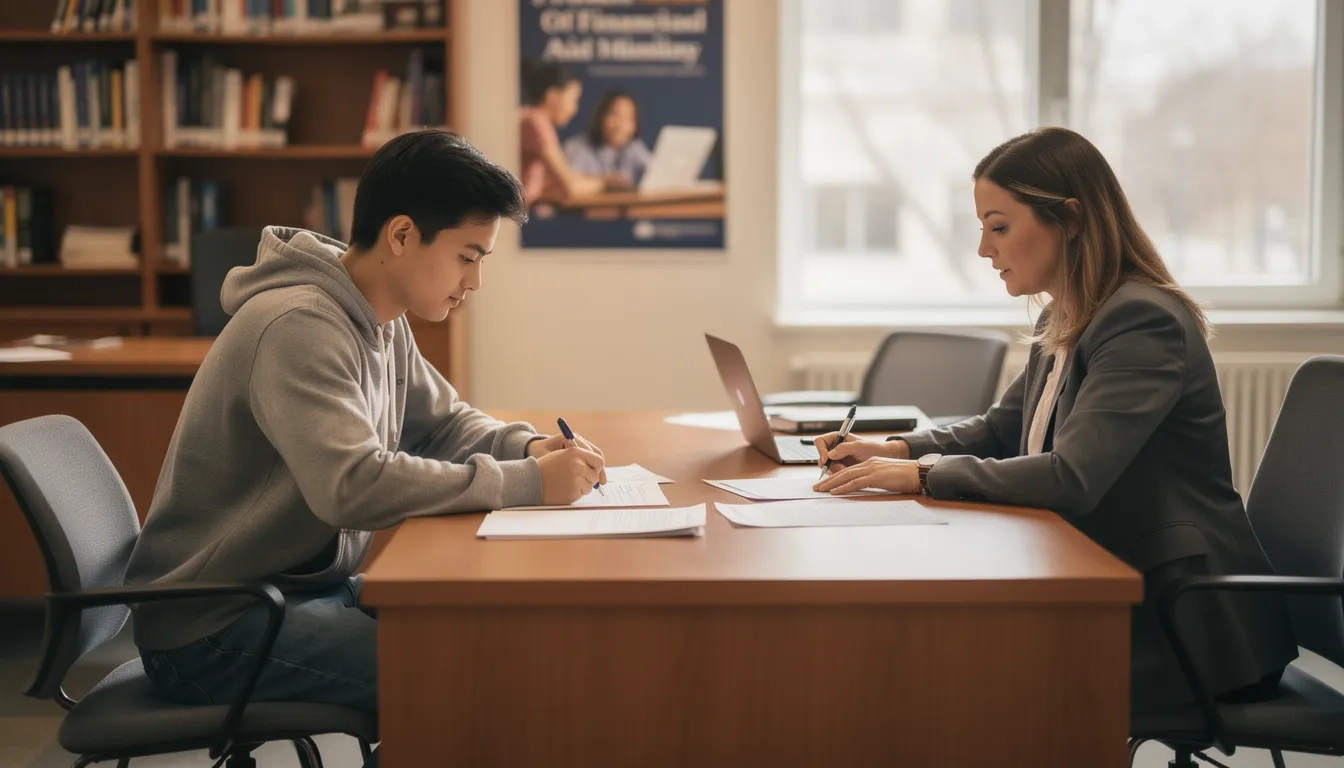
Your financial aid office is the most underused resource on this list. Schools like Brandeis publicly list emergency laptop grants for high-need undergraduates. California State University Bakersfield runs the STEP Program, loaning devices to students who demonstrate financial need. Duke, Alabama State, and Empire State University all offer semester-long laptop checkout programs.
Most of these programs aren't advertised anywhere obvious. They live in a PDF buried on the financial aid page, or they require you to walk into the office and ask. Students who have filed FAFSA and show demonstrated need tend to qualify; students who skipped FAFSA often find themselves ineligible for everything.
Loaner vs. ownership is a distinction worth caring about. Borrowing a laptop until graduation has real value, but it creates headaches when your device breaks mid-semester or you need it for a job search in your senior year. Programs where you own the device from day one are worth more, even if the hardware is a generation behind.
Before going anywhere else, email your financial aid office this week. Ask specifically: "Do you have any emergency technology grants or device loaner programs for students with financial need?" You might be surprised what comes back.
Schools That Give You a Laptop to Keep
Some universities have made free devices part of the deal — not a loan, not a "contact financial aid" situation, but a laptop you walk away with.
| School | Device | Who Qualifies | Yours to Keep? |
|---|---|---|---|
| Moravian University | MacBook Pro + iPad + Apple Watch | All incoming undergrads | Yes |
| Berea College | Dell laptop | All first-year students | Yes |
| Bowdoin College | MacBook Pro + iPad Mini + Apple Pencil | All undergrads, auto-enrolled | Yes |
| University of Michigan | MacBook Air | Eligible incoming students (school contacts you) | Yes, after first semester |
| Northwest Missouri State | Laptop | All undergrad and grad students | Yes, until graduation |
| Valley City State University | MacBook Pro or Windows laptop | Full-time students | Yes |
| Full Sail University | Program-specific laptop + software | All students (cost included in tuition) | Yes |
| Seton Hall University | Lenovo ThinkPad T14S 2-in-1 | All incoming full-time undergrads | Varies by year |
| UA Grantham | Lenovo laptop | All degree-seeking students | Yes |
Berea College deserves its own sentence. It's a no-tuition liberal arts school in Kentucky that admits only students from low- to moderate-income families — the median family income of incoming students sits around $29,000 per year. Every student works on campus as part of their education. Every incoming student gets a Dell laptop. If your family qualifies financially, Berea is one of the most underrated college decisions in the country.
Full Sail's Project LaunchBox bundles industry-standard production software directly into your degree program. For students in music, film, or game design, that software would cost $3,000 or more annually on the open market. The device you receive is purpose-built for your major, not a generic machine.
One caveat: some programs (like Seton Hall's) specify the laptop model but not income requirements — they give devices to all full-time incoming students. If you're attending one of these schools regardless of financial situation, you're still getting the hardware. But for students choosing between schools partly on cost, this table changes the math.
The Dell Scholars Program
The Dell Scholars Program selects 500 students each year and gives each one a $20,000 scholarship plus a laptop with a four-year warranty, four years of Chegg textbook credits, emergency funds for mid-degree crises, access to free teletherapy, and ongoing academic coaching. The full package is designed to get low-income students across the finish line, not just through orientation week.
The requirements are more specific than most applicants expect:
- Be a high school senior participating in an approved college readiness program in both 11th and 12th grade
- Qualify for a Federal Pell Grant in your first year of college
- Hold a minimum cumulative GPA of 2.4 (that's the floor, not a competitive target)
- Plan to enroll full-time at an accredited four-year university immediately after graduation
The college readiness program requirement is the one that catches students off guard. If you're not currently enrolled in something like Upward Bound, College Advising Corps, or a Michael & Susan Dell Foundation-approved program, you can't apply — even if you meet every other criterion. That's not something you can fix at application time.
The Dell Scholars program isn't just a laptop handout. It includes ongoing academic coaching, teletherapy, and career support designed to keep low-income students enrolled through graduation. The laptop is table stakes; the support system is the real product.
Applications for the 2026-2027 cycle will open December 15, 2026 and close February 15, 2027. High school juniors currently in college readiness programs should be tracking this now, not their senior fall.
Nonprofits Filling the Gaps
Not every student attends one of the schools above or qualifies for Dell Scholars. For those students, a handful of nonprofits specialize in getting working hardware to people who need it.
PCs for People provides free or deeply discounted computers to individuals below 200% of the federal poverty line, or anyone enrolled in a qualifying government assistance program (Medicaid, SNAP, SSI, and others count). Refurbished machines typically run Windows 10 or 11 and cost between $0 and $74 depending on your qualification tier. They operate in multiple states and ship nationally.
Human-I-T, based in California but operating across the country, takes donated corporate hardware and redistributes it alongside affordable internet plans starting at $14.99/month and digital literacy training. If you're starting from zero on both hardware and connectivity, their bundled approach is one of the more complete solutions available. Their Gold Membership offers high-speed internet, a refurbished device, bilingual tech support, and free training.
Laptops 4 Learning distributes about 25 refurbished laptops per month to low-income students pursuing online education. The volume is limited, but applications stay open continuously. The competition pool is smaller than the bigger programs, which matters when you're calculating your actual chances.
For any refurbished laptop, one practical note: a ThinkPad or Dell from three to four years ago handles coursework — documents, spreadsheets, video calls, browser-based assignments — without issues. Students in graphic design or engineering programs may need more eventually, but for the first year or two, refurbished hardware is genuinely sufficient.
What Happened to Federal Help
Here's the awkward truth: the federal government's most useful device-access program is gone.
The Affordable Connectivity Program shut down on June 1, 2024, after Congress declined to renew its funding. At peak enrollment, the ACP covered 23 million households with up to $30/month off internet service and a one-time $100 discount on devices. College students receiving Pell Grants qualified automatically. Then the program ended, with no replacement legislation in sight.
The FCC's Lifeline program still exists and provides a $9.25/month discount on internet service for qualifying households. It's not nothing, but it's a fraction of what the ACP delivered, and it doesn't touch hardware costs.
T-Mobile's Project 10Million offers free hotspot data and discounted devices, but its primary focus is K-12 student households, not college students. Some college students in qualifying households can still access the program if they meet the income criteria, but it wasn't designed with higher education in mind.
For students who were counting on the ACP: there is no direct federal replacement as of mid-2026. About a dozen states have launched their own broadband assistance programs, but coverage and benefit levels vary significantly. If you're in California, New York, or Illinois, check your state's digital equity program specifically.
Where to Start: A Decision Framework
Where you should focus depends on where you are in the process right now.
If you haven't chosen a college yet, factor device programs into your comparison. The difference between attending Bowdoin or Berea versus a school with no device program could run $2,000+ over four years, and that's before repair costs. Run the real numbers when you get financial aid award letters.
If you're already enrolled, contact your financial aid office this week. Ask specifically about emergency technology grants and semester-long loaner programs. Many offices hold discretionary funds for exactly this situation and release them only when students ask.
If you're a high school junior in an approved college readiness program and you qualify for Pell Grants, the Dell Scholars application is worth treating like a part-time job for two months. The $20,000 scholarship alone covers tuition at many public universities for two years.
Here's the sequence I'd recommend working through:
- Contact your financial aid office and ask directly about tech grants and loaner programs
- Check Dell Scholars eligibility — specifically whether you're enrolled in an approved college readiness program
- Check nonprofit eligibility — PCs for People if you're below 200% of the federal poverty line, Human-I-T for a combined device and internet package
- Factor school selection into your decision if you're still choosing — the laptop program is part of the financial aid package
My honest take: if your household income is under $75,000 and you haven't seriously looked at Berea College, you should. A no-tuition education, a free laptop, a strong liberal arts degree, and a national alumni network is a combination that's genuinely hard to beat on pure financial terms.
Bottom Line
- Email your financial aid office before doing anything else. Ask specifically about emergency tech grants and device loaner programs. Many exist quietly, and the ask takes five minutes.
- High school juniors in approved college readiness programs should mark December 15 on their calendar for Dell Scholars applications — the $20,000 scholarship plus laptop plus four-year warranty is significant money.
- The federal ACP ended June 1, 2024 and has not been replaced. PCs for People and Human-I-T are currently the most reliable nonprofit fallbacks for free or near-free hardware.
- If you're still choosing a college, Bowdoin, Berea, Moravian, and the other schools in the table above should get extra credit in your financial comparison — that hardware is real money.
Frequently Asked Questions
Do I have to return the laptop when I leave school?
It depends entirely on the program. Berea, Bowdoin, Moravian, Full Sail, and UA Grantham all provide hardware you keep permanently. Many other schools — including several California State University campuses — operate semester or year-long loan programs where the device goes back. Always confirm ownership terms before assuming the laptop is yours.
Can I use Pell Grant money to buy a laptop?
Yes, in most cases. If your Pell Grant exceeds what your school charges in tuition and fees, the surplus is typically refunded to you directly (this is what people mean by a "refund check"). That money can legally be spent on educational expenses including a computer. How much you get back depends on your school's cost of attendance and your total financial aid package — some students receive a few hundred dollars, others several thousand.
Is the Dell Scholars Program actually competitive to get into?
It's selective but not impossibly so. Only 500 students are chosen nationally each year, which sounds small. But the approved college readiness program requirement dramatically narrows the eligible pool. Students who qualify and apply are often genuinely competitive. A 2.4 GPA is the stated minimum, but finalists typically have stronger academic records plus compelling personal circumstances. The most common mistake is finding out about Dell Scholars too late to meet the readiness program requirement.
Are refurbished laptops from nonprofits good enough for college coursework?
For the vast majority of classes, yes. A refurbished ThinkPad or Dell Latitude handles word processing, research, video calls, spreadsheets, and most learning management systems without breaking a sweat. Students in programs that require video editing, 3D modeling, or engineering simulation software may eventually outgrow a refurbished mid-range machine, but for general coursework through sophomore year, it's perfectly adequate hardware.
What if my laptop breaks mid-semester and I can't afford a replacement?
Contact your financial aid office immediately and describe it as an academic hardship — because it is one. Many schools have emergency funds specifically for situations like this. Separately, check whether your campus library has extended checkout programs (beyond the standard two-hour in-library loans). Laptops 4 Learning also accepts ongoing applications, so a new submission is worth sending even if your semester is already underway.
Who was most affected by the end of the Affordable Connectivity Program?
College students on Pell Grants were among the hardest hit, since Pell eligibility was an automatic qualifier for the ACP's benefits. When the program ended June 1, 2024, those students lost access to the $30/month internet subsidy and the one-time $100 device discount simultaneously. The remaining Lifeline program covers only $9.25/month toward internet service and provides no device benefit, leaving a gap that no federal program has filled since.
Sources
- 20 Colleges That Offer Free Laptops - BestColleges
- How to Get a Free Laptop for College - Scholarships360
- Dell Scholars Program - For Students
- The Affordable Connectivity Program Has Ended - Reviews.org
- Affordable Internet for College Students - Human-I-T
- 35 Colleges Offering Free Laptops in 2025 - College Transitions