For many college students, picking a major takes time and revising
For many students applying to college, choosing the right major and career path may seem like the most important decision they’ve ever had to make.
Some students prioritize fields that offer high salaries, while others follow their passions. Some may be inspired by their peers’ careers or influenced by their parents’ wishes.
But the reality is, many students do not stick to their initial choice. The American Academy of Arts and Sciences reveals that 55% of students who graduated with a humanities degree began their college education intending to major in another field. Roughly 85% of college students change their major at least once, according to the Washington, D.C.-based consulting firm EAB, formerly known as the Education Advisory Board. EAB studies also show that students who delay declaring a major graduate at a slightly higher rate than those who choose a major in their first semester.
Academic advisers on California college campuses say that, contrary to what students may believe, their major does not necessarily determine their career path, and recommend that students take the time to find a major that fits them.
“A decision about a major is not a major decision because employers don’t care what your major is, and med school doesn’t care, and law school doesn’t care,” said David Spight, director of the undergraduate/undeclared advising program at UC Irvine.
According to a survey conducted by the American Association of Colleges and Universities, 93% of the 318 employers surveyed said that critical thinking, communication and problem-solving are more valuable than a candidate’s undergraduate major.
Some students, unsure about what to pursue, begin their college journey undeclared or later switch majors to find the right path.
The process is often difficult. Many students either have too many interests and struggle to choose, are trying to balance familial expectations with personal interests or feel unfit for what they want to pursue, experts say.
EdSource interviewed students and academic advisers from University of California campuses about their experiences choosing a major and exploring careers, as well as the struggles and lessons they faced.
A long path
Growing up, Kaitlynn Brandon never imagined she would attend college, but when the opportunity arose, she was overwhelmed with how many interests she wanted to pursue.
“It was kind of like an academic candy store,” Brandon said.
As a kid, Brandon said she liked to read Archie comics and was good at drawing, but did not consider art as a major because her family, who were members of the fundamentalist Christian organization Institute in Basic Life Principles, expected her to forgo college and instead raise a family.
After moving out at age 24, Brandon enrolled in San Joaquin Delta College, where she qualified for a tuition waiver.
“I was not sure what to expect at all going into it. I didn’t know how many options there were going to be,” she said. “I just felt for me a need to explore higher education, and I saw an opportunity, so I took it.”
At first, she was unsure about what path to take. She was interested in graphic design, writing and drawing, but struggled to fit her hobbies into a single career path.
“I found things being split up into different categories for academia and different majors almost restrictive,” Brandon said. “I can’t just explore things, I have to choose a path and stick to it.”
While speaking with a Career and Technical Education counselor, she complained that her many interests were a sign of confusion.
“I kept telling him, ‘I’m sorry, I have so many different interests. I’m kind of all over the place. I have all these weird experiences that aren’t conducive to a single track,’ ” she said.
Brandon also remained unsure about whether college was the right path for her, and at times thought she was meant to spend her life doing what her dad called “grunt labor.” Her counselor, however, helped her realize that her upbringing did not define her future and that her many interests equipped her with skills that employers seek.
“It was surprisingly psychological in a way. It felt like I was talking to a therapist,” Brandon said. “He broke me out of this state of mind.”
Brandon is now an undeclared student at UC Berkeley but hopes to major in English and minor in creative writing, and is considering adding a major or minor in anthropology.
Her dream is to become an award-winning comic book author, but because this goal doesn’t guarantee her financial stability, she has other plans to fall back on.
“It’s so hard to get a bite in the economy for creatives alone, so I feel like I need to have like my creative dream and also a backup that’s maybe less creative,” Brandon said.
Family pressure
When 19-year-old Rubaita Iqbal was accepted to UC Riverside, she didn’t know which major to choose. For four years, she was enrolled in a medical magnet high school and conditioned, like everyone around her, to believe she would pursue a career in medicine.
But during her senior year of high school, she began to doubt her long-standing goal of becoming a physician’s assistant, especially when she began working in a nursing home as part of a Certified Nurse Assistant program through USC and West Los Angeles College.
Iqbal’s friends talked about their interest in the work, but to her, the 8-10-hour Saturday clinicals dragged on.
“My friend was telling me how he felt very passionate to help these people, and I was like, ‘OK, when is it gonna be 5 o’clock when I can clock out?’ I felt like I wasn’t supposed to feel like that,” she said.
She applied to UC Riverside undeclared in the College of Natural and Agricultural Sciences, giving herself time to consider her options.
Being undeclared didn’t feel right to Iqbal, who saw on social media that many incoming students had already made a decision. She declared neuroscience as her major that summer, because she enjoyed her high school psychology classes.
“I was really disappointed, mainly because I felt like my life wasn’t going anywhere,” she said.
During the fall of her first year, however, she dreaded her introductory science courses and had multiple conversations with her adviser, who told her not to switch.
Today, Iqbal wishes she had remained an undeclared student for longer. She feels it would have better supported her throughout her major exploration journey.
“I kind of regret going to neuroscience because, like I just put myself in a path because, again, I felt pressured,” said Iqbal, whose parents have always expected her to pursue a medical profession. She spent her first year trying to reconcile her expectations and her interests.
It wasn’t until she took classes in political science and journalism in the winter that she found her calling in the humanities. After spending the rest of the school year weighing public political science and public policy, she ultimately decided on the latter.
This was the first time Iqbal felt like she was doing something for herself rather than others. Now, she hopes to attend law school after graduating from UC Riverside.
An adviser’s opinion
Kyle Behen, director of the university advisement center at UCLA, said he does not believe students should be expected to know what to pursue when they’re high school seniors.
“I mean, let’s face it, we’re asking a ridiculous thing. You’re a 17-year-old, applying to college, and we’re asking you, ‘Please determine your entire future, today,’ ” he said.
For many students, especially first-generation students, pursuing a path in the arts seems almost “selfish,” Behen said. He has interacted with many who are torn between two fields — one that their parents hope they pursue and another they feel called to.
“We really want students to become advocates for themselves,” he said, adding that he often coaches students on how to manage disagreements with their parents.
At the beginning of his college education, Behen pursued his interest in the sciences and, inspired by his dad’s career as an engineer, hoped to study geology. But taking a variety of humanities classes allowed him to consider these fields as potential areas of study. After taking a course in Greek, he decided to declare a major in classics during his junior year.
“I think I went through a version of what a lot of my students go through. It’s like, yes, engineering is the practical thing, science is the practical thing. But it wasn’t the thing that was going to get me out of bed in the morning.”
Isolation and confusion
In the first grade, Glenda Orozco decided she wanted to work in the medical field, just like her mother, who was a doctor in Mexico. As a child, she asked her mother questions like “Why is the grass green?” and “Why do we need oxygen?” and received detailed answers in return.
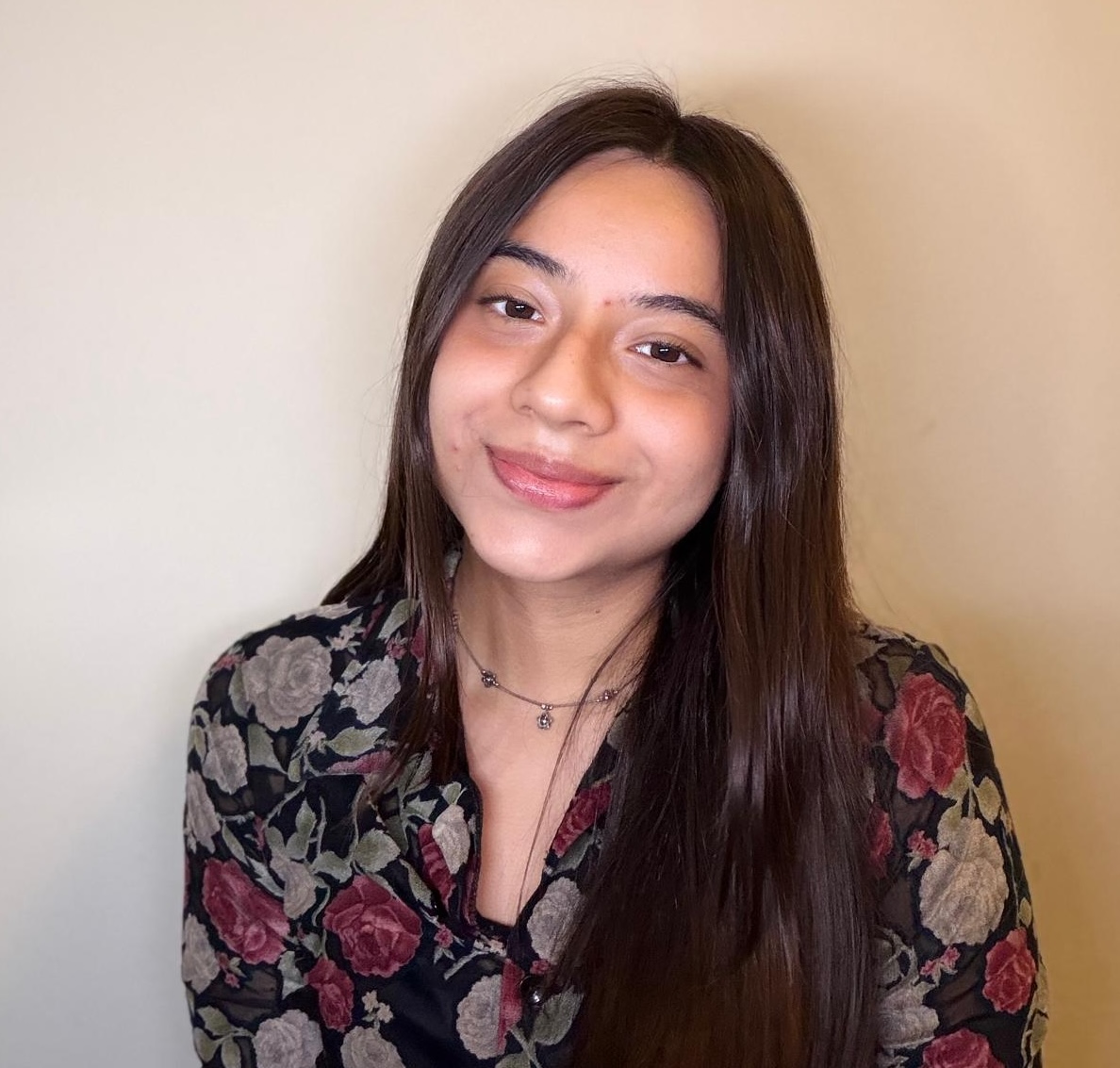
“That made me feel like she was knowledgeable,” Orozco said, “and that I wanted to have that amount of knowledge.”
In middle school, she developed a love for reading. While reading “Chronicle of a Death Foretold” for class, she reflected on the characters’ motivations and behaviors, which sparked an interest in psychology.
“I started to notice those patterns, and I wanted to know more that was beyond the behavior,” she said. “Then I went deeper, and I was like, well, what kind of molecules are involved in traumas or in this behavior?”
Last spring, she was accepted to UC Irvine as a cognitive science major, but learned later that summer that course offerings were not what she had hoped.
Without much thought, she switched to undeclared during her freshman summer orientation, remembering the warnings against doing so by college students she met on high school field trips to universities.
“I thought it was really risky,” said Orozco. “I was doing something everyone told me not to do.”
During orientation, her adviser offered helpful insight into which classes she might want to take, and the encouraging attitude toward students like her made her feel welcome.
But when she took her first college chemistry class in the fall, she began to wonder if she had what it took to pursue neurobiology. The class required her to invest a lot of time in independent study, and she struggled to find an effective approach.
The struggle and confusion took an emotional and physical toll on Orozco, who was also struggling with social isolation and financial aid issues as a freshman. She began losing hair, felt increasingly exhausted and drowsy throughout the day and became more irritable and easily brought to tears.
Amid frustration with her academic performance, Orozco remembered her love for Spanish literature and decided to major in Spanish.
“I thought, maybe if I major in Spanish — I’m already good at it, it’s my hobby, I’m passionate about it — maybe that’s the path I have to follow,” she said.
Eventually, Orozco realized it was difficult to let go of her hope to work in neurobiology. Once again, she became an undeclared student. This time, she faced the struggle of choosing between two fields she loved equally.
She ultimately decided to pursue biology because she had always been inspired by her mom, who was a doctor in Mexico. She felt like a career in neuroscience was a more altruistic endeavor.
“I felt that majoring in Spanish was something I was doing for me and only for me, and I felt that doing something that had to do with neurobiology was something that was not only for me, but for humanity,” Orozco said.
Mariam Farag is a third-year political science and literary journalism major at UC Irvine and a member of EdSource’s California Student Journalism Corps.