Your FAFSA Month-by-Month Planning Checklist
Here's a number worth sitting with: according to Saving for College's analysis of federal aid data, students who submit the FAFSA within the first three months of it opening receive roughly twice as many grants, on average, as students who file later. Twice. The form doesn't change. The family's income doesn't change. Only the submission date does.
Most families treat the FAFSA like a tax return — something to deal with when the deadline looms. This guide is for families who want to do it differently.
How the FAFSA System Actually Works
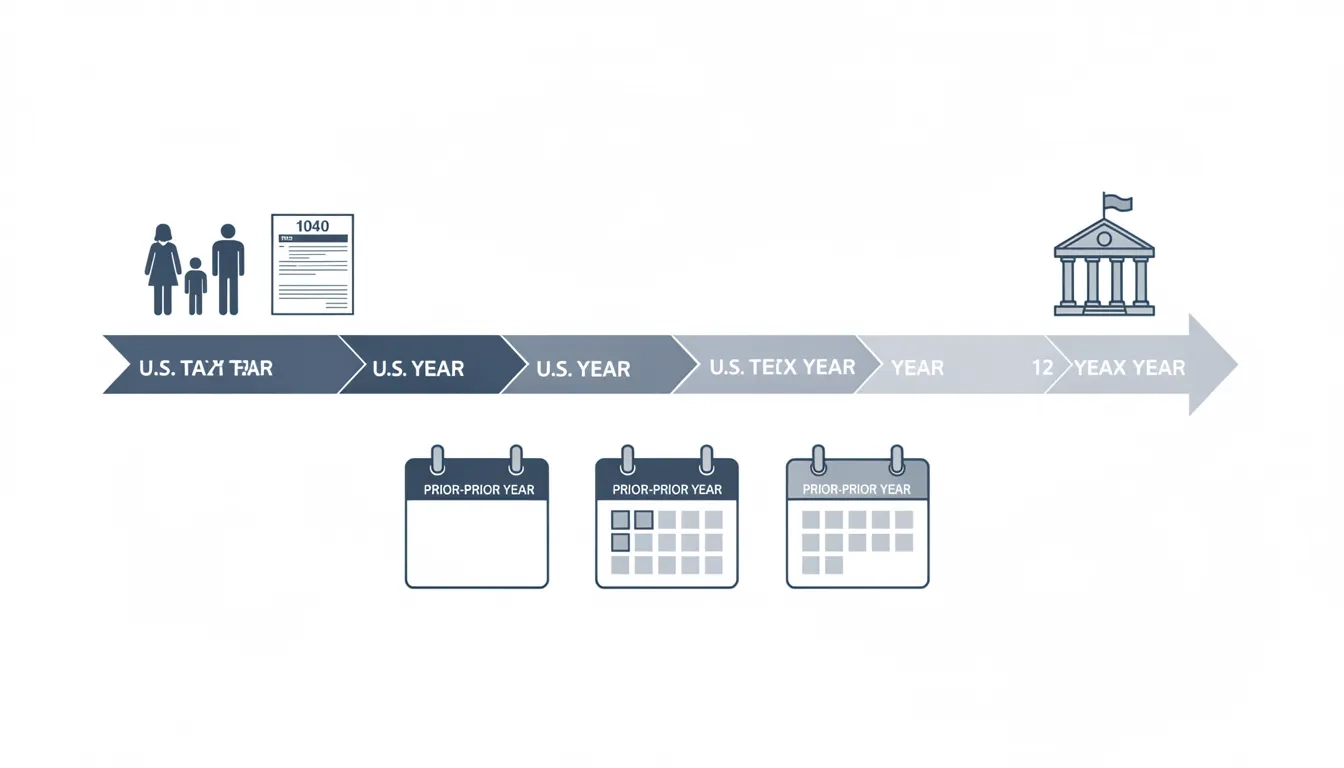
Before getting into the calendar, the structure matters. The FAFSA runs on what the Department of Education calls "prior-prior year" tax data. For the 2026-27 academic year, you use your 2024 tax returns. Your financial picture is already locked in before the form opens — which means financial planning moves need to happen a year or two in advance, not the week before you file.
Three separate deadline layers trip up most families:
- Federal deadline — June 30 of the award year. Keeps you eligible for Pell Grants and federal loans, but this is the floor, not the goal.
- State deadlines — Range from late November to June depending on your state. Many states run out of money well before the federal cutoff.
- College deadlines — Usually the earliest of all three. Most schools set priority deadlines between November 1 and February 15.
"The money can run out." That's the language Federal Student Aid uses to describe campus-based programs like the Federal Supplemental Educational Opportunity Grant (FSEOG) and Federal Work-Study. Schools receive fixed allocations — when the pool is empty, it's empty, regardless of when the federal deadline falls.
Filing late doesn't just reduce your aid odds. It can eliminate entire categories of aid that no longer exist by the time your application arrives.
The Year Before: What Sophomores and Juniors Should Actually Do
Most FAFSA guides skip this window entirely. That's penny-wise and pound-foolish, because the decisions made a year or two before the form opens have real consequences on the aid calculation.
Junior year is the last meaningful window for tax planning. The FAFSA for a student entering college in fall 2027 will use 2025 tax data. A financial planner who understands college aid can suggest moves — like timing a business asset sale or adjusting retirement contributions — before December 31 of your student's junior year.
Here's something most families don't know: the FAFSA's Student Aid Index (SAI) weighs student assets at 20%, versus a maximum of 5.64% for parent assets. A dollar sitting in a student's savings account counts against financial aid eligibility at nearly four times the rate of the same dollar in a parent's account. If a grandparent has set up a 529 plan in the student's name, that's worth reviewing with someone who knows the rules.
Practical steps for junior year:
- Research financial aid policies at colleges on your list — some schools guarantee to meet 100% of demonstrated need, and that distinction matters when comparing sticker prices
- Create FSA IDs at StudentAid.gov for both the student and at least one parent (the identity verification process can take several days, sometimes longer)
- Determine whether your target schools require the CSS Profile in addition to the FAFSA — it's required by roughly 400 mostly private colleges, costs $25 for the first school and $16 for each additional, and asks substantially more detailed financial questions than the FAFSA
August and September: The Final Prep Window
By August of senior year, you should be in document-gathering mode. The 2026-27 FAFSA opened September 24, 2025 — a week ahead of the standard October 1 date — which caught some families unprepared. Don't assume the opening date stays fixed from year to year.
Get everything together before the form goes live:
| Document | Who Needs It |
|---|---|
| Federal tax return (IRS Form 1040) | Student + parents |
| W-2 forms and income records | Student + parents |
| Bank and brokerage account statements | Both |
| Records of untaxed income (Social Security, disability) | Parents |
| FSA ID credentials | Student + one contributing parent |
| List of colleges with Federal School Codes | Student |
The IRS Data Retrieval Tool connects directly to tax records and auto-fills most income fields in the FAFSA. Using it reduces errors significantly — and that matters because roughly 30% of FAFSA filers get selected for verification, a process where schools request paper documentation of everything you entered. Using the tool doesn't eliminate verification, but it makes the process far smoother.
One thing worth confirming before October: the email address on your FSA ID account. If it's an old address you can't access, you'll find yourself locked out at the worst possible moment.
October and November: File Now, Not Later
The FAFSA opens around October 1. File that week. Not that month. That week.
14 states distribute grants on a first-come, first-served basis starting the moment October 1 arrives: Alaska, Illinois, Indiana, Kentucky, Nevada, North Carolina, North Dakota, Oklahoma, Oregon, South Carolina, Tennessee, Utah, Vermont, and Washington. If you live in one of these states and wait until Thanksgiving, some of that pool has already moved to other applicants.
Beyond the state competition, many colleges set their own priority deadlines in November. A school with a November 1 early action deadline often pairs it with a November 1 financial aid priority deadline. Miss one, miss both.
After submitting, do these four things immediately:
- Save your confirmation number and screenshot the submission page
- Watch for your Student Aid Report (SAR) in email — usually arrives within 3 to 5 days
- Review the SAR: your SAI is listed there, and errors at this stage can reduce your final award
- Add any remaining colleges to your FAFSA list (you can include up to 20 schools)
December and January: State Deadlines Hit Hard
This is where procrastination turns expensive.
State grant programs have hard deadlines, and unlike the federal government, states don't extend them. Here's a snapshot of the most critical early cutoffs:
| State | Priority Deadline | Program |
|---|---|---|
| Illinois | As soon as possible (first-come) | MAP Grant |
| Tennessee | As soon as possible (first-come) | Tennessee Promise |
| Texas | January 15 | TEXAS Grant |
| Missouri | February 1 | A+ Scholarship |
| California | March 2 | Cal Grant |
California's Cal Grant program is among the largest state-based aid programs in the country. Missing that March 2 deadline by a single day means waiting an entire year to reapply — there's no grace period, no extension, no appeal for late filing.
December is also when families applying to private colleges need to tackle the CSS Profile. Submit it at least two weeks before each school's financial aid deadline. The Profile asks about home equity, business valuations, and non-custodial parent income — information that takes time to pull together, especially if parents are divorced or self-employed.
February and March: Reading Award Letters Without Getting Fooled
Letters start arriving. Reading them accurately is harder than it sounds.
Schools are not required to use a standardized format, which means one letter might list a loan right alongside a grant under the heading "financial aid," making the package look more generous than it actually is. The National Association of Student Financial Aid Administrators (NASFAA) has pushed for a uniform format for years. It still isn't law.
When comparing letters, sort every line item into one of three buckets:
- Free money: Grants and scholarships — never has to be repaid
- Earned money: Federal Work-Study — you earn it through on-campus work, it's not a guaranteed check
- Borrowed money: Federal loans — must be repaid, with interest
Your real out-of-pocket cost is total cost of attendance minus grants and scholarships only. Don't subtract loans or work-study from that number. Those aren't savings — they're obligations.
A school with a $62,000 sticker price and a $28,000 grant package can be cheaper than a school charging $48,000 with a $5,000 grant. Run the actual math before assuming the lower-priced school is the better deal.
April and May: Comparing Offers and Appealing
National Decision Day is May 1. But that date isn't as final as it seems.
Financial aid appeals work, and families should know this going in. If your family's circumstances changed since you filed — a job loss, a major medical expense, a separation — write to the financial aid office with documentation. Schools call this a "professional judgment" review. Most have a formal process for it, and the staff handling these requests have real discretion to adjust your package.
You can also appeal on the basis of a competing offer. This works best when you're comparing schools of similar academic profile. Attach the competing award letter and ask, in writing, whether the school can come closer to matching it. I'd argue this is almost always worth doing at schools where you're genuinely choosing between two options — the worst outcome is that they say no.
Before May 1, make sure you've:
- Accepted your chosen school's aid package (or sent your appeal first)
- Declined any aid you don't plan to use, including loans you'd rather not carry
- Submitted any verification documents your school requested — delays here can hold up disbursement into the fall
June and the Renewal Cycle
The FAFSA is not a one-time event. You file a new one every year of enrollment.
The renewal form is faster since some information carries over, but you still need updated tax information each year. And your SAI can shift. A sibling enrolling in college, a parent's income change, or a shift in assets can all move the number — sometimes in your favor.
The same October timing logic applies to renewal. Set a reminder for late September each year, since recent history shows the form sometimes opens before October 1. Treat year two, three, and four exactly like year one: file immediately when the window opens.
If your family's financial picture changes significantly mid-year — job loss, death of a parent, a divorce that wasn't reflected in prior tax returns — contact each school's financial aid office directly. Schools can adjust packages between cycles when the circumstances are documented and documented well. Don't wait for the next FAFSA cycle to flag a major change.
Bottom Line
The families who come out ahead on financial aid are not always the ones with the lowest incomes. They're the ones who understood the system, planned early, and didn't treat October like a suggestion.
- Start junior year of high school, not senior year — FSA ID creation and tax planning belong 12 to 18 months before the form opens
- File within the first week of October (or whenever the form opens) — 14 states fund grants first-come, and college priority deadlines cluster in November
- Know your state's specific deadline — California, Texas, Missouri, and Illinois have dates that do not flex
- Separate grants from loans when reading award letters — the number that matters is cost of attendance minus free money only
- Appeal if your situation changed or if a competing school offered more — schools have more flexibility than they typically advertise
Frequently Asked Questions
When is the best time to file the FAFSA?
File within the first week of October — or whatever week the form opens for your award year, since recent cycles have opened as early as September 24. Many state grant programs and campus-based aid funds operate on a first-come, first-served basis. Waiting until December or January can cost real money, not just theoretical eligibility.
Does the FAFSA look at my income from this year?
No. The FAFSA uses "prior-prior year" tax data, meaning two years before the academic year you're applying for. If you're filing for the 2026-27 school year, you use your 2024 tax returns. By the time October arrives, those taxes are already filed, so there's no guessing or estimating required.
Is the FAFSA only for low-income families?
This is the most persistent misconception about federal student aid. Middle- and upper-middle-income families regularly receive some form of aid, especially at private colleges with large endowments. Beyond grants, the unsubsidized federal student loan — available regardless of financial need — requires a filed FAFSA. Some colleges also require FAFSA completion to release merit scholarships that have nothing to do with income.
What's the difference between the FAFSA and the CSS Profile?
The FAFSA is the federal form used by every college to determine eligibility for federal aid programs. The CSS Profile is a separate form from College Board, required by roughly 400 mostly private and selective colleges, that goes much deeper into family finances — including home equity, business assets, and non-custodial parent income. The CSS Profile costs $25 for the first school and $16 for each additional one. If you're applying to highly selective private universities, you almost certainly need both forms.
What happens if my student's income from a part-time job is too high?
The FAFSA currently exempts student income up to $11,770 (for the 2026-27 cycle). Every dollar earned above that threshold reduces your expected student contribution by 50 cents on the dollar — a steep rate. If your student worked significantly in the prior-prior tax year, run the numbers through a SAI calculator before submitting so the result doesn't come as a surprise.
Can I negotiate my financial aid award after receiving it?
Yes, and it's worth attempting. Write a brief, professional letter to the financial aid office explaining your situation — either a changed circumstance or a competing school's more generous offer. Attach documentation (a competing award letter, or paperwork showing a family income change). Schools call this an appeal or a "professional judgment" request. It won't work everywhere, but the cost of asking is just a letter.