Education and housing: California’s AB 1454 and AB 609
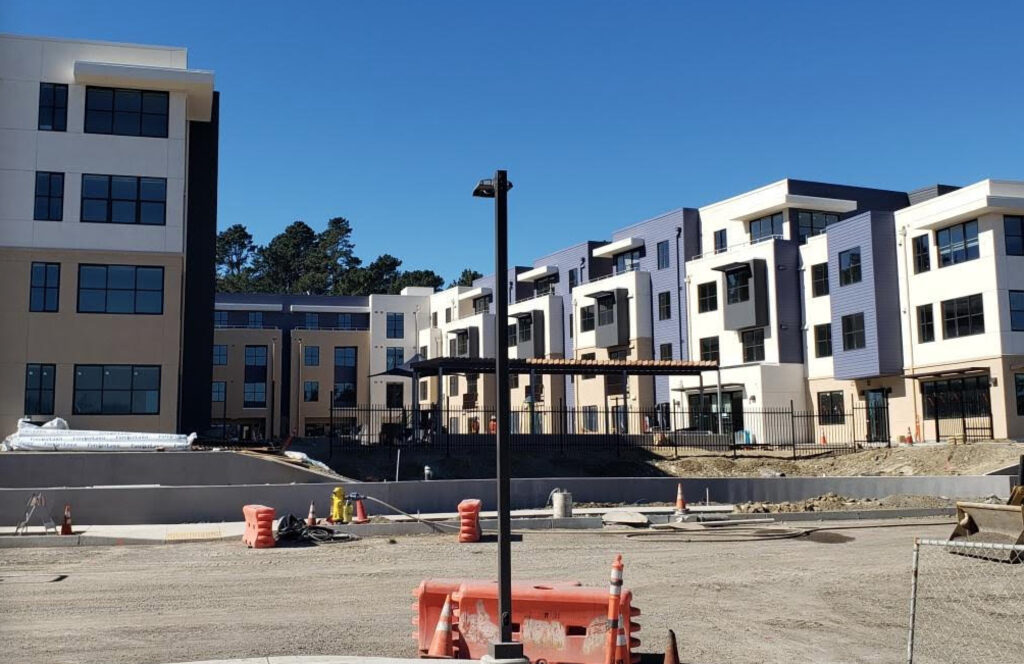
The Jefferson Union High School District in Daly City opened 705 Serramonte in May 2022 with 122 apartments for teachers and other staff.
Photo courtesy of Jefferson Union High School District
Education advocates in California have been rightly focused on Assembly Bill 1454, Assembly Speaker Robert Rivas’ bill that would revamp how California’s kids learn to read. Fewer than half of our fourth graders are reading proficiently at grade level. That has to change, and AB 1454 is a huge step forward.
Yet the second-most important piece of legislation for California education was not labeled as an education bill at all, even as it targets one of the most serious threats to our public education system: California’s sky-high housing costs.
California’s median home price of $906,500 is nearly double the national average — one reason thousands of California educators leave the profession each year, or never enter it in the first place. According to a California Teachers Association report released earlier this year, 84% of teachers surveyed cannot afford to live near their schools, leading them to commute long distances or leave the job entirely in search of more affordable locales. In rural and suburban districts, housing — either too expensive or too scarce — is frequently the single biggest barrier to staffing classrooms.
84% of teachers surveyed cannot afford to live near their schools.
Steve Westly
Good teachers are not paid at a level commensurate with the value they provide to society. But with projected state budget deficits of $10 billion to $20 billion for the next few years, regulatory reforms that increase California’s housing supply and reduce home prices are a cost-effective way to put money in teachers’ pockets. Such reforms also help keep families and kids from decamping to Arizona, Las Vegas, Texas or Florida. When families leave, enrollment drops — and with that come shrinking school budgets, staffing cuts and program reductions that harm the students who remain.
In March, Assemblymember Buffy Wicks introduced Assembly Bill 609 to reform the California Environmental Quality Act, or CEQA, and unlock hundreds of thousands of new housing units close to job centers and transit hubs. Despite opposition from some unions and environmental groups that might have been insurmountable in past years, Gov. Gavin Newsom joined the fight alongside Wicks and her allies. He recognized that housing costs affect virtually everything in California and drive the cost-of-living challenges that push great teachers out of the profession and too many families out of our state.
Often, our discourse around education policy stops at the schoolhouse door — money for textbooks, curriculum frameworks, and test scores. These are vital. Yet we must not fail to connect the dots to what happens outside — commuting woes, rent, real estate pressures, and family displacement. All of these are education issues, too.
Those fighting for education reform take plenty of arrows, and wading into the state’s housing wars might seem like asking for trouble. Yet our education system will never be where we want it to be without affordable, accessible housing, and parents and teachers can be difference-makers on politically challenging bills like AB 609. Moreover, unions, reform groups, parent organizations and charter school advocates who sometimes find themselves on opposite sides of traditional education issues will be able to line up shoulder to shoulder when it comes to the importance of building the housing we need.
So let’s celebrate AB 1454, the transformative reading bill this year. It will change outcomes for many thousands of California kids. But let’s also recognize AB 609 as a second major step California is taking in advancing education this year — not in the classroom, but in homes and neighborhoods that support it.
•••
Steve Westly served as California state controller from 2003 to 2007. He is founder of the 21st Century Alliance, a nonpartisan movement of political philanthropists, civic leaders and public advocates focused on supporting effective leaders and using best practices from around the world to ensure California’s long-term success.
The opinions expressed in this commentary represent those of the author. EdSource welcomes commentaries representing diverse points of view. If you would like to submit a commentary, please review our guidelines and contact us.