Bill to extend substitute teaching time raises academic concerns
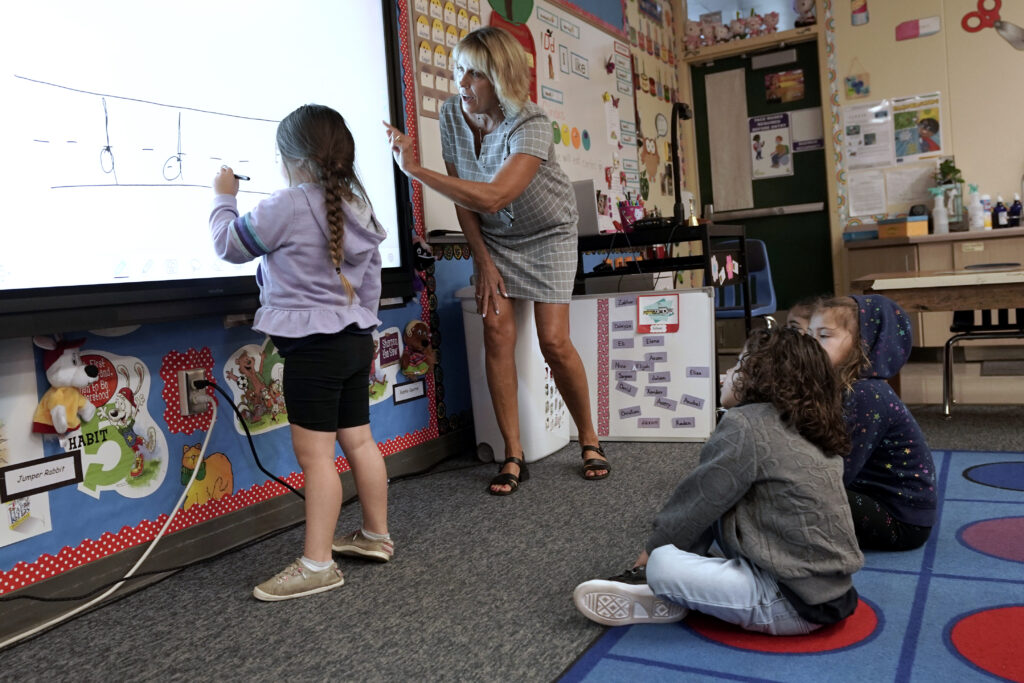
Credit: Rich Pedroncelli / AP Photo
Top Takeaways
- Assembly Bill 1224 would fill vacant teaching positions by doubling substitute teaching days for up to 60 days.
- School districts must report substitute usage to the state starting in 2026-27.
- Teacher preparation leaders worry about a disproportionate effect on students with disabilities.
California legislation that would double the number of days a substitute can teach a single class could help school districts keep vacant teaching positions filled, but opponents fear it could hurt students academically.
Assembly Bill 1224, by Assemblymember Avelino Valencia, D-Anaheim, would reinstate a pandemic-era provision that doubled the time a substitute teacher could stay in one classroom to 60 days. Substitute teachers in special education classes would be able to extend their stay from 20 to 60 days.
The bill passed both the Senate and Assembly and is making its way to the governor’s desk. It goes into effect on Jan. 1, 2026 and will expire on Jan. 1, 2029.
“The increased flexibility will reduce classroom instability and learning disruptions that affect students with disabilities the most,” said Valencia in his author’s statement. “With greater stability in the classroom, students are able to establish rapport with their substitute teacher, leading to better educational outcomes.”
Vulnerable students could be harmed
While acknowledging the teacher shortage is serious, leaders of the California Commission on Teacher Credentialing (CTC), which oversees teacher preparation in the state, argued that allowing a substitute teacher with no required preparation to be the sole educator in a classroom for a third of the school year would harm vulnerable students the most.
“That is both lowering expectations and differential treatment, which will impact English learners, students with disabilities, and students from low-income families the hardest,” said CTC Chair Marquita Grenot-Scheyer.
The CTC proposed authorizing 60-day assignments only when substitutes complete basic training in classroom management, reading instruction, teaching English learners and supporting students with special needs.
“With this preparation, schools gain flexibility, and students are less likely to lose ground,” said CTC Executive Director Mary Vixie Sandy. “Without it, whether it is one 60-day substitute or two 30-day substitutes, learning is interrupted.”
A letter from Silvia Yee, public policy director of the Disability Rights Education and Defense Fund, to members of the Senate Appropriations Committee on Aug. 17, expressed concern about the lack of training substitute teachers have working with students with disabilities.
“These substitute teachers will be spending up to 12 weeks with a class in survival mode, cycling through classroom management techniques they’ve read about online and trying to figure out how to build a rapport with students who have a wide gamut of educational levels and needs, rather than developing good lesson plans and preparing their students to achieve educational goals,” she said.
Continuity could help students
The California School Boards Association, a sponsor of the bill, says allowing substitutes to remain in a class longer will improve instructional stability and student achievement.
“Substitute teachers who remain in the classroom for longer periods can build rapport with students, gain experience, and provide greater continuity and instruction, leading to more positive learning environments and better educational outcomes,” said CSBA Chief Information Officer Troy Flint in May. “While the state continues to focus on recruiting and retaining qualified teachers, additional tools are needed now to help address the real-time staffing challenges.”
Texas research is revealing
Substitute teachers are “a patch, not a fix to the teacher shortage,” said Jacob Kirksey, an assistant professor at Texas Tech University. Kirksey recently completed research that helped persuade the Texas Legislature to strengthen certification requirements in that state’s schools.
Texas has eased credentialing requirements over the last decade, resulting in half of its teachers being without certification last year, meaning that they had not been enrolled in a teacher preparation program or passed content or pedagogy exams. One in five did not hold a bachelor’s degree, Kirksey said.
California substitute teachers are required to have a bachelor’s degree, complete an application, and submit fingerprints for a background check.
The Texas research showed that uncertified teachers, especially those without prior classroom experience, are linked to declines in student achievement. Students with new, uncertified teachers lose about four months of learning in reading and three months in math.
Kirksey also found that students with dyslexia were twice as likely to go undiagnosed in a classroom with an uncertified teacher than in a classroom with a certified teacher, despite a Texas law that requires students to be screened for dyslexia in their first year of schooling.
“Students who have special needs or learning differences, those students would be particularly vulnerable to having a teacher with no experience,” Kirksey said.
Student success also depends on the experience of their teachers, regardless of their educational attainment, Kirksey said. But that doesn’t extend to substitutes who don’t have the training to improve their practice, he said.
“So we know what works best is getting to practice being a teacher before being a teacher yourself,” Kirksey said. “And, as a substitute, you’re not really practicing, you’re just kind of being thrown in — automatically being seen as temporary by the nature of it.”
Amendments add support
Senate floor amendments approved on Sept. 4 addressed some of the concerns of opponents. The revised bill now provides extra support to substitute teachers who do not hold a preliminary or clear credential. The support includes access to training and mentorship, as well as an orientation that includes training in classroom management, instructional strategies and safety protocols.
The bill now also requires school districts and charter schools to obtain school board approval at a public meeting before allowing a substitute to remain in the classroom past the previous 20- and 30-day thresholds for general assignment classroom and education classes.
School districts and charter schools are also required to report the number of substitutes exceeding those thresholds annually to the CTC beginning with the 2026–27 school year. The report must include whether the substitute filled a vacancy or covered a teacher on leave.