Adult education: A bridge to better life and economy
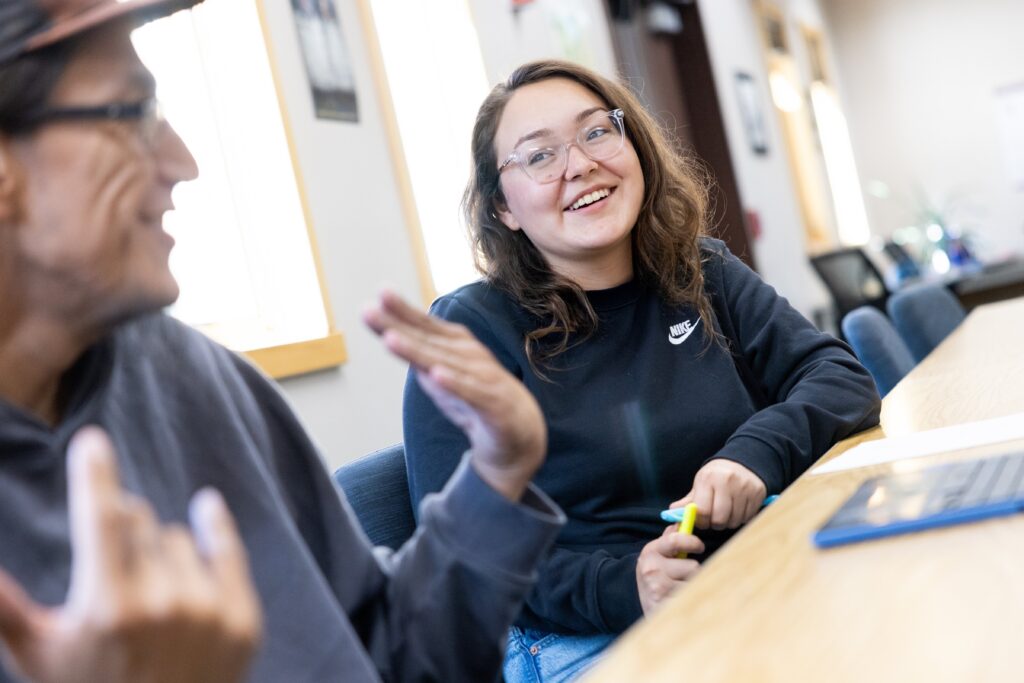
Credit: Photo by Allison Shelley/Complete College Photo Library
Those of us who work in continuing education share a belief that expanding access to our programs drives local economic growth and advances equity. I was drawn to this field because I’ve seen firsthand how it transforms lives.
In my role as vice president of the School of Continuing Education at Mt. San Antonio College (Mt. SAC), I’m fortunate to meet students every day who embody this promise. For example, a formerly incarcerated student finding a second chance after receiving his diploma, a mother learning English as a second language to become a stronger advocate for her children, and a young man with spina bifida earning workplace honors after completing a health care certification. Education is their bridge to a better life.
Adult education is one of California’s best avenues for helping our communities move forward, yet it doesn’t always receive the attention it deserves. These free courses allow adult learners to build skills and earn credentials without the roadblocks that can make higher education feel out of reach.
Adult education practitioners must actively reach out to individuals facing barriers such as low digital literacy, limited English, employment gaps, mental health challenges, poverty or incarceration, and draw them into our programs.
Adult learners show us what’s possible when barriers to education are minimized. More than 500,000 Californians participated in noncredit education programs this year. From workforce certifications to computer training, noncredit education helps students build real skills and contribute to California’s economic growth.
As one of the largest noncredit programs in the state, Mt. SAC hosted the third annual Vision 2030 Noncredit Summit last month, bringing together over 350 education leaders to explore how noncredit programs can reach more adult learners. The message was clear: The impact of noncredit education goes far beyond the classroom.
Let’s not forget that noncredit programs are deeply connected to regional workforce needs. Along with offering short-term, hands-on training in industries such as business, technology, transportation and renewable energy, students completing noncredit health-care pathways designed for English-language learners meet the growing Spanish-language demands of the industry.
The results speak for themselves. According to the California Community Colleges Chancellor’s Office, students who complete noncredit courses experience a median wage increase of 34% (toggle to academic year 2021-22 for the most recent wage data).
Despite these outcomes, noncredit education is often overlooked in policy and funding decisions. Traditional metrics measure degrees, not the skills or wage gains noncredit programs deliver. Without sufficient data, it’s easy to undervalue the most effective equity tools in higher education.
That leaves noncredit students, many from high-needs populations, without sufficient dedicated funding. At Mt. SAC alone, tens of thousands could lose access to federal programs that help them enter the workforce and achieve economic mobility.
Take Uriel Castro, one student whose story reminds us why this work is critical. After being released from incarceration, Castro enrolled in our noncredit adult high school diploma program. He not only earned his diploma but also secured a job with the college and went on to enroll in a degree program with an emphasis on psychology. He even traveled to the state Capitol to advocate for students like himself.
That is the power of come as you are.
California should further recognize and measure the remarkable journeys of adult learners. Doing so could spark policy changes that better serve an often-overlooked population while strengthening the state’s workforce and revitalizing its economy. The demand is real, and noncredit educators are ready to meet it.
•••
Madelyn Arballo, who holds a doctorate in education, is the vice president of the School of Continuing Education at Mt. San Antonio College.
The opinions expressed in this commentary represent those of the author. EdSource welcomes commentaries representing diverse points of view. If you would like to submit a commentary, please review our guidelines and contact us.